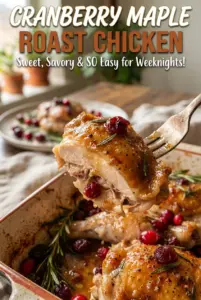
Bronzed roast chicken with cranberry-maple glaze has a way of looking far more complicated than it is. The skin turns glossy and deep golden, the cranberries burst into a tart-sweet pan sauce, and the onions soften just enough to catch all those drippings. It’s the kind of dinner that lands in the center of the table with a little drama, then disappears piece by piece.
This version works because the chicken gets seasoned before it ever goes into the oven, and the butter-rub under the skin keeps the breast meat from drying out while the high heat builds color fast. The maple and Dijon go on later, after the first roast, so the glaze thickens instead of scorching. The cranberries don’t just decorate the pan; they break down into the sauce and give the whole dish a sharp, bright edge that keeps the maple from tasting flat.
Below, you’ll find the timing cue that keeps the glaze from burning, plus a few smart swaps if you need to change the herbs, fruit, or mustard. The rest is mostly letting the oven do its job.
The skin came out lacquered and crisp, and the cranberries turned into the best pan sauce. I’d never glazed a roast chicken halfway through before, but it kept the maple from burning and the meat was still juicy.
Save this cranberry maple roast chicken for the kind of dinner where you want crisp skin, glossy glaze, and a pan sauce that tastes like it took all day.
The Reason the Glaze Waits Until the Second Roast
The biggest mistake with maple-glazed chicken is putting the sweet part on too early. Maple syrup starts to darken fast, and if it goes into a hot oven from the beginning, the skin can go from burnished to bitter before the thighs are cooked through. That first stretch of roasting is for rendering fat, setting the skin, and building a good base of color.
Once the chicken has had time to roast on its own, the glaze can cling instead of slide off. The cranberries go in at the same time because they need heat to burst and release juice, but they also need enough oven time to soften into the pan sauce rather than staying sharp and raw. If your chicken is pale at the 50-minute mark, keep going; if the skin is already very dark, tent loosely with foil during the final roast.
What Each Ingredient Is Actually Doing in the Pan
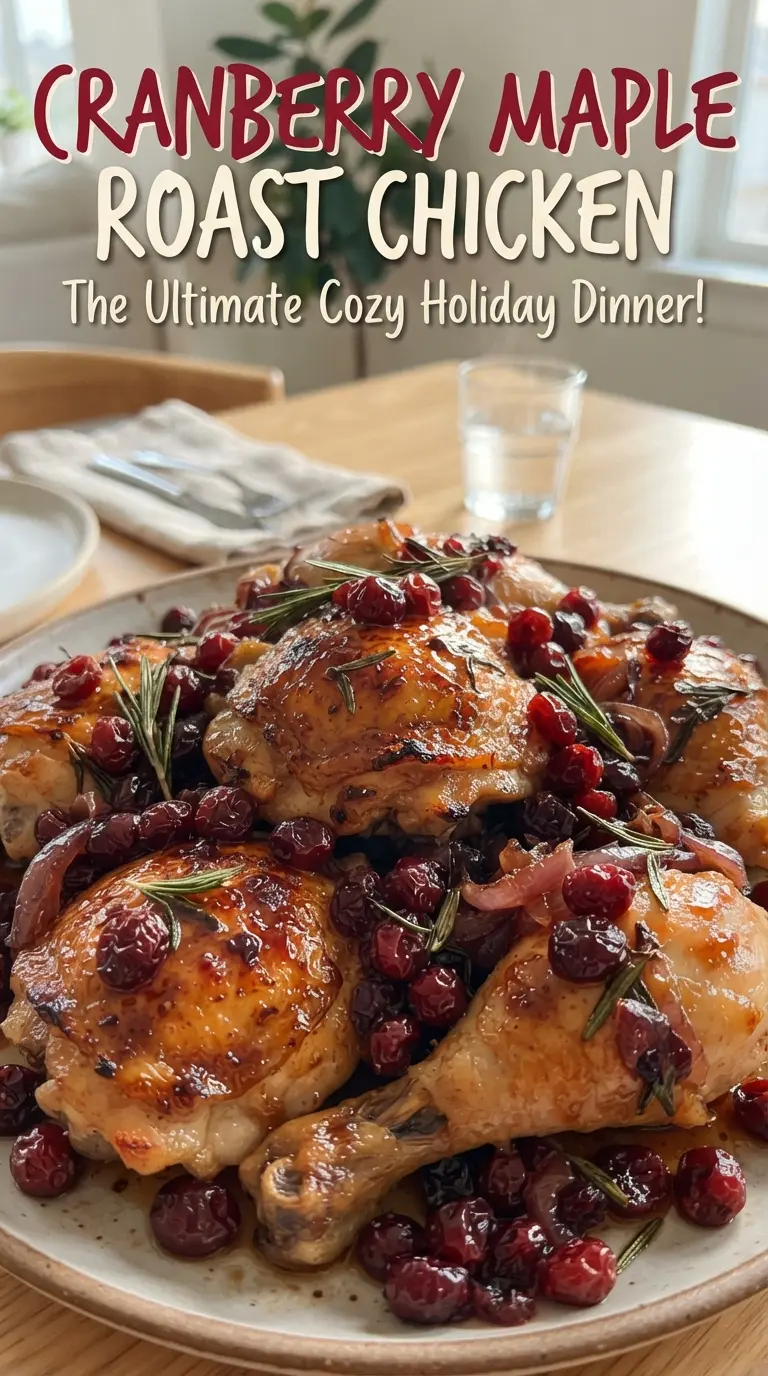
- Chicken — A 5-pound bird gives you enough time in the oven to build flavor without drying out the breast. If you buy air-chilled chicken, the skin usually roasts a little better because there’s less surface moisture to fight against.
- Butter and rosemary — The butter carries the rosemary straight onto the meat and under the skin, which is where the flavor matters most. Margarine won’t give the same round, rich finish, and dried rosemary won’t perfume the chicken the same way fresh does.
- Orange and garlic — They scent the cavity from the inside, and that subtle steam keeps the chicken from tasting one-note. The garlic softens as it roasts, so it turns sweet instead of sharp.
- Maple syrup and Dijon — This is the glaze’s backbone. The mustard keeps the syrup from tasting sticky-sweet and helps it emulsify with the pan juices so it brushes on in a thin, shiny layer instead of pooling.
- Cranberries, onion, and broth — The cranberries bring acidity, the onion adds sweetness as it softens, and the broth keeps the pan from drying out before the sauce forms. Fresh cranberries matter here; dried ones won’t burst or turn into sauce.
Building the Roast So the Skin Stays Crisp
Seasoning the Bird Properly
Pat the chicken dry before you do anything else. Moist skin steams in the oven, and steaming is the fastest way to lose crispness. Season inside and out with salt and pepper, then work the softened butter mixed with rosemary under and over the skin so the meat stays moist while the skin browns.
Setting Up the Roasting Pan
Put the orange halves and garlic inside the cavity, then scatter the onion wedges around the chicken. The onion acts like a little rack and also flavors the drippings as it softens. Use a roasting pan or a sturdy baking dish with enough room for the cranberries later; if the pan is cramped, the fruit steams instead of roasting into sauce.
Glazing and Finishing at the Right Time
After 50 minutes, whisk the maple syrup and Dijon together, brush on half, then add the cranberries and broth to the pan. The chicken should already be lightly browned before the glaze goes on. Brush with the remaining glaze during the last roast, and start checking temperature at the thickest part of the thigh; 165°F is the number to trust, not the color alone. Resting for 15 minutes matters because the juices settle back into the meat instead of running out onto the cutting board.
Three Ways to Make This Roast Chicken Fit Your Table
Dairy-Free Version
Swap the butter for olive oil or a plant-based butter that behaves well under heat. Olive oil gives you a slightly leaner finish and won’t brown quite as deeply, while vegan butter keeps more of the richness. Either way, keep the rosemary and seasoning the same so the chicken still tastes full and aromatic.
If You Don’t Have Fresh Cranberries
Fresh cranberries are best because they burst into the pan sauce, but frozen cranberries work without thawing first. Skip dried cranberries here; they won’t soften enough to create that tart sauce, and they’ll just taste chewy and sweet. If you use frozen, expect the pan to need a few extra minutes to come back to a full roast after they go in.
Mustard Swap for a Milder Finish
Dijon gives the glaze backbone, but a smooth whole-grain mustard can work if you want a softer bite and a more textured finish. Yellow mustard is too sharp and thin here; it pulls the glaze in a different direction and tastes less balanced with the maple. If you switch, use the same amount and whisk it thoroughly so it doesn’t leave streaks in the glaze.
Storage and Reheating
- Refrigerator: Store leftovers in an airtight container for up to 4 days. The skin will soften, but the flavor deepens after a night in the fridge.
- Freezer: The carved chicken and pan sauce freeze well for up to 2 months. Freeze in portions with some sauce spooned over the top so the meat doesn’t dry out when thawed.
- Reheating: Reheat covered in a 325°F oven with a spoonful of broth or sauce until warmed through. The common mistake is blasting it in the microwave, which toughens the meat and turns the glaze sticky instead of glossy.
Answers to the Questions Worth Asking
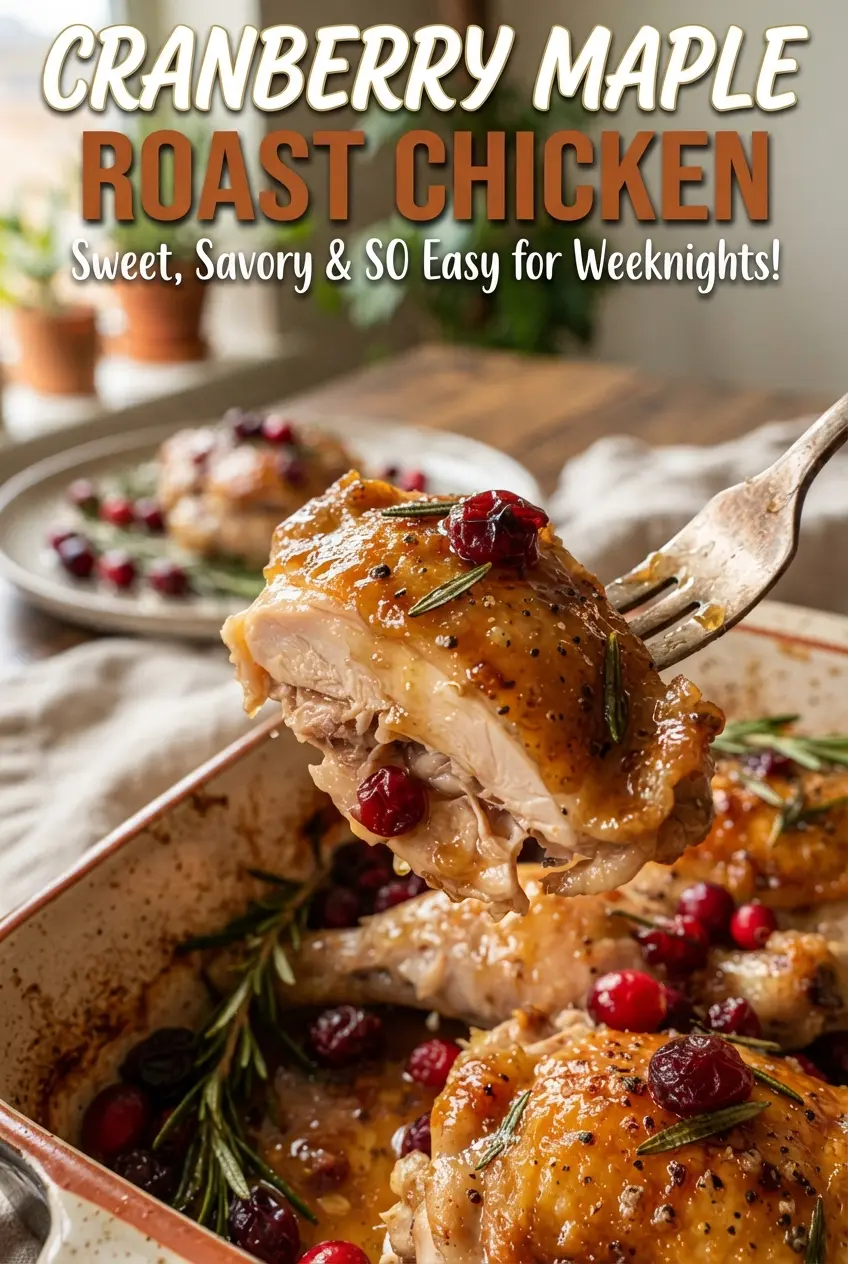
Cranberry Maple Roast Chicken
Ingredients
Equipment
Method
- Preheat the oven to 425F and set a roasting pan ready for the chicken.
- Season the chicken inside and out with salt and black pepper, then rub the butter mixed with chopped rosemary under and over the skin for even coverage.
- Stuff the cavity with orange halves and halved garlic, then place the chicken in the roasting pan and tuck red onion wedges around it.
- Roast at 425F for 50 minutes, until the skin begins to bronze and the chicken is actively cooking.
- Whisk maple syrup and Dijon mustard until smooth, then brush half of the glaze over the chicken.
- Add fresh cranberries to the pan and pour in the chicken broth for roasting moisture and pan sauce base.
- Roast 25-30 minutes more at 425F, brushing with the remaining glaze once during roasting, until the thigh reaches 165F and the skin looks lacquered.
- Rest the chicken for 15 minutes before carving so juices redistribute, and spoon the cranberry pan sauce over the top right before serving.