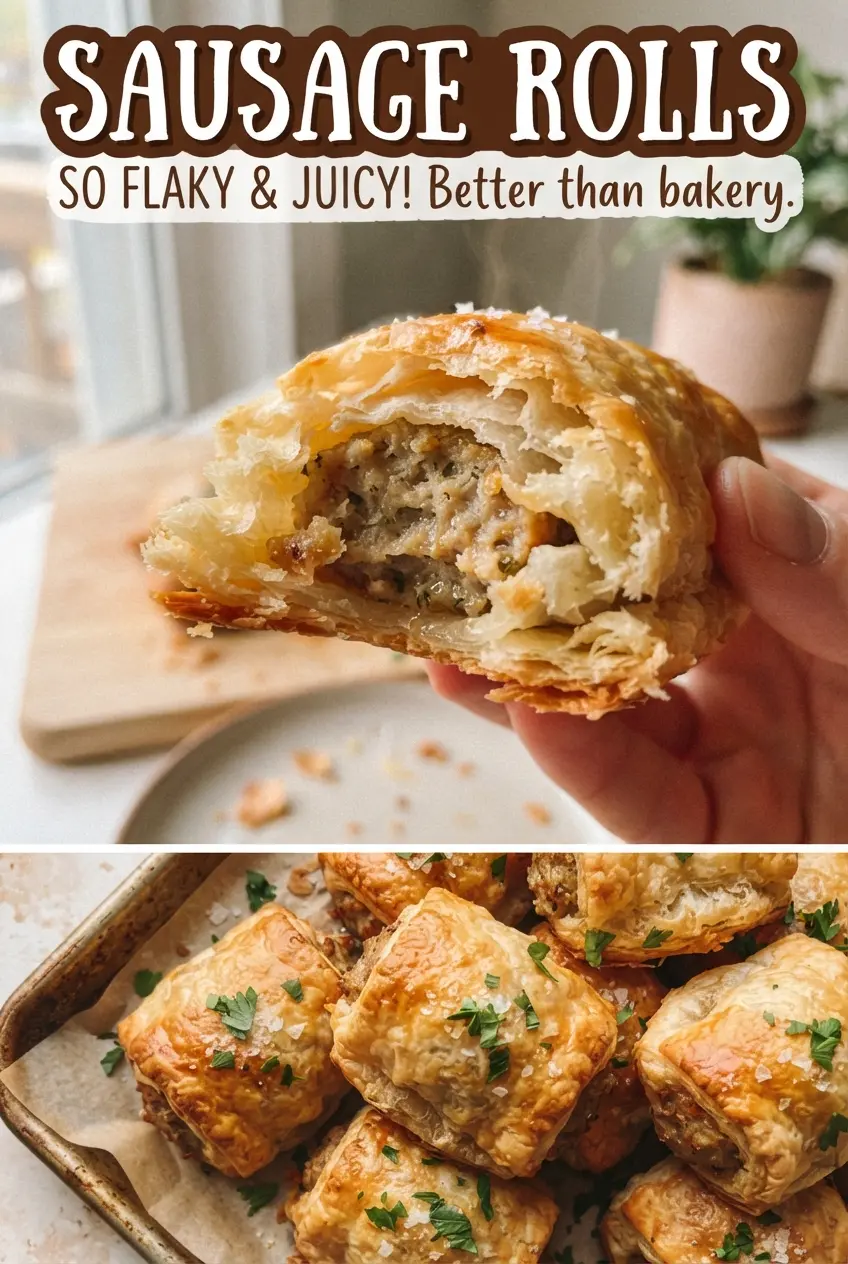
Flaky, savory sausage rolls have a way of disappearing faster than anything else on the table. The pastry bakes up deeply golden and crisp, while the filling stays juicy and well-seasoned with onion, sage, and thyme. Served warm with a little whole grain mustard, they hit that perfect balance of rich and sharp that keeps people reaching back for another one.
The trick here is keeping the filling flavorful without making it wet. Grating the onion lets it melt right into the sausage mixture, and the breadcrumbs help hold everything together so the pastry doesn’t get soggy before it bakes. A small slit in the top of each roll gives the steam somewhere to go, which helps the pastry stay crisp instead of puffing unevenly and splitting open.
Below, I’ll walk you through the best way to seal the pastry cleanly, how to judge when the rolls are done, and a few swaps that still keep the texture right.
The pastry browned evenly and the filling stayed juicy all the way through. I loved the sage with the mustard on the side — it tasted exactly like the bakery version I grew up with.
Like these golden sausage rolls? Save them to Pinterest for a flaky appetizer with herby filling and mustard on the side.
The Mistake That Makes Sausage Rolls Greasy Instead of Crisp
The filling needs to be mixed just until it comes together. If you work it too much, the sausage turns dense and bouncy instead of tender, and the fat has a harder time staying evenly distributed through the filling. The grated onion adds moisture and sweetness, but it needs the breadcrumbs to absorb that extra liquid so the pastry can crisp properly in the oven.
The other place people run into trouble is sealing the pastry too loosely. A thin strip of egg wash along the edge gives you a proper seal, and pressing the seam with a fork keeps it closed as the pastry expands. If the rolls burst, it’s usually because the seam wasn’t sealed well or the filling was packed in too tightly.
What Each Ingredient Is Actually Doing in These Sausage Rolls
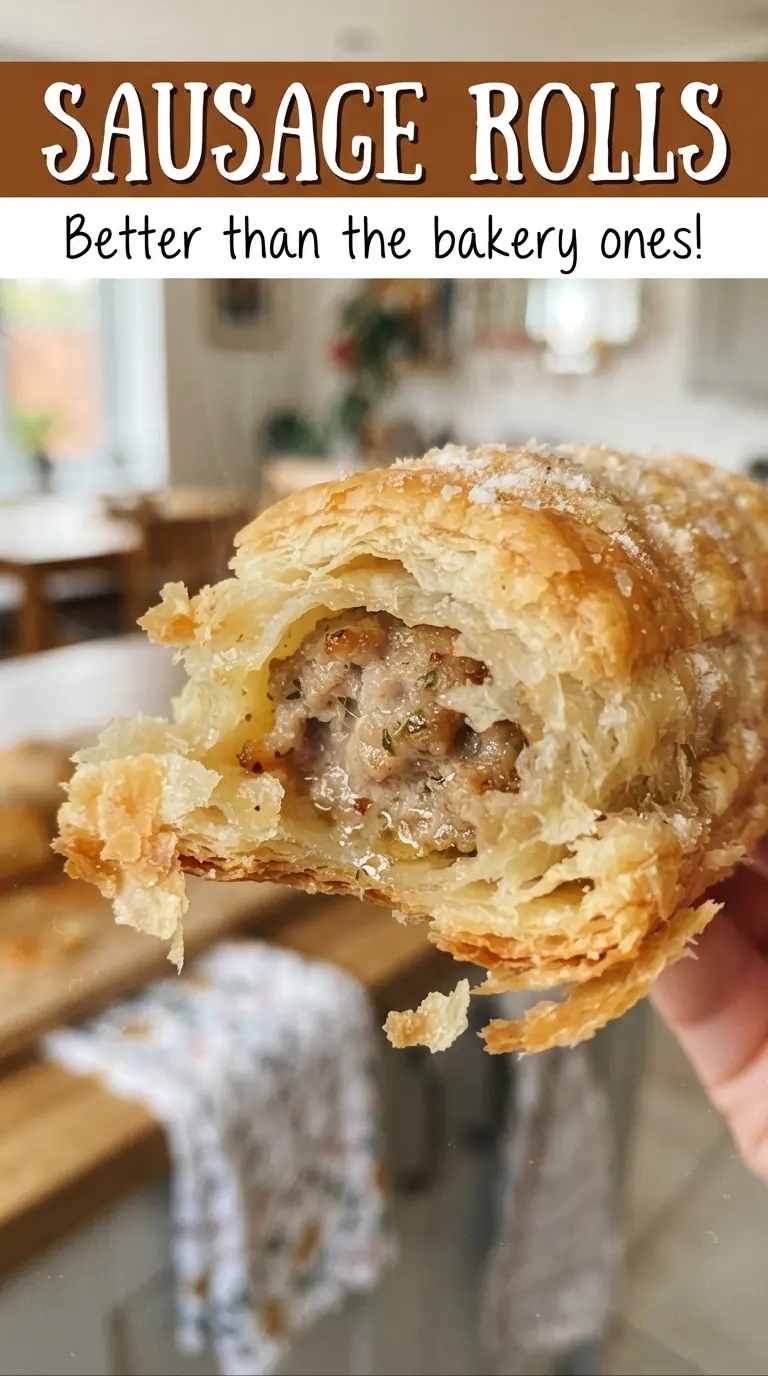
- Puff pastry — This is the shell that gives you those light, crisp layers. Thawed pastry handles best when it’s still cold but pliable. If it gets too warm, the butter softens and the layers bake up flatter.
- Pork sausage meat — This is the main flavor and the source of the juicy texture inside. Use good sausage meat if you can, since bland sausage makes a bland roll. If all you have is bulk sausage links, just remove the casings and use the meat as-is.
- Fresh sage and thyme — These give the filling its classic British profile. Dried herbs work in a pinch, but fresh herbs keep the flavor brighter and less dusty. Chop them finely so they distribute evenly.
- Breadcrumbs and onion — The breadcrumbs help bind the filling, while the grated onion melts into the sausage and keeps everything moist without leaving chunks. If the onion is chopped instead of grated, it can stay a little crunchy and push through the pastry.
- Egg wash and sesame seeds — The egg wash seals the pastry and gives the tops that deep golden shine. Sesame seeds add a little nuttiness and texture, but they’re not just decorative; they help you spot the most browned pieces at a glance.
Shaping, Sealing, and Baking the Rolls So They Stay Crisp
Mix the filling just enough
Combine the sausage, grated onion, garlic, breadcrumbs, herbs, and pepper until everything looks evenly distributed. Stop as soon as the mixture comes together. Overmixing makes the filling tight and springy, and that works against the tender texture you want inside the pastry.
Build the logs on cold pastry
Cut each sheet of puff pastry into long strips and shape the filling down the center in an even line. The filling should be thick enough to hold its shape but not so piled up that the pastry struggles to close. If the pastry starts softening while you work, slide it back into the fridge for a few minutes before sealing.
Seal, score, and finish with egg wash
Brush one edge with beaten egg, fold the pastry over, and press firmly with a fork to close the seam. Cut each long roll into smaller pieces and place them seam-side down so they don’t open in the oven. Brush the tops with egg, sprinkle with sesame seeds, and cut a small slit in each one so steam can escape instead of forcing the pastry apart.
Bake until the pastry is deep gold and the filling is done
Bake at 400°F until the pastry is puffed and deeply browned, and the sausage reaches 160°F in the center. If the tops are coloring too quickly, the oven is running hot; move the tray to a lower rack and keep baking until the pastry feels crisp all over. Pull them too early and the bottoms stay pale and soft, which ruins the contrast.
How to Adapt These Sausage Rolls Without Losing the Flaky Crust
Make-ahead and bake later
Assemble the rolls, place them seam-side down on a tray, and chill them covered for up to 24 hours before baking. This actually helps the pastry stay flaky because the butter stays cold right up until it goes into the oven. Brush with egg only right before baking so the tops don’t dry out.
Gluten-free version
Use a gluten-free puff pastry and swap in gluten-free breadcrumbs. The texture will be a little more delicate, so chill the assembled rolls well before baking and move them carefully to the tray. The filling itself doesn’t need to change.
Pork-free filling
Use chicken or turkey sausage meat if you want something lighter. The rolls will bake up a little less rich, so keep the sage and thyme in place and don’t skip the mustard on the side, since it helps sharpen the milder meat.
Storage and Reheating
- Refrigerator: Store baked sausage rolls in an airtight container for up to 3 days. The pastry softens a bit, but the flavor holds.
- Freezer: Freeze baked or unbaked rolls on a tray, then transfer to a freezer bag for up to 2 months. Bake from frozen if unbaked, adding a few extra minutes.
- Reheating: Reheat in a 350°F oven until hot and crisp again. The oven brings the pastry back; the microwave makes it limp.
Answers to the Questions Worth Asking
Sausage Rolls
Ingredients
Equipment
Method
- Preheat the oven to 400F and line two baking sheets with parchment for easy release and crisp bottoms.
- Mix the pork sausage meat, onion, garlic, fresh breadcrumbs, fresh sage, fresh thyme leaves, and black pepper until combined.
- Cut each puff pastry sheet in half lengthwise, then pipe or shape a log of filling down the center of each strip.
- Brush one edge of each strip with beaten large egg, fold pastry over the filling, and press to seal using a fork.
- Cut each filled log into 6 pieces, place seam-side down on the lined baking sheets, and keep them spaced out.
- Brush the tops with beaten large egg, sprinkle with sesame seeds, and cut a small slit in each roll to vent steam.
- Bake for 22–25 minutes at 400F until deep golden and the sausage reaches 160F in the center.
- Serve warm with whole grain mustard.