Crispy-edged Greek feta roast potatoes bring together everything people hope for in a side dish: deep golden potatoes, bright lemon, garlic, oregano, and salty feta that softens just enough over the heat. The potatoes roast in a shallow bath of broth and citrus, then finish with the kind of crust that snaps when you scoop them from the pan. They land on the table looking simple, but the flavor is layered enough to steal attention from the main dish.
This version works because the potatoes aren’t tossed with oil alone. The lemon juice and broth keep the wedges moving toward tenderness while the oven slowly cooks off the liquid and concentrates the seasoning. Yukon golds are the right choice here because they hold their shape and turn creamy inside instead of drying out. A hot oven and a single layer in the pan matter just as much as the ingredients; overcrowding turns the potatoes soft instead of crisp.
Below you’ll find the small details that make the difference, including how to keep the potatoes from steaming in the pan and how to swap ingredients without losing the Greek-style finish.
The lemon soaked into the potatoes while they roasted, and the edges turned crisp even with the broth in the pan. I added the feta at the end like you said, and it stayed crumbly instead of melting away.
Save these Greek feta roast potatoes for the nights when you want crispy lemon-oregano wedges with salty feta and almost no extra effort.
The Trick to Crisp Potatoes When the Pan Starts With Liquid
The part that trips people up here is the broth-and-lemon mixture. It looks like too much liquid at first, and that’s exactly why the potatoes need plenty of surface area and a hot oven. As the liquid bakes off, the wedges go from braising to roasting, which is what gives you tender centers and browned edges in the same pan.
Cut the potatoes into even wedges so they finish at the same time. If some pieces are tiny and others are thick, the small ones dry out before the larger ones get crisp. The flip halfway through matters, too. It exposes the sides that were sitting in the liquid and lets them caramelize instead of staying soft.
What the Lemon, Oregano, and Feta Are Each Doing Here
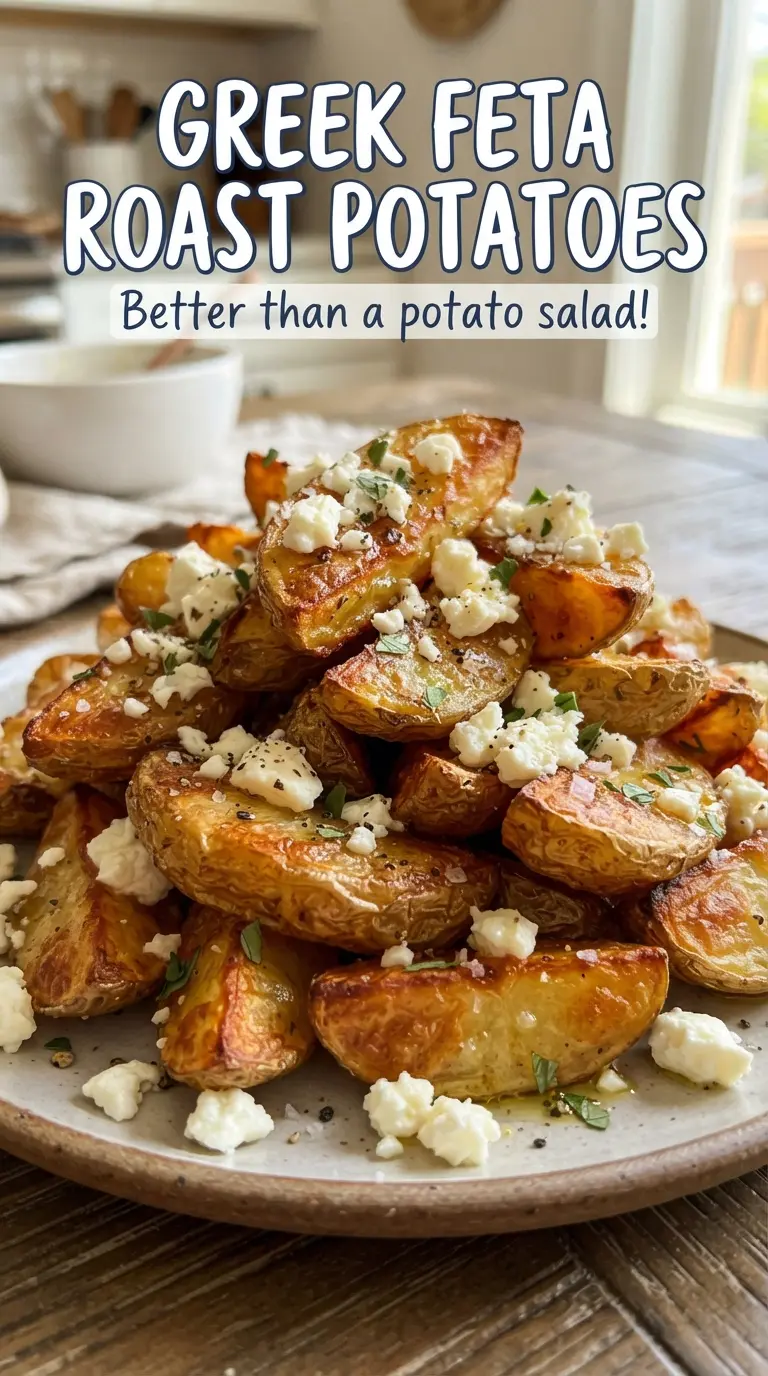
- Yukon gold potatoes — These stay creamy inside while the edges brown nicely. Russets can work if that’s what you have, but they break down more and give a fluffier, less structured result.
- Olive oil — This helps the potatoes blister and carry the oregano across every wedge. A good everyday olive oil is fine here; save the fancy finishing oil for the table.
- Lemon juice — Fresh lemon gives the potatoes their sharp, clean finish and keeps the dish from tasting flat. Bottled juice can work in a pinch, but the flavor comes across harsher and less bright.
- Chicken broth — The broth adds seasoning and gives the potatoes a head start on tenderness before the pan dries out. Vegetable broth works if you want a vegetarian version, and the result stays balanced as long as it’s not overly salty.
- Feta — Add it at the end so it stays crumbly and creamy instead of melting into the pan. Buy block feta if you can and crumble it yourself; the flavor and texture are better than the pre-crumbled kind.
Getting the Pan from Saucy to Crisp
Coating the Potatoes Evenly
Toss the wedges with the oil, lemon, broth, garlic, oregano, salt, and pepper right in the roasting pan so every cut surface gets seasoned. You want the potatoes glossy, not submerged. If the pan looks crowded or the liquid pools deep around the potatoes, use a larger dish; too much overlap means steaming instead of browning.
Roasting Until the Liquid Is Gone
Slide the pan into a fully heated 425F oven and leave the potatoes alone long enough to build color. Around the halfway point, turn them so the lower sides can catch up with the top. The goal is for the liquid to disappear and the wedges to look golden at the edges, with the bottom of the pan showing browned bits instead of a puddle.
Finishing with Feta and Herbs
Scatter the feta over the potatoes as soon as they come out of the oven, while the heat is still strong enough to soften it slightly. Add the dill or parsley last so it stays fresh and green. If you add the herbs too early, they darken and lose that clean, bright finish that makes the dish taste finished.
How to Adjust These Potatoes Without Losing the Greek Character
Vegetarian Version
Swap the chicken broth for vegetable broth. You’ll keep the same roasting method and almost the same depth of seasoning, but the final flavor will be a little cleaner and less savory. Use a broth that tastes good on its own, since bland vegetable stock disappears in the oven.
Dairy-Free Finish
Leave off the feta and finish with a little extra lemon zest, chopped herbs, and a drizzle of olive oil. You won’t get the salty creaminess that feta brings, but the potatoes will still taste bright and distinctly Greek-style. A few sliced Kalamata olives added at the end can replace some of that briny punch.
Extra Briny, More Salty Finish
Fold in a handful of Kalamata olives during the last 10 minutes of roasting or scatter them over the finished pan. They add a sharper, saltier edge that works well next to the feta. Don’t add them too early or they can turn dull and lose their bite.
Storage and Reheating
- Refrigerator: Store leftovers in an airtight container for up to 4 days. The potatoes soften a little, but the flavor holds up well.
- Freezer: I don’t recommend freezing these. The potato texture turns mealy and the feta loses its fresh finish.
- Reheating: Reheat on a sheet pan in a 400F oven until the edges crisp back up. The microwave will heat them, but it also turns the wedges soft and gives up the texture you worked for.
Answers to the Questions Worth Asking
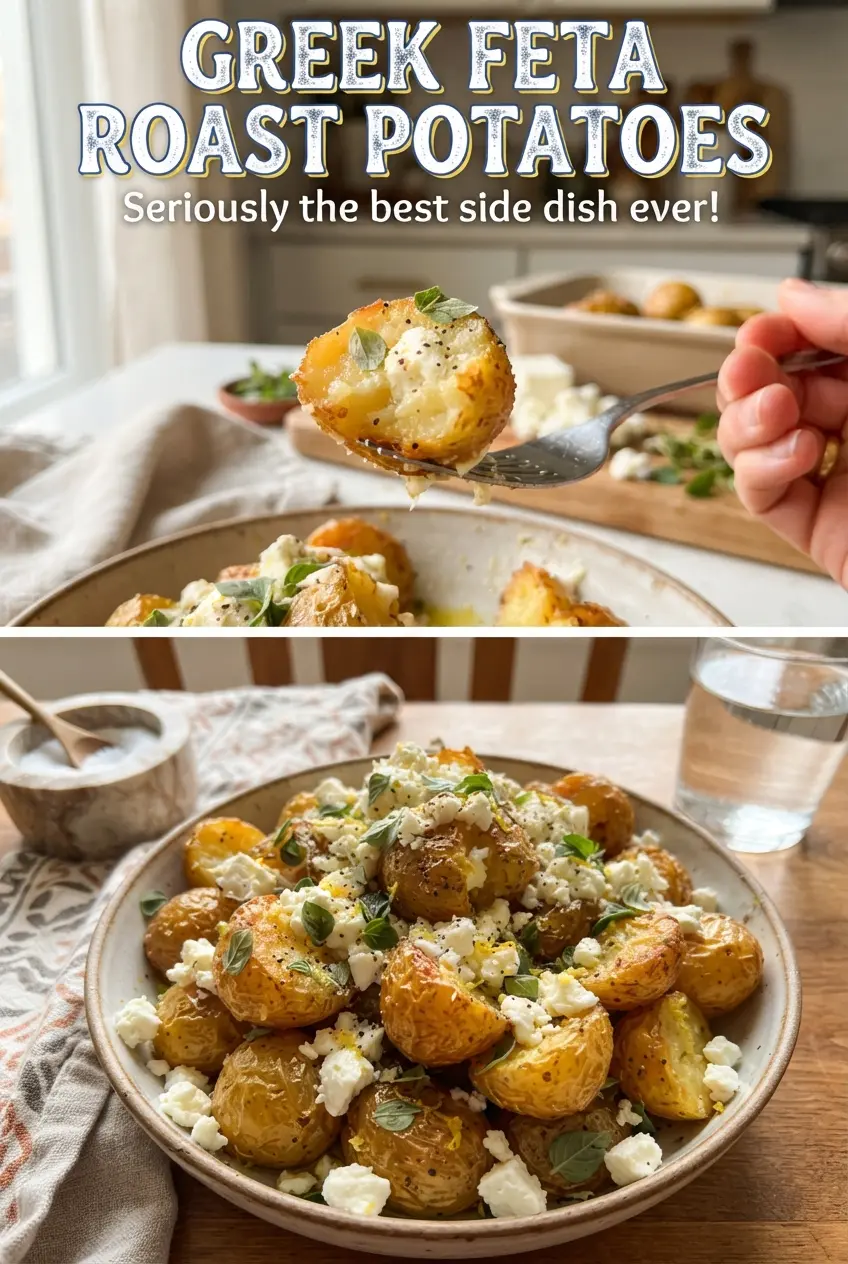
Greek Feta Roast Potatoes
Ingredients
Equipment
Method
- Preheat the oven to 425F until fully heated, then set a roasting pan ready for the wedges. Visual cue: the oven indicator should show it has reached 425F.
- In a roasting pan, toss the potato wedges with olive oil, lemon juice, chicken broth, minced garlic, dried oregano, salt, and black pepper until evenly coated. Visual cue: the wedges should look glossy and speckled with seasoning.
- Spread the potatoes in a single layer in the pan so the cut sides have space to crisp. Visual cue: you should be able to see individual wedges without heavy overlap.
- Roast for 45-50 minutes at 425F. Visual cue: after about halfway, the edges start to pull away slightly and turn deeper golden.
- Flip the potatoes halfway through roasting so both sides crisp evenly, then continue roasting until the liquid is absorbed and the edges are crispy and golden. Visual cue: the pan should look drier and the wedges should be golden with crisp edges.
- Top the hot potatoes with crumbled feta and chopped fresh dill or parsley. Visual cue: feta should sit on top and soften slightly from the heat.
- Serve hot. Visual cue: the wedges should be steaming and the feta should look lightly melted and scattered.