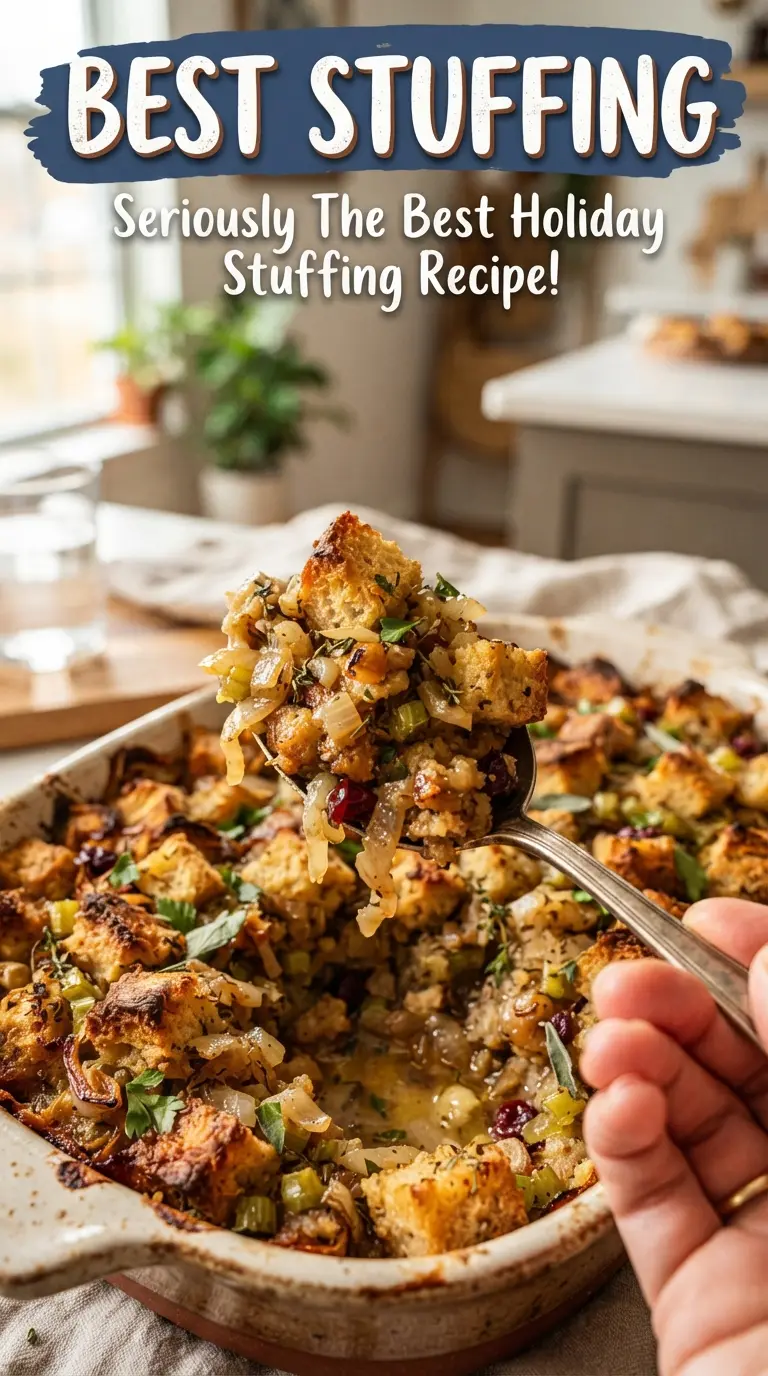
Golden, crisp-topped stuffing with a soft, savory center earns its place on the table fast. The top turns deeply browned and a little craggy in the oven, while the middle stays moist and fluffy instead of collapsing into a wet bread pudding. That contrast is the whole game here, and it’s what keeps people going back for a second scoop.
This version works because the bread is dried first, so it can drink in the broth without turning heavy. Butter softens the onion and celery until they melt into the mix, and the herbs bloom in the fat before the liquid goes in, which gives the stuffing a cleaner, fuller flavor. The eggs help set everything just enough to slice and serve without making it dense.
Below, I’ll walk through the one detail that keeps stuffing from turning gummy, plus the small ingredient choices that make the difference between decent and worth repeating.
The bread stayed fluffy instead of soggy, and the top came out crisp even after I covered it for the first part of baking. The sage and thyme tasted like they were built into every bite.
Save this golden-topped stuffing for the nights when you want fluffy bread, buttery herbs, and a crisp baked top.
The Trick to Stuffing That Stays Fluffy Instead of Gummy
The biggest mistake with stuffing is treating the bread like it can absorb endless liquid without consequence. It can’t. Once the cubes are fully moistened and no dry pockets remain, stop adding broth. If the mixture looks soupy in the bowl, it’ll bake up heavy and pasty, especially under foil where steam has nowhere to go.
Dried bread is what gives you control. Fresh bread collapses fast and turns dense before the center has a chance to set, while dried cubes keep their structure and soften gradually in the oven. The eggs help bind the stuffing just enough, but they can’t rescue bread that’s already oversaturated. You want each cube coated and supple, not floating.
What Each Ingredient Is Actually Doing Here
- Crusty white or sourdough bread — This is the backbone. You need a loaf with enough structure to hold broth and still bake into distinct cubes. Soft sandwich bread turns to mush. If you need a swap, use another sturdy country loaf or bakery bread cut and dried the same way.
- Butter — The butter carries the aromatics and coats the bread so the stuffing tastes rich all the way through. Olive oil works in a pinch, but you lose that classic holiday-style depth. Don’t skimp here; the butter is part of the flavor, not just the cooking fat.
- Onion, celery, and garlic — These build the savory base. Cook the onion and celery until soft before adding the garlic so the garlic doesn’t burn and turn sharp. The vegetables should look glossy and tender, not browned.
- Fresh sage, thyme, rosemary, and parsley — Fresh herbs matter here because stuffing has a simple ingredient list and the herbs carry most of the personality. Dried herbs can work, but use less: about one-third the amount, and add them with the butter so they have time to wake up.
- Chicken broth and eggs — The broth hydrates the bread, and the eggs help the stuffing set in the oven. Use a broth you’d actually taste on its own; bland broth gives you bland stuffing. If you need a lighter version, low-sodium broth is fine as long as you season carefully.
Building the Pan So the Top Browns and the Center Stays Tender
Softening the aromatics
Start with the onion and celery in melted butter and cook them until they’re soft and translucent with just a little edge of color. That takes 8 to 10 minutes, and it matters because undercooked celery stays crunchy in the final dish. Add the garlic and herbs near the end so they bloom in the fat without losing their scent to the air.
Coating the bread without crushing it
Use a large bowl and fold the bread cubes gently into the vegetable mixture. You want the cubes coated, not mashed. If you stir too hard, the dried bread starts breaking before it has a chance to soften, and the final texture turns uneven. Parsley goes in here for brightness and color.
Moistening at the right pace
Whisk the broth, eggs, salt, and pepper together before pouring it over the bread. Add it gradually and toss after each pour so you can stop when the cubes are evenly moistened. The mixture should look plush and hydrated, with no puddles at the bottom of the bowl. If you can squeeze a handful and it holds together without dripping, you’re there.
Baking in two stages
Cover the dish first so the center cooks through gently, then uncover it to brown the top. That second bake is what gives you the crisp, craggy surface people reach for first. If you uncover it too early, the top can dry out before the middle finishes; too late, and you lose the contrast.
Three Small Changes That Make This Stuffing Work for Different Tables
Make it vegetarian
Swap the chicken broth for a good vegetable broth. That’s the only change you need, but use one with real body or the stuffing can taste flat. Vegetarian stuffing often benefits from a little extra thyme and parsley to replace the savory depth the chicken stock would have brought.
Go dairy-free
Use a plant-based butter that melts cleanly and tastes neutral. You’ll still get a good result, but the finished stuffing will taste a little less rich and round than the butter version. Don’t use a strongly flavored oil unless you want that flavor showing up in the final dish.
Add sausage for a heartier side
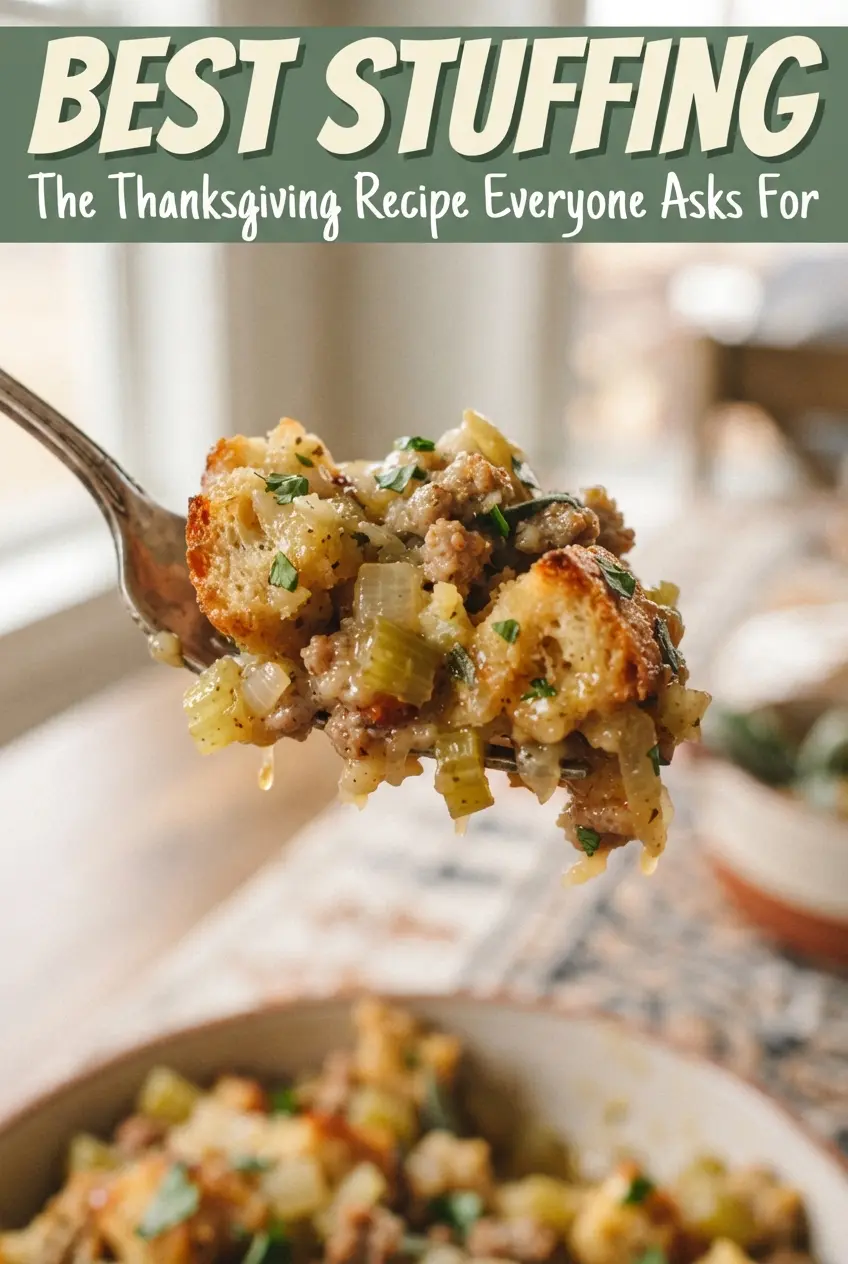
Brown 1 pound of cooked sausage and fold it in with the bread cubes. The sausage adds salt, fat, and a deeper savory note, so you may want to reduce the added salt slightly. This version turns the stuffing into something closer to a full side dish and holds up especially well on a buffet.
Make-ahead for a busy day
You can assemble the stuffing a few hours ahead, cover it, and refrigerate it before baking. Let the dish sit at room temperature while the oven preheats so it doesn’t go into the oven ice-cold. Cold stuffing takes longer to heat through, and the top can darken before the center is ready.
Storage and Reheating
- Refrigerator: Store leftovers in an airtight container for up to 4 days. The top softens as it sits, but the flavor stays solid.
- Freezer: It freezes well in portions. Wrap tightly and freeze for up to 2 months, then thaw overnight in the refrigerator before reheating.
- Reheating: Reheat covered at 325F until hot, then uncover for a few minutes if you want the top to crisp again. The mistake most people make is blasting it in the microwave, which makes the bread rubbery instead of warm and tender.
Questions I Get Asked About This Recipe
Best Stuffing
Ingredients
Equipment
Method
- Preheat the oven to 350°F, then butter a 9x13-inch baking dish so the stuffing doesn’t stick.
- Melt the butter, then cook the onion and celery for 8-10 minutes until soft and translucent, stirring so they don’t brown.
- Add the garlic, fresh sage, fresh thyme leaves, and fresh rosemary, and cook for 1 minute until fragrant and glossy.
- Toss the bread cubes with the vegetable mixture and the fresh parsley in a large bowl until the herbs are evenly distributed.
- Whisk the chicken broth, eggs, salt, and black pepper, then pour over the bread and toss until every cube is evenly moistened.
- Spread the mixture into the buttered baking dish in an even layer, then cover tightly with foil to trap moisture during the first bake.
- Bake for 30 minutes at 350°F, then uncover and bake another 20-25 minutes until the top is golden and crisp with browned edges.