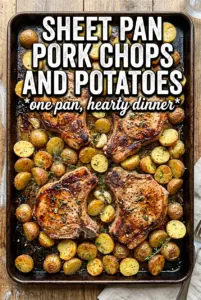
Golden pork chops and caramelized potatoes on one pan earn a permanent spot in the dinner rotation because they come out with real contrast: crisp edges on the potatoes, juicy meat in the center, and green beans that still have a little bite. The garlic butter slips into the pan at the end and picks up every bit of savory browned flavor, which is what keeps this from tasting like a basic sheet pan dinner.
The part that matters most is the split cooking method. The potatoes get a head start so they have time to brown before the pork goes in, and the chops get a quick sear first so they don’t spend the whole roast drying out in the oven. That little extra step is what gives you pork with a proper crust instead of pale, steamed-looking meat.
Below, I’ve included the timing cue that keeps the pork tender, plus a few smart swaps if you want to change up the vegetables or make this work with what’s already in your kitchen.
The potatoes got those crispy browned edges I was hoping for, and the pork stayed juicy at exactly 145°F. The garlic butter over the green beans was such a good touch that I didn’t even miss having a separate side dish.
Save these sheet pan pork chops and potatoes for the nights when you want crispy potatoes, juicy pork, and one pan to clean.
The Trick to Keeping Pork Chops Juicy While the Potatoes Finish
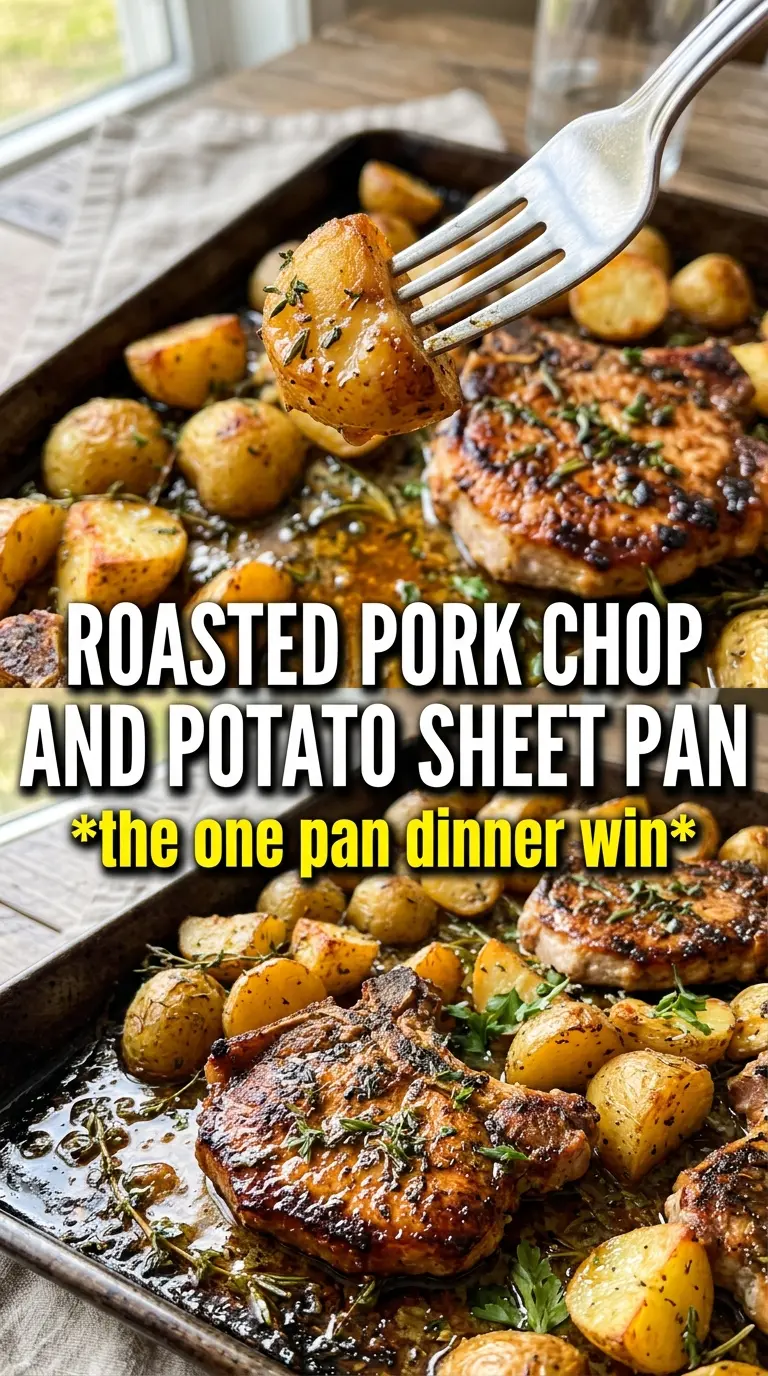
Bone-in pork chops are forgiving, but only if you treat them like two separate jobs: build flavor on the outside, then stop cooking at the right moment. The quick skillet sear gives you color and a little crust before the chops go into the oven, which matters because pork chops can look done on the outside before the center has actually reached temperature. If you skip that sear and leave them in the oven the whole time, the meat tends to dry out before the potatoes are browned enough.
The other key is the oven timing. The potatoes need that 15-minute head start because baby potatoes take longer to caramelize than pork chops take to cook through. Once the chops are in, the oven does the rest of the work gently, and the pork is ready when it hits 145°F and still has a little spring when you press the center.
- Bone-in pork chops — The bone helps the chops stay juicier and gives the meat a little more margin in the oven. Boneless chops work, but they cook faster and dry out more easily, so start checking them several minutes early.
- Baby potatoes — These hold their shape well and brown at the cut edges. Russets turn fluffy and can break down more, while Yukon Golds give you a creamier middle with good browning.
- Green beans — They cook fast enough to join late without turning mushy. If you use broccoli instead, add it a bit earlier so the stems have time to soften.
- Smoked paprika — This adds depth to the pork without needing a long marinade. Regular paprika works in a pinch, but you’ll lose that gentle smoky edge that makes the dish taste fuller.
What Each Ingredient Is Actually Doing in This Recipe
- Primary ingredient (the star) — Quality matters most. Choose the best you can find.
- Cooking medium (oil, butter, or broth) — This carries flavors and prevents dryness.
- Seasonings (salt, pepper, spices, herbs) — Layer flavors so nothing overpowers. Build depth gradually.
- Aromatics (garlic, onion, herbs) — Cook with fat to bloom flavors. Become the foundation.
- Supporting ingredients — Complement the main ingredient without overpowering it.
- Sauce or liquid (if applicable) — Brings flavors together. Balance richness with acid.
- Acid (lemon, vinegar, wine, or other) — Brightens and prevents flat-tasting results.
- Final finish (garnish, glaze, or sauce) — Prevents one-dimensional taste and adds visual appeal.
Building the Pan So Everything Finishes Together
Getting the Potatoes Started First
Toss the halved potatoes with oil, rosemary, thyme, garlic powder, salt, and pepper, then spread them cut-side down where possible. That contact with the pan is what gives you browning instead of soft, pale potatoes. Roast them alone for the first 15 minutes so the cut sides can start to caramelize before the pork and green beans join in. If the potatoes are crowded or piled up, they’ll steam instead of roast, so use the biggest sheet pan you have.
Searing the Pork for Color and Flavor
Season the chops with smoked paprika, salt, and pepper, then sear them in a hot skillet for about 2 minutes per side. You’re not cooking them through here; you’re building a crust and giving the meat a head start. If the skillet isn’t hot enough, the chops will stick and gray instead of brown, so wait until the oil shimmers before they hit the pan. Pull them off as soon as the surface is deeply colored.
Finishing in the Oven Without Overcooking
Push the potatoes toward the edges, set the pork chops in the center, and scatter the green beans around them. Stir the garlic into the melted butter and drizzle it over everything so the flavor runs across the whole pan while it roasts. The pork is done when it reaches 145°F in the thickest part and the juices look clear, not pink. If the chops are done before the potatoes look fully browned, take the pork out and let the potatoes keep roasting for a few minutes on their own.
Swap in a different vegetable
Broccoli, asparagus, or zucchini can stand in for the green beans, but each one needs a different timing. Broccoli needs a little longer to soften at the stalks, asparagus needs less time, and zucchini should go in near the end so it doesn’t collapse into the pan juices.
Make it dairy-free
Skip the butter and finish with an extra tablespoon of olive oil plus a squeeze of lemon over the hot pan. You’ll lose a little richness, but the dish still tastes bright and savory because the garlic and herbs carry the flavor.
Use boneless pork chops
Boneless chops work well if that’s what you have, but they need less time in the oven and can dry out faster. Start checking them several minutes early and pull them as soon as they hit 145°F, since they don’t have the bone to buffer the heat.
Make the potatoes extra crisp
For a deeper crust, parboil the potatoes for 5 minutes, drain them well, then rough them up in the pot before seasoning. That gives the cut sides a little more surface texture, which browns faster in the oven.
Storage and Reheating
- Refrigerator: Store leftovers in an airtight container for up to 4 days. The potatoes soften a little, but the flavor holds up well.
- Freezer: The pork chops freeze fine, but the potatoes and green beans lose their best texture after thawing. If you freeze it, wrap the chops separately and treat the vegetables as a bonus rather than the main event.
- Reheating: Warm everything in a 325°F oven, covered loosely with foil, until the pork is hot and the potatoes are steaming again. The common mistake is blasting the pan in a hot oven or microwave, which drives the pork past 145°F and makes the potatoes dry.
Answers to the Questions Worth Asking
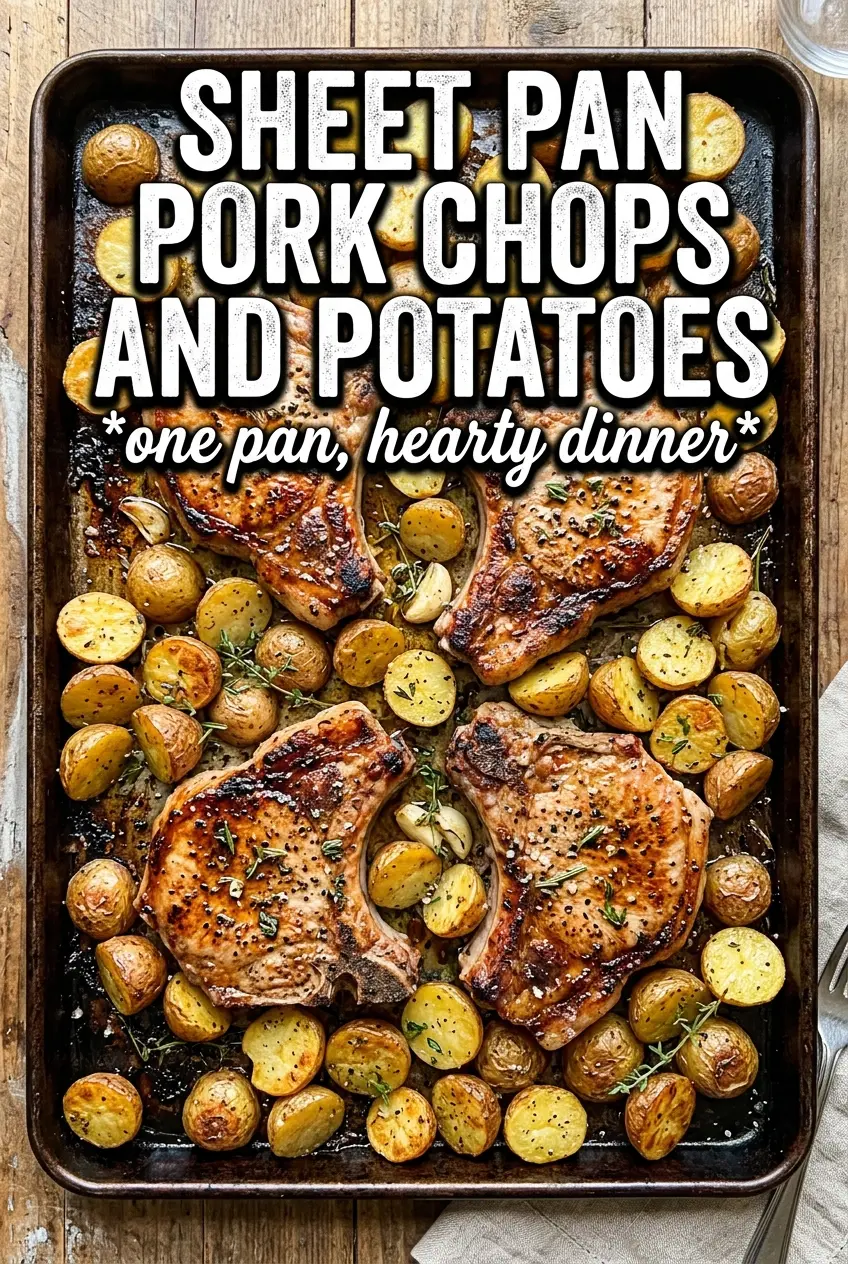
Sheet Pan Pork Chops And Potatoes
Ingredients
Equipment
Method
- Preheat the oven to 425F and line a large rimmed baking sheet with parchment, leaving enough space for potatoes to spread out in a single layer.
- Toss the baby potatoes with 2 tablespoons olive oil, dried rosemary, dried thyme, garlic powder, salt and pepper, then spread them on the pan and flatten into an even layer with visible browned edges potential.
- Roast the potatoes for 15 minutes, until they look slightly dry on the surface and the edges start to turn golden.
- Season the bone-in pork chops with smoked paprika, salt, and pepper so the surface is evenly speckled.
- Heat a hot skillet and sear the pork chops in the remaining olive oil for 2 minutes per side, until you see deep golden-brown crusts forming.
- Push the potatoes to the edges, then place the pork chops in the center and tuck the green beans around them so everything stays in contact with hot pan surfaces.
- Mix the minced garlic with the melted butter, then drizzle over the pork chops, potatoes, and green beans so you see buttery pools around the center.
- Roast for 18-20 more minutes at 425F until the pork is cooked through to 145F, with potatoes visibly caramelized and pork no longer pink at the thickest point.
- Garnish with fresh parsley right before serving so the top looks fresh green against the browned pan contents.