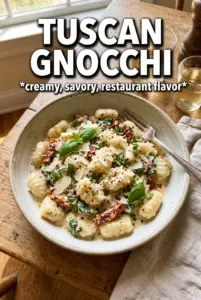
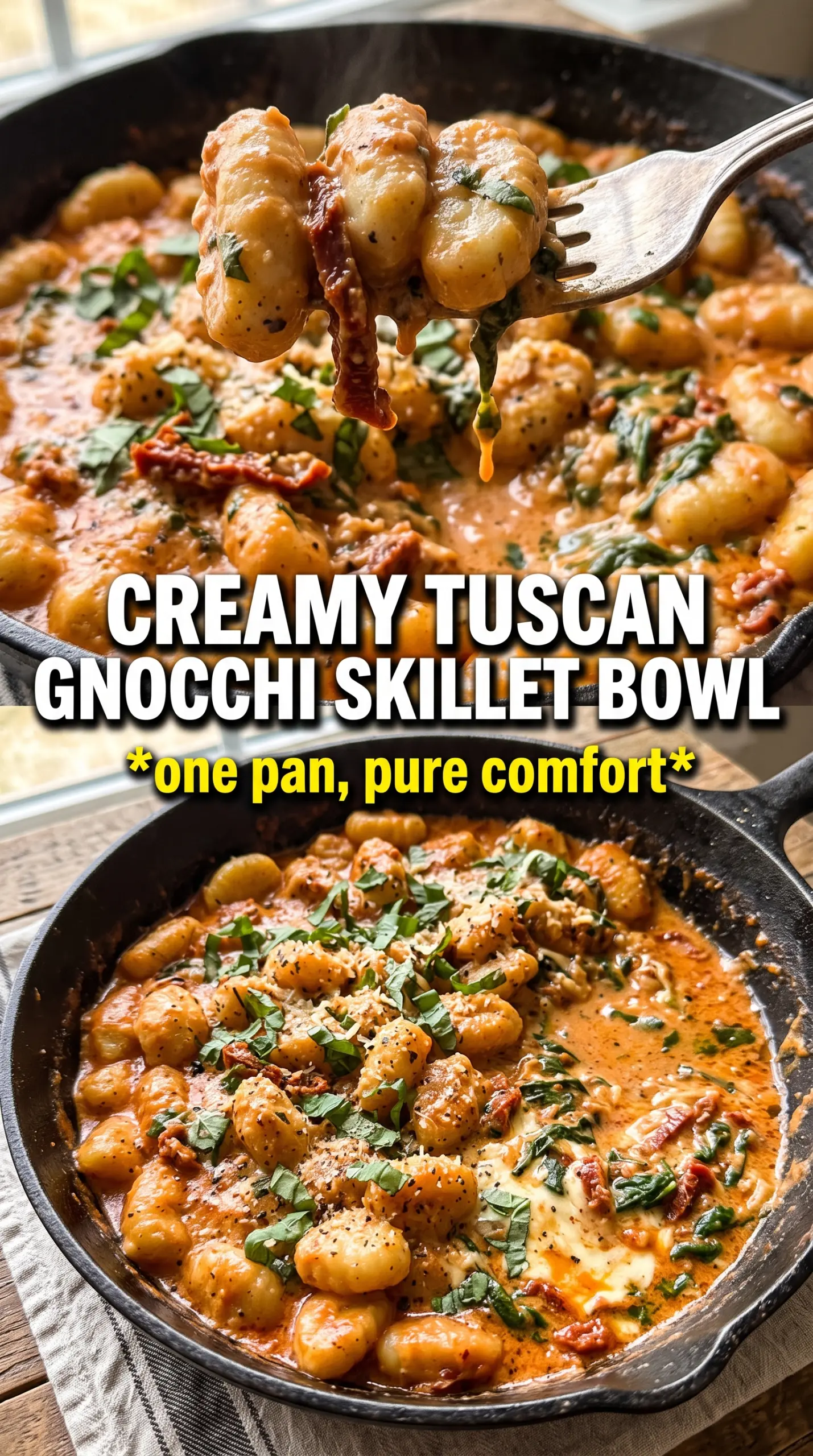
Golden-seared gnocchi coated in a creamy sun-dried tomato sauce has a way of disappearing fast, especially when the sausage brings enough savoriness to keep every bite interesting. The spinach softens into the sauce without turning it muddy, the parmesan melts in just enough to thicken everything, and the basil at the end keeps the whole skillet from feeling heavy.
What makes this version work is the order. Browning the sausage first gives you a flavorful base, and using the oil from the sun-dried tomatoes to bloom the garlic pulls more out of that jar than just the tomatoes themselves. The cream and broth simmer long enough to come together before the parmesan goes in, which helps the sauce stay smooth instead of grainy.
Below, I’ve included the little timing details that matter most, plus a few smart swaps if you need to work with what’s already in your kitchen. If you’ve ever had gnocchi turn gummy or a cream sauce break on you, the notes in this post will help keep both of those problems off your stove.
The sauce came together silky and the gnocchi held its shape instead of getting mushy. I loved that the spinach wilted in right at the end and the whole skillet tasted like it simmered for much longer than 20 minutes.
Save this Tuscan Gnocchi for the nights when you want a creamy skillet dinner with crispy sausage, tender gnocchi, and a basil finish.
The Part That Keeps Gnocchi Tender Instead of Sticky
Gnocchi can go wrong fast once it’s been boiled, especially if it sits around waiting for the sauce. The trick here is to move it from the package to the skillet at the point where the sauce is already ready and lightly thickened. That way the gnocchi finishes in the sauce instead of soaking up liquid on its own and turning dense.
The other thing worth watching is the heat under the cream. A hard boil is what turns a smooth sauce grainy or greasy. Keep it at a steady simmer, then add the parmesan off the hottest part of the burner so it melts in without seizing.
- Italian sausage — This is the main source of salt, fat, and seasoning. Mild sausage gives you a softer, more kid-friendly result; hot sausage adds more punch without changing the method.
- Sun-dried tomatoes in oil — The oil is part of the recipe, not a throwaway. It carries flavor into the garlic and helps start the sauce with a rich, tomato-forward base. If yours are dry-packed, soak them in hot water for 10 minutes and use olive oil in the pan.
- Heavy cream — This is what gives the sauce body and keeps it from breaking as easily. Half-and-half will work in a pinch, but the sauce will be thinner and more likely to split if you boil it hard.
- Parmesan — Freshly grated parmesan melts cleaner than the pre-shredded kind, which often contains anti-caking agents. If you only have the bagged stuff, add it slowly and keep the heat low.
- Baby spinach — Add it at the end. It only needs a minute or two to wilt, and if you cook it longer it loses its bright color and disappears into the sauce.
What Each Ingredient Is Actually Doing in This Recipe
- Primary ingredient (the star) — Quality matters most. Choose the best you can find.
- Cooking medium (oil, butter, or broth) — This carries flavors and prevents dryness.
- Seasonings (salt, pepper, spices, herbs) — Layer flavors so nothing overpowers. Build depth gradually.
- Aromatics (garlic, onion, herbs) — Cook with fat to bloom flavors. Become the foundation.
- Supporting ingredients — Complement the main ingredient without overpowering it.
- Sauce or liquid (if applicable) — Brings flavors together. Balance richness with acid.
- Acid (lemon, vinegar, wine, or other) — Brightens and prevents flat-tasting results.
- Final finish (garnish, glaze, or sauce) — Prevents one-dimensional taste and adds visual appeal.
Building the Skillet in the Right Order
Brown the sausage first
Cook the sausage in a large skillet over medium-high heat until it’s deeply browned and no pink remains, breaking it into crumbles as it cooks. You want some color on the meat, not just gray bits in a pan, because those browned edges season the whole sauce. If there’s a lot of fat left after draining, leave just a thin film in the pan so the garlic and tomatoes don’t fry in grease.
Wake up the tomatoes and garlic
Add the chopped sun-dried tomatoes and garlic to the oil left in the skillet and stir for about 2 minutes, just until the garlic smells fragrant. Don’t let it brown; garlic that goes too far turns bitter and can overpower the cream. This is the point where the pan should smell sweet, savory, and a little tangy all at once.
Let the sauce thicken before the cheese goes in
Pour in the cream, broth, Italian seasoning, and red pepper flakes, then simmer until the sauce lightly coats the back of a spoon, about 4 minutes. That short reduction matters because it gives the parmesan something to emulsify into instead of floating in thin liquid. Stir in the parmesan off the hottest part of the burner, and keep stirring until the sauce looks smooth and glossy.
Finish with gnocchi, spinach, and basil
Cook the gnocchi according to the package directions, then add it straight into the sauce so it can pick up flavor immediately. Return the sausage, add the spinach, and toss just until the leaves collapse and the gnocchi is coated. Season at the end with salt and pepper, then finish with fresh basil while the skillet is still hot enough to release its aroma.
Ways to Change the Dish Without Losing What Makes It Good
Dairy-free version with less richness
Swap the heavy cream for full-fat canned coconut milk and use a dairy-free parmesan-style topping if you want. The sauce will be a little sweeter and less sharp, so the red pepper flakes and sun-dried tomatoes matter more for balance. Keep the heat low because coconut milk can separate if it boils hard.
Gluten-free version
Use a gluten-free gnocchi and check the sausage label, since some brands use fillers that contain wheat. The sauce itself is naturally gluten-free, so the texture change mostly comes from the gnocchi brand you choose. Cook the gnocchi carefully; gluten-free versions can soften faster than potato gnocchi made with wheat flour.
Vegetarian skillet
Skip the sausage and add sautéed mushrooms for a deeper, meaty texture. You’ll lose some salt and seasoning from the sausage, so add an extra pinch of Italian seasoning and taste the sauce before serving. A splash of soy sauce or tamari can help replace the savory depth if the skillet tastes flat.
Storage and Reheating
- Refrigerator: Store in an airtight container for up to 3 days. The sauce will thicken and the gnocchi will soften a bit, but the flavor holds well.
- Freezer: I don’t recommend freezing this one. Cream sauces and gnocchi both tend to turn grainy or mealy after thawing.
- Reheating: Warm gently on the stove over low heat with a splash of broth or cream to loosen the sauce. The common mistake is blasting it in the microwave until the sauce splits and the gnocchi turns tough.
Answers to the Questions Worth Asking
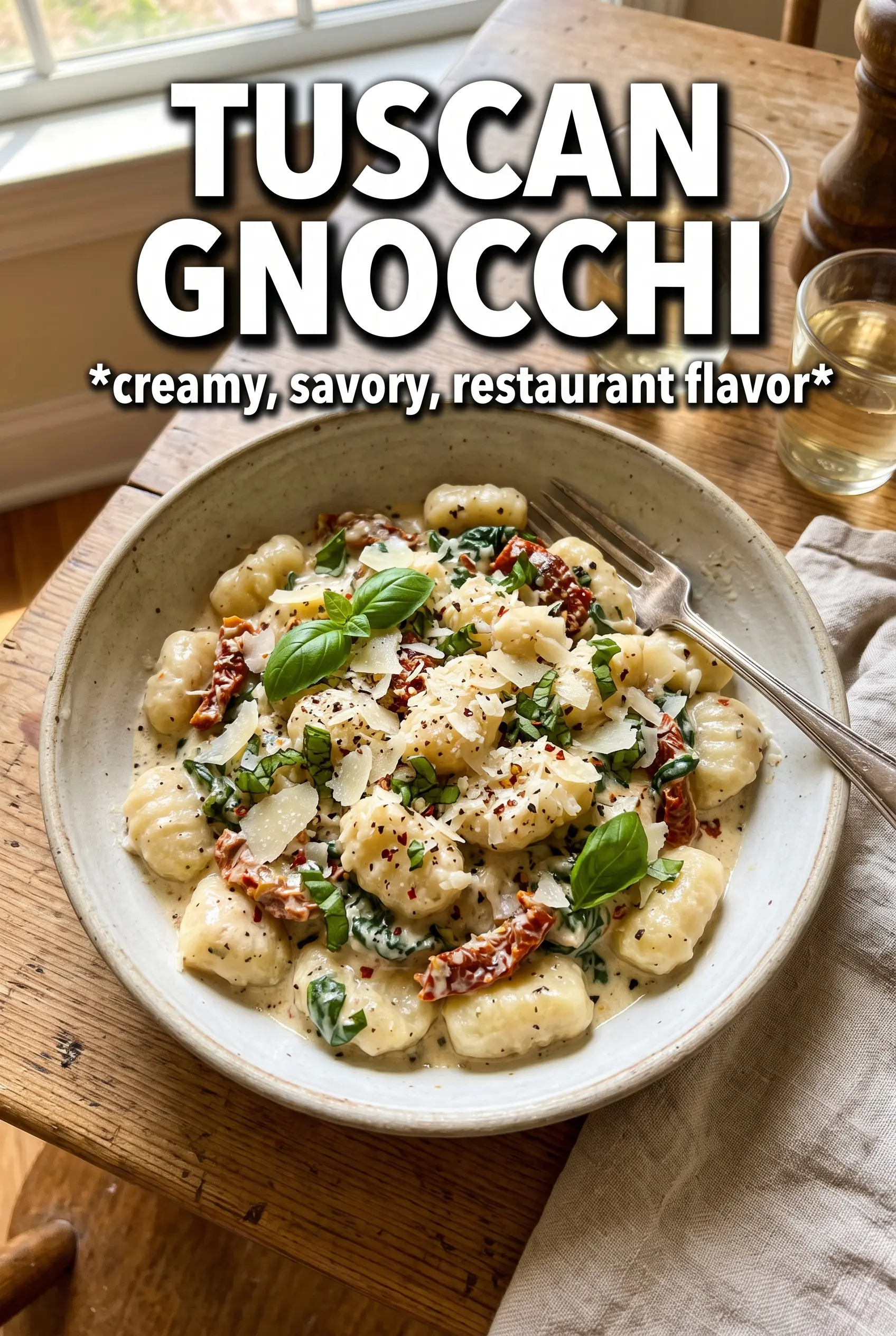
Tuscan Gnocchi
Ingredients
Equipment
Method
- Heat a large skillet over medium-high heat and brown the Italian sausage until cooked through and browned, about 8-10 minutes. Drain and set aside.
- In the same skillet, sauté the garlic and chopped sun-dried tomatoes in the sun-dried tomato oil for 2 minutes, stirring until fragrant. Keep the heat at medium.
- Add the heavy cream, chicken broth, Italian seasoning, and red pepper flakes, then simmer for 4 minutes. Stir often so the sauce thickens slightly and looks glossy.
- Stir in the grated parmesan until melted and smooth throughout. Simmer for 1 additional minute if needed for full melt.
- Cook the potato gnocchi according to package directions, then add the gnocchi directly into the sauce. Toss gently so the dumplings are coated.
- Return the sausage to the skillet and add the baby spinach, then toss until the spinach wilts, about 1-2 minutes. The sauce should cling to the gnocchi.
- Season with salt and pepper to taste, then top with fresh basil. Serve immediately while the sauce is hot and lightly creamy.