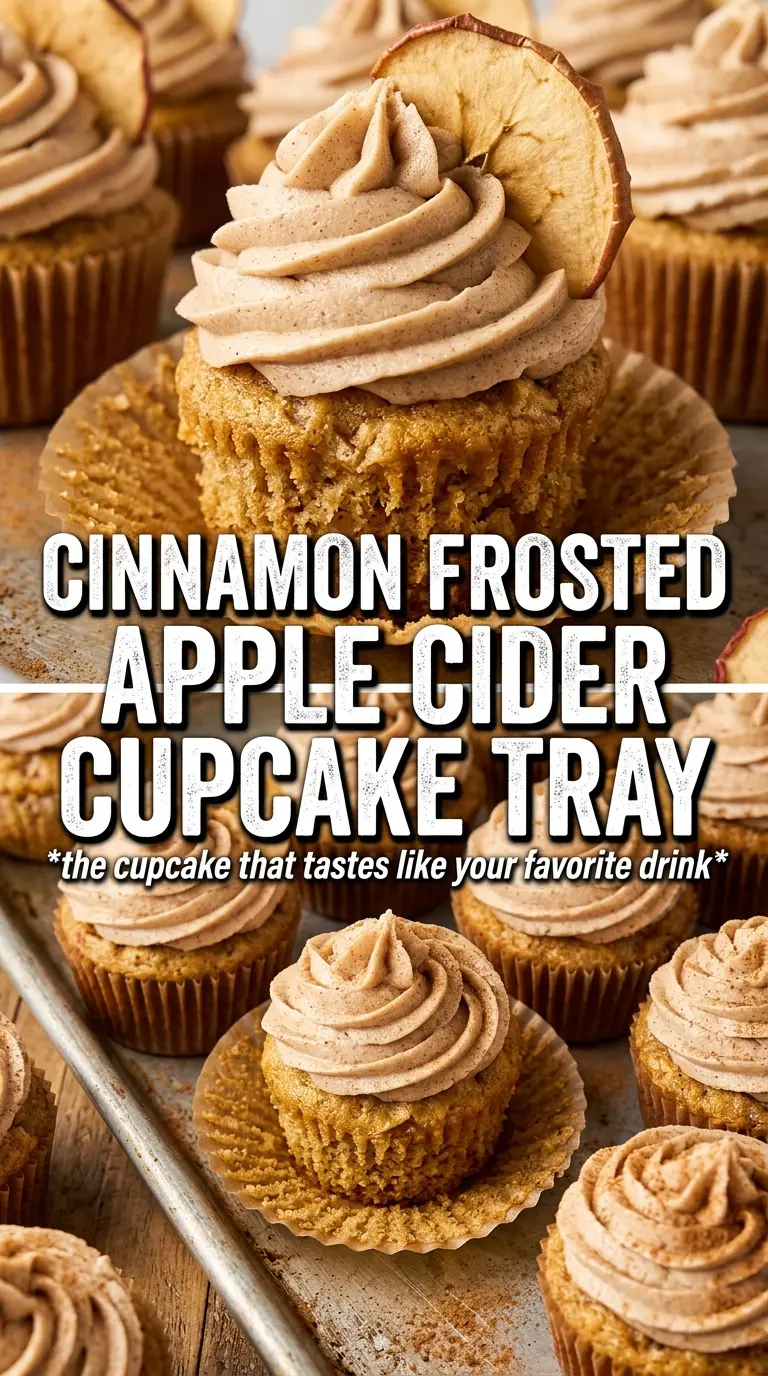
Apple cider cupcakes bake up soft and plush, with a tender crumb that stays moist for days and a cinnamon-spiced flavor that tastes like it came straight out of a bakery case. The reduced cider gives the cake a deeper apple note than plain juice ever could, and the cream cheese frosting keeps each bite balanced instead of cloying. A little caramel drizzle on top turns them into the kind of cupcake people pick up with their eyes before they even take the first bite.
The trick here is reducing the cider first. That step concentrates the flavor and keeps the batter from turning watery, which is a common problem in apple cakes and cupcakes that rely on too much liquid. Brown sugar, sour cream, and a good dose of cinnamon round out the batter, while the frosting uses just enough cider to echo the cake without thinning out the texture. You get apple flavor in every layer, not just from a decorative topping.
Below you’ll find the exact timing for the reduction, the right texture for the frosting, and a few smart swaps if you want to make these without caramel or with a slightly different finish.
The cupcakes came out light and fluffy, and the reduced cider made the apple flavor taste fresh instead of artificial. I also loved that the frosting held its shape for piping after chilling for just a few minutes.
These apple cider cupcakes get their bold flavor from reduced cider, soft spice, and that cream cheese frosting swirl on top.
The Secret to Keeping the Apple Flavor Strong Without a Wet Crumb
Most apple cider cupcakes lose their personality because the batter is carrying too much liquid. The cider needs to be reduced first so the apple flavor survives the oven instead of disappearing into a bland, damp cake. That one step also keeps the crumb light enough to hold a swirl of frosting without sinking in the center.
Sour cream does important work here too. It adds tenderness and a little fat, which keeps the cupcakes soft after they cool. If you swap it for plain yogurt, the texture still works, but the flavor will be slightly tangier and a touch less rich. The goal is a batter that looks thick and scoopable, not loose like cake batter from a box.
- Reduced apple cider — This is the flavor base. Start with more cider than the recipe needs, then cook it down until it’s syrupy and measured. If you skip the reduction, the cupcakes taste flatter and the crumb can turn too loose.
- Brown sugar — It gives the cake a deeper caramel note that white sugar can’t match. Light or dark brown sugar both work; dark brown sugar makes the spice taste a little warmer and fuller.
- Sour cream — This keeps the cupcakes moist without making them heavy. Plain full-fat Greek yogurt is the best substitute, and it should be used in the same amount.
- Cream cheese frosting — The tang cuts through the sweetness and keeps the caramel drizzle from feeling over the top. Use full-fat cream cheese for the smoothest result; low-fat versions can turn loose and grainy.
What Each Ingredient Is Actually Doing in This Recipe
- Primary ingredient (the star) — Quality matters most. Choose the best you can find.
- Cooking medium (oil, butter, or broth) — This carries flavors and prevents dryness.
- Seasonings (salt, pepper, spices, herbs) — Layer flavors so nothing overpowers. Build depth gradually.
- Aromatics (garlic, onion, herbs) — Cook with fat to bloom flavors. Become the foundation.
- Supporting ingredients — Complement the main ingredient without overpowering it.
- Sauce or liquid (if applicable) — Brings flavors together. Balance richness with acid.
- Acid (lemon, vinegar, wine, or other) — Brightens and prevents flat-tasting results.
- Final finish (garnish, glaze, or sauce) — Prevents one-dimensional taste and adds visual appeal.
Building the Batter So the Cupcakes Rise Instead of Collapse
Reducing the Cider First
Pour the cider into a small saucepan and cook it down until you have 1/3 cup, then let it cool completely before it goes into the batter. Warm cider can soften the butter too much and change the texture of the cupcakes before they even hit the oven. You want it concentrated, not hot.
Mixing the Base Without Overworking It
Beat the butter and brown sugar until the mixture looks pale and fluffy, then add the eggs one at a time. That gives the cupcakes a lighter crumb and helps the batter hold air. Once the dry ingredients go in, stop mixing as soon as you no longer see streaks of flour. Overmixing at this point is the fastest way to get dense cupcakes.
Filling and Baking for Even Tops
Scoop the batter into lined tins only two-thirds full. That leaves enough room for a dome without spilling over the edges. Bake until the tops spring back when lightly pressed and a toothpick comes out with a few moist crumbs, about 18 to 20 minutes. If the centers sink, they needed another minute or two; if they come out dry, they went too far.
Cooling Before the Frosting
Let the cupcakes cool all the way before piping. Even a little residual heat will melt the cream cheese frosting and make the caramel slide off instead of staying in those pretty ridges. If you’re in a hurry, move the cupcakes to a wire rack after 5 minutes in the pan so they don’t steam from the bottom.
How to Adjust These Cupcakes When You Need a Different Finish
No caramel drizzle
Leave it off and dust the frosted cupcakes with a pinch of cinnamon instead. You’ll lose the sticky-sweet bakery look, but the apple and spice flavors come through more clearly and the cupcakes are easier to serve cleanly.
Dairy-free version
Use a plant-based butter and swap the sour cream for a thick dairy-free yogurt. For the frosting, use a dairy-free cream cheese that’s known to hold up for piping; softer brands can turn runny once the cider is added. The flavor stays close, though the frosting will be a little less tangy.
Make them into a loaf cake
Bake the batter in a greased 9×5-inch loaf pan instead of cupcake tins. The baking time will be longer, and the center needs to come out clean before you pull it, but the flavor gets even deeper as the cake bakes more slowly.
Storage and Reheating
- Refrigerator: Store frosted cupcakes in an airtight container for up to 4 days. The frosting stays best when the cupcakes aren’t stacked.
- Freezer: Freeze the unfrosted cupcakes for up to 2 months. Wrap each one tightly, then thaw at room temperature before frosting. Frosted cupcakes can be frozen, but the texture of the cream cheese topping softens after thawing.
- Reheating: Cupcakes don’t need true reheating. Let refrigerated cupcakes sit at room temperature for 20 to 30 minutes so the cake softens and the frosting loses its chill. Microwaving makes the frosting melt and the crumb tight.