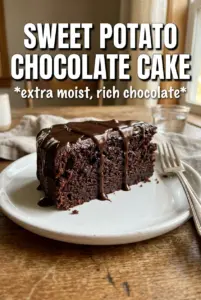
Deep, dark chocolate cake gets a little extra tenderness here from sweet potato puree, and that’s what makes this one stand out. The crumb stays moist for days without turning heavy, and the chocolate flavor still comes through strong instead of getting buried under the sweet potato. Paired with a glossy ganache frosting, each slice feels rich, smooth, and sturdy enough to serve cleanly.
The sweet potato doesn’t make the cake taste earthy or savory. It mostly works behind the scenes, bringing moisture, a soft texture, and a little natural sweetness that lets you keep the cake balanced instead of overly sugary. The buttermilk does its part too, giving the batter a slight tang and helping the cocoa taste deeper and more rounded. That combination is what keeps this cake from eating like a dense chocolate loaf.
Below, I’ll walk through the small details that matter most, especially how to keep the ganache from turning greasy or too loose to frost. If you’ve ever had a chocolate layer cake that baked up dry or finished with a frosting that slid off the sides, this version fixes both problems.
The cake was unbelievably moist, and the ganache whipped up into the fluffiest frosting after cooling. I loved that the sweet potato made the texture softer without changing the chocolate flavor at all.
Save this sweet potato chocolate cake for the days when you want a moist chocolate layer cake with a whipped ganache finish.
The Trick to Keeping Sweet Potato Cake Moist Without Turning It Dense
The biggest mistake with sweet potato cake is treating the puree like a bonus add-in instead of part of the cake’s structure. Too much moisture, or puree that’s watery and loose, can make the crumb heavy and gummy. What you want is a smooth, thick puree that blends cleanly into the batter and disappears into the chocolate base without leaving streaks or pockets.
This recipe works because the cocoa, butter, and sweet potato all pull in the same direction: tender crumb, deep color, and a cake that stays soft after chilling. The batter should look thick but spreadable, not pour-thin. If it looks loose before the flour goes in, your puree probably needs to be thicker next time.
- Sweet potato puree — Use a thick puree, not a mashed filling or watery leftovers. If yours seems loose, spoon it into a fine strainer or cook it down briefly before adding it to the batter.
- Buttermilk — This keeps the cake soft and helps the cocoa bloom. Whole milk won’t give the same lift or tang, but if that’s all you have, add 1 tablespoon lemon juice or vinegar to regular milk and let it sit for 5 minutes.
- Unsweetened cocoa powder — Quality matters here because the chocolate flavor has nowhere to hide. A basic cocoa works, but a darker Dutch-process cocoa will give you a deeper color and a richer finish.
- Dark chocolate chips — These become the ganache base, so use chips that melt smoothly. If you want a silkier frosting, chopped bar chocolate works even better than chips.
What Each Ingredient Is Actually Doing in This Recipe
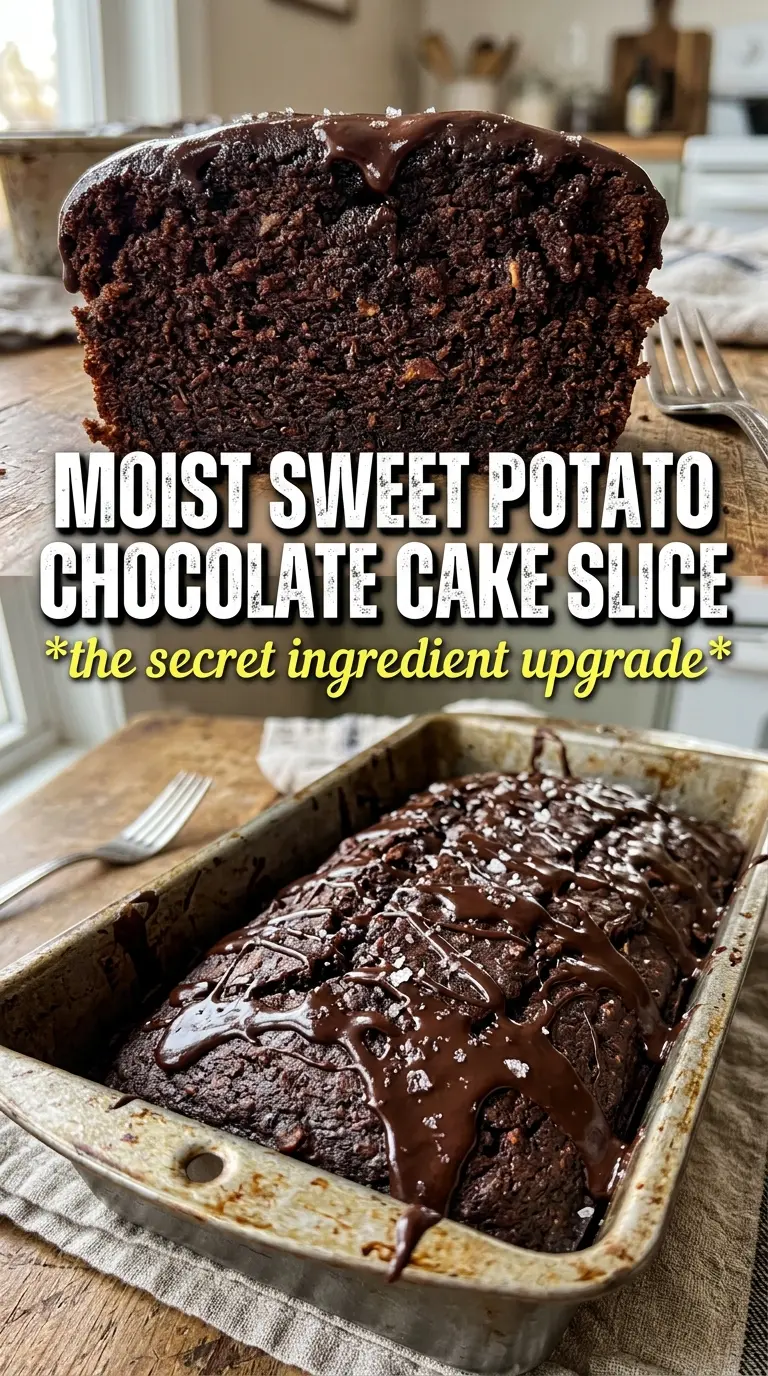
- Primary ingredient (the star) — Quality matters most. Choose the best you can find.
- Cooking medium (oil, butter, or broth) — This carries flavors and prevents dryness.
- Seasonings (salt, pepper, spices, herbs) — Layer flavors so nothing overpowers. Build depth gradually.
- Aromatics (garlic, onion, herbs) — Cook with fat to bloom flavors. Become the foundation.
- Supporting ingredients — Complement the main ingredient without overpowering it.
- Sauce or liquid (if applicable) — Brings flavors together. Balance richness with acid.
- Acid (lemon, vinegar, wine, or other) — Brightens and prevents flat-tasting results.
- Final finish (garnish, glaze, or sauce) — Prevents one-dimensional taste and adds visual appeal.
Building the Batter and Frosting So They Stay Smooth
Start with a Properly Aerated Base
Beat the butter and sugar until the mixture looks pale and fluffy before adding the eggs. That step matters because it traps air, which helps the cake rise instead of baking up heavy. Once the eggs go in, the batter may look slightly curdled before the sweet potato and buttermilk smooth it out. That’s normal, so don’t stop early and assume something went wrong.
Fold the Dry Ingredients Just Until the Flour Disappears
After the flour mixture goes in, mix only until you no longer see dry streaks. Overmixing at this stage turns the cake tighter and tougher, especially with cocoa in the batter. Divide the batter evenly between the pans and tap them lightly on the counter to release any big air pockets before baking.
Watch the Cake, Not the Clock
Start checking at the 35-minute mark. The top should spring back lightly, and a toothpick should come out with a few moist crumbs, not wet batter. If the centers still look shiny and domed, give them a few more minutes, but don’t wait until the cakes pull hard from the pan or they’ll dry out by the time they cool.
Cool the Ganache Before You Whip It
The ganache needs time to cool before you add the powdered sugar and vanilla. If it’s warm, it will stay loose and greasy instead of turning fluffy. You’re looking for a spreadable texture that holds soft peaks, almost like a thick chocolate mousse. If it gets too firm, let it sit at room temperature for a few minutes and stir again rather than trying to warm it quickly.
How to Adapt This Cake When You Need a Different Finish
Dairy-Free Version With the Same Rich Texture
Swap the butter for a plant-based baking stick and replace the buttermilk with unsweetened dairy-free milk mixed with 1 tablespoon vinegar. For the frosting, use full-fat coconut cream in place of heavy cream and expect a slightly softer ganache with a faint coconut note.
Gluten-Free Cake That Still Holds Its Shape
Use a good 1:1 gluten-free flour blend in place of the all-purpose flour. The cake will be a little more delicate, so let it cool completely before moving it, and don’t rush the frosting while the layers are still warm.
Extra-Deep Chocolate Flavor
Use Dutch-process cocoa and dark chocolate with a higher cacao percentage in the frosting. The result is less sweet and more intense, which works well if you like the sweet potato to stay in the background and let the chocolate take center stage.
Storage and Reheating
- Refrigerator: Store covered for up to 4 days. The frosting firms up when chilled, but the cake itself stays moist.
- Freezer: Freeze unfrosted layers tightly wrapped for up to 2 months. Thaw overnight in the refrigerator before frosting. Fully frosted cake can be frozen, but the ganache texture won’t be quite as smooth after thawing.
- Reheating: Let slices sit at room temperature for 20 to 30 minutes before serving. Cold chocolate cake tastes tighter and less fragrant, and the frosting needs that short rest to soften.
Answers to the Questions Worth Asking
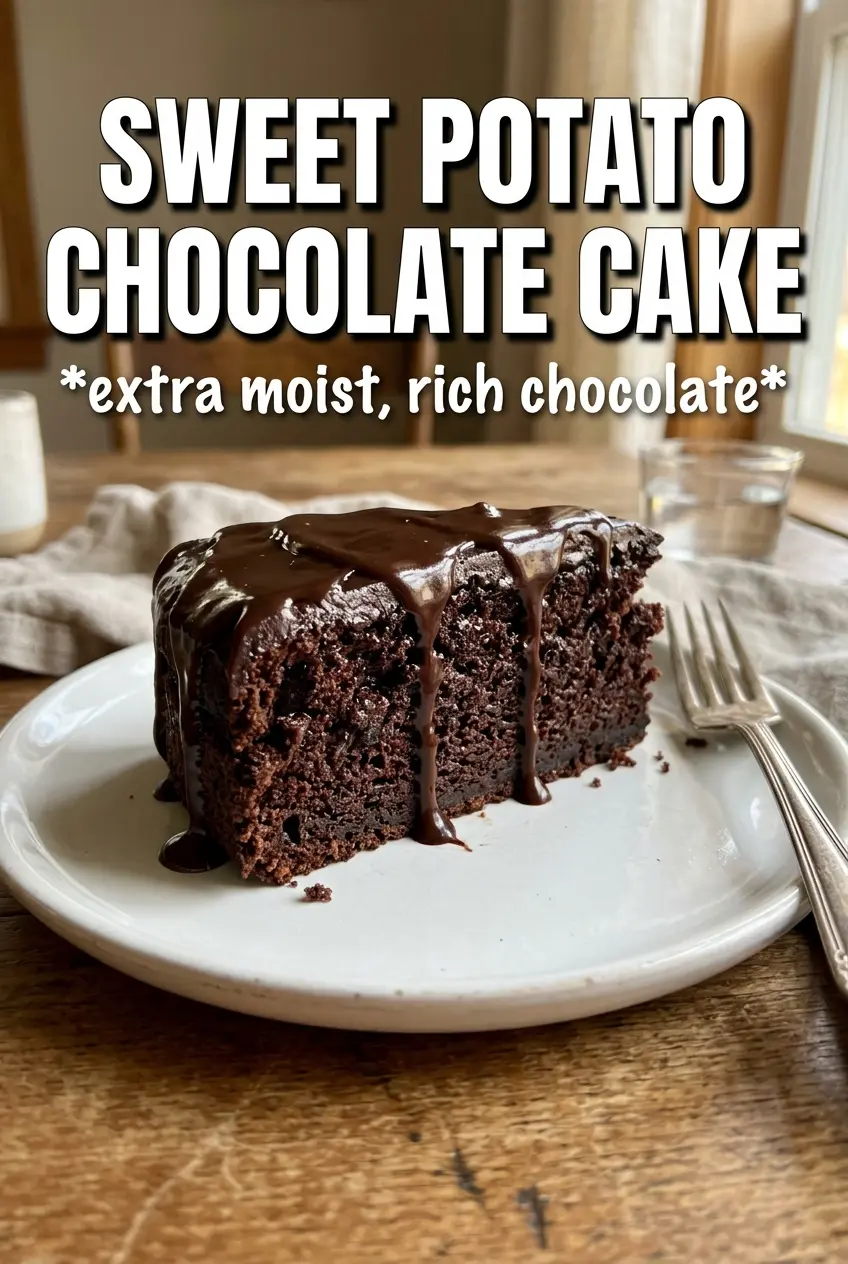
Sweet Potato Chocolate Cake
Ingredients
Equipment
Method
- Preheat the oven to 350F, then grease two 9-inch round pans and set them aside.
- Beat the butter and sugar until combined, then beat in the eggs, sweet potato puree, buttermilk, and vanilla until smooth and thick.
- Fold in the flour, cocoa powder, baking powder, baking soda, cinnamon, and salt just until no dry streaks remain, and stop mixing when the batter looks uniform.
- Divide the batter between the two pans and smooth the tops so they bake evenly.
- Bake for 35-40 minutes at 350F, until the centers spring back lightly and a toothpick comes out with only a few moist crumbs.
- Cool the cake layers completely in the pans before turning them out, so they slice and frost cleanly.
- Heat the heavy cream until steaming, then pour it over the dark chocolate chips and unsalted butter.
- Rest the mixture for 2 minutes, then stir until smooth and glossy.
- Cool the ganache until spreadable, then beat in powdered sugar and vanilla until fluffy and lighter in color with a thicker ribbon-like texture.
- Place one cake layer on a stand and frost between the layers, then spread frosting over the top.
- Frost the sides and finish with an even coating, letting the texture settle for a neat finish.