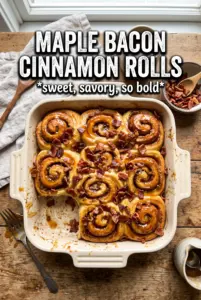
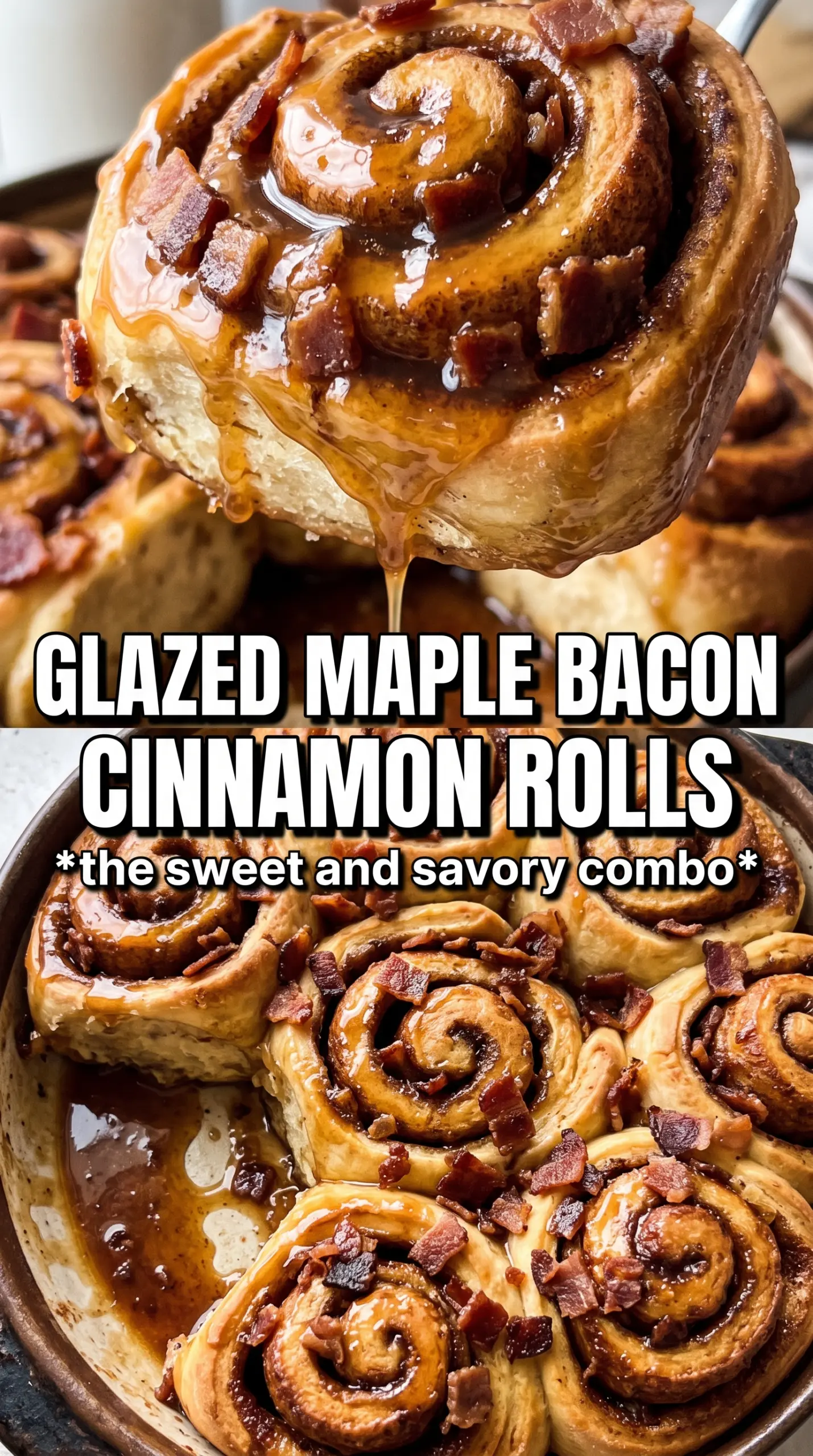
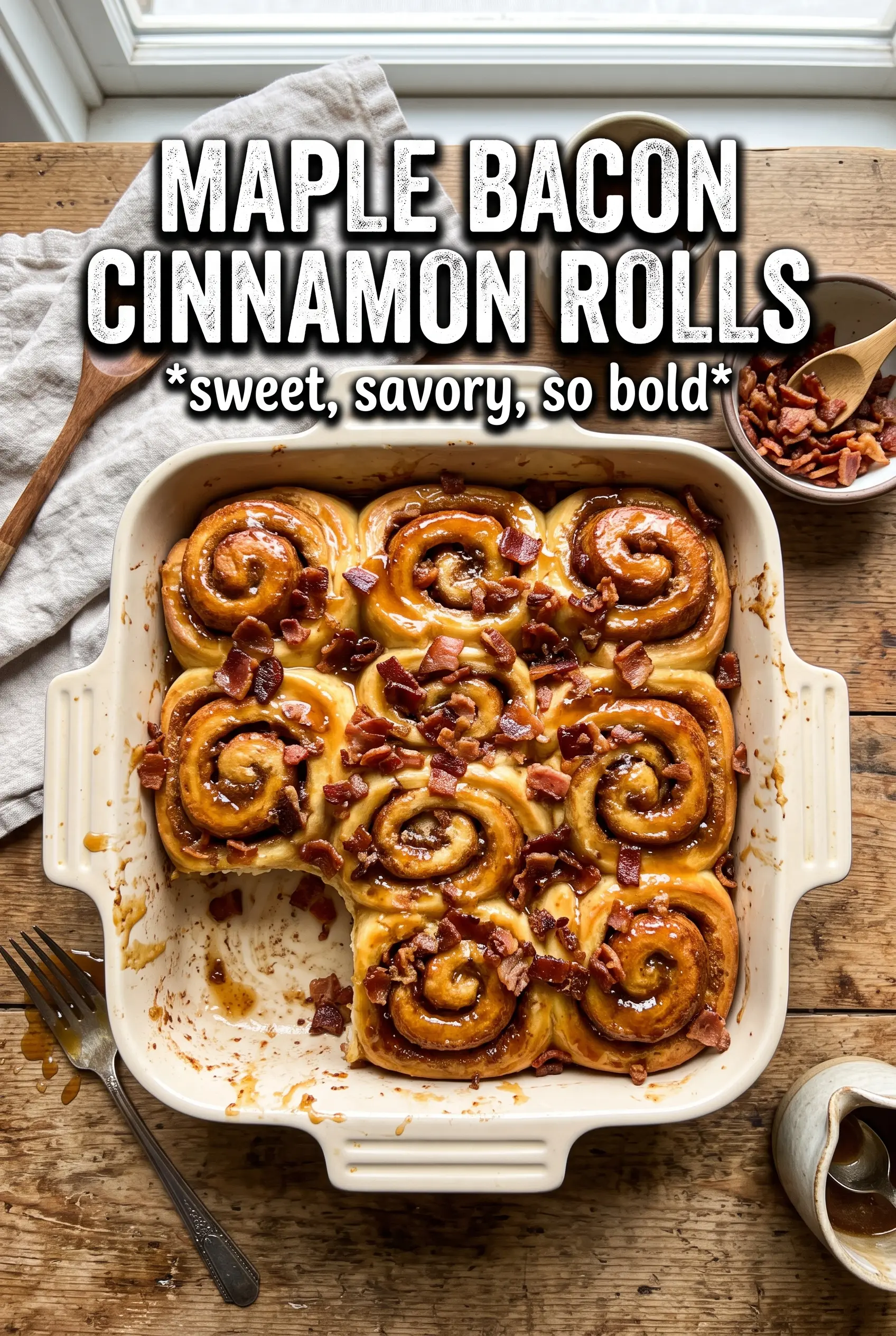
Soft, pillowy cinnamon rolls get a salty-sweet upgrade here, with maple in the glaze and bacon tucked into both the filling and the topping. The rolls bake up tender in the middle, lightly caramelized at the edges, and sticky enough that the glaze sinks into every swirl instead of sitting on top like an afterthought.
What makes these work is balance. The dough stays enriched and flexible from the milk, butter, and eggs, which gives you that classic pull-apart texture. The filling uses softened butter so the sugar and cinnamon spread evenly, and the bacon goes in cooked and crumbled so it stays distributed instead of turning chewy in the oven. A separate batch of maple-candied bacon on top adds crunch after baking, which keeps the whole pan from tasting one-note.
Below you’ll find the small details that matter most: how to keep the dough from getting tight when you roll it, why the glaze should go on the rolls while they’re still warm, and a few smart swaps if you need to adjust the recipe for a different pantry or diet.
The dough rose beautifully and the filling stayed put instead of leaking out. That maple glaze soaked into the warm rolls and the candied bacon on top gave every bite a little crunch.
Save these maple bacon cinnamon rolls for the morning when you want gooey spirals, maple glaze, and crisp candied bacon all in one pan.
The Reason These Rolls Stay Soft Instead of Drying Out
Cinnamon rolls usually fail in one of two places: the dough gets over-floured and tight, or the filling escapes before the center bakes through. These rolls avoid both problems by keeping the dough enriched and by rolling it snugly enough to hold the spirals without squeezing out the butter. The second rise matters here. It gives the cut rolls enough lift that they bake into each other and stay tender in the center.
The bacon changes the structure a little, too. It adds fat and little salty pockets, which is great, but it also means the filling can slip if the bacon is too wet or undercooked. Cook it fully before crumbling so it stays crisp enough to mix through the sugar, and don’t overload the pan with loose bits on the bottom. The maple glaze finishes the job by softening the top layer and pulling into the seams while the rolls are still warm.
What Each Ingredient Is Actually Doing in These Rolls
- Warm milk — It wakes up the yeast and gives the dough a soft, supple texture. Keep it warm, not hot; anything that feels hot on the wrist can slow or kill the yeast.
- Instant or active dry yeast — This is what gives the rolls lift. If your yeast doesn’t foam in the warm milk mixture, start over before you waste the flour.
- Butter — Melted butter goes into the dough for richness, while softened butter in the filling helps the cinnamon sugar spread into an even layer. That split use matters because each texture does a different job.
- Brown sugar and cinnamon — Brown sugar melts into a sticky, caramel-like filling that holds the swirls together better than white sugar would. Cinnamon gives the rolls that classic aroma and keeps the maple from tasting flat.
- Bacon — Use fully cooked bacon for the filling so it crumbles cleanly and doesn’t release too much grease. The candied bacon on top is worth the extra pan because it adds crunch and a sharper smoky note.
- Pure maple syrup — Use the real thing in the glaze and on the candied bacon. Pancake syrup won’t give you the same deep maple flavor or the same glossy finish.
- Powdered sugar — It thickens the glaze without making it grainy. If the glaze looks too thin, add a little more powdered sugar rather than cutting back the milk too far.
Rolling, Rising, and Baking Without Losing the Swirl
Building the Dough
Mix the yeast into the warm milk first, then add the sugar, butter, eggs, and vanilla before working in the flour and salt. The dough should come together soft and slightly tacky, not stiff. Knead it for the full 8 minutes so the gluten develops enough to stretch when you roll it out. If it feels dry early on, resist the urge to bury it in more flour; a dough that starts a little sticky usually bakes up softer.
Shaping the Rectangle
After the first rise, roll the dough into a 12×18 rectangle on a lightly floured surface. Keep the corners as even as you can so each roll gets a similar amount of filling and bakes at the same pace. If the dough springs back, let it rest for 5 minutes and try again instead of forcing it thinner. That short rest keeps the gluten from fighting you.
Filling and Cutting Cleanly
Spread the softened butter edge to edge, then layer on the brown sugar, cinnamon, and crumbled bacon. Roll the log tightly from the long side so the spiral stays compact, but don’t pull so hard that the filling squeezes out. A sharp knife or unflavored dental floss gives the cleanest cuts. A dull knife drags the swirl flat and smears the filling into the pan.
Second Rise and Final Bake
Arrange the cut rolls in a greased 9×13 dish and let them rise until puffy and touching. They should look expanded and pillowy, not fully doubled in a dramatic way. Bake at 375°F until the tops are deeply golden and the centers no longer look wet, usually 22 to 25 minutes. If the top browns too fast, tent loosely with foil for the last few minutes so the middle can finish without drying out.
Glazing While Warm
Beat the maple glaze until smooth, then drizzle it over the warm rolls so it melts into the surface. Warm rolls drink in glaze better than cooled rolls, which is what gives you that sticky bakery finish. Crumble the candied bacon over the top right after glazing so it clings to the glaze instead of sliding off. If you add it too early, the crunch softens.
How to Adapt These Rolls Without Losing the Maple-Bacon Balance
Make Them Ahead for a Slow Morning
Shape the rolls, place them in the baking dish, and cover tightly before the second rise. Refrigerate overnight, then let them sit at room temperature until puffy before baking. The cold rest actually helps the swirl hold its shape, and the maple glaze can still go on while the rolls are warm.
Gluten-Free Version
Use a cup-for-cup gluten-free flour blend that includes xanthan gum and expect a softer, less stretchy dough. It won’t roll quite as neatly, so chill it briefly before cutting if it feels too slack. The rolls still bake up well, but the texture will be a little more tender and less chewy than the wheat version.
Skip the Bacon in the Filling
If you want the maple flavor to lead, leave the bacon out of the spiral and keep it only on top as candied garnish. That gives you a cleaner cinnamon roll center with the same sweet-salty finish. It’s the better move when you’re serving a crowd that likes bacon but doesn’t want a smoky filling in every bite.
Storage and Reheating
- Refrigerator: Store covered for up to 4 days. The glaze will soak in a little and the rolls will firm up.
- Freezer: Freeze baked rolls without the glaze for up to 2 months. Wrap them well so the bacon doesn’t pick up freezer odors, then thaw before reheating and glazing.
- Reheating: Warm individual rolls in the microwave for 20 to 30 seconds or cover the pan with foil and heat in a 300°F oven until soft. If you reheat them uncovered, the edges dry out before the center loosens.
Answers to the Questions Worth Asking
Maple Bacon Cinnamon Rolls
Ingredients
Equipment
Method
- Activate yeast in warm milk in a mixing bowl, then stir in sugar, melted butter, eggs, and vanilla until combined. The mixture should look creamy and slightly foamy where the yeast is active.
- Knead in flour and salt for 8 minutes until the dough is smooth and elastic, pulling away from the sides of the bowl.
- Cover and rise for 1 hour, until doubled in size and airy.
- Roll the dough into a 12x18 rectangle on a lightly floured surface. Spread the dough out evenly to the corners for even rolls.
- Spread softened butter over the dough, then sprinkle brown sugar and cinnamon across the surface. Scatter the cooked, crumbled bacon evenly so each roll gets some filling.
- Roll the dough tightly into a log and pinch the seam to seal. Slice into 12 rolls with clean, even spacing.
- Arrange the rolls in a greased 9x13 baking dish and cover, then rise for 45 minutes until puffy and touching.
- Bake at 375°F for 22-25 minutes, until the tops are golden and the centers look set.
- Bake the bacon strips on a sheet pan at 375°F for 15 minutes, glazed with maple syrup partway through until candied. Let cool briefly, then crumble the bacon.
- Beat the maple glaze by whisking powdered sugar, pure maple syrup, milk, and vanilla until smooth and pourable.
- Drizzle the glaze over the warm rolls and immediately scatter the candied bacon crumbles on top for sticky, crunchy contrast.