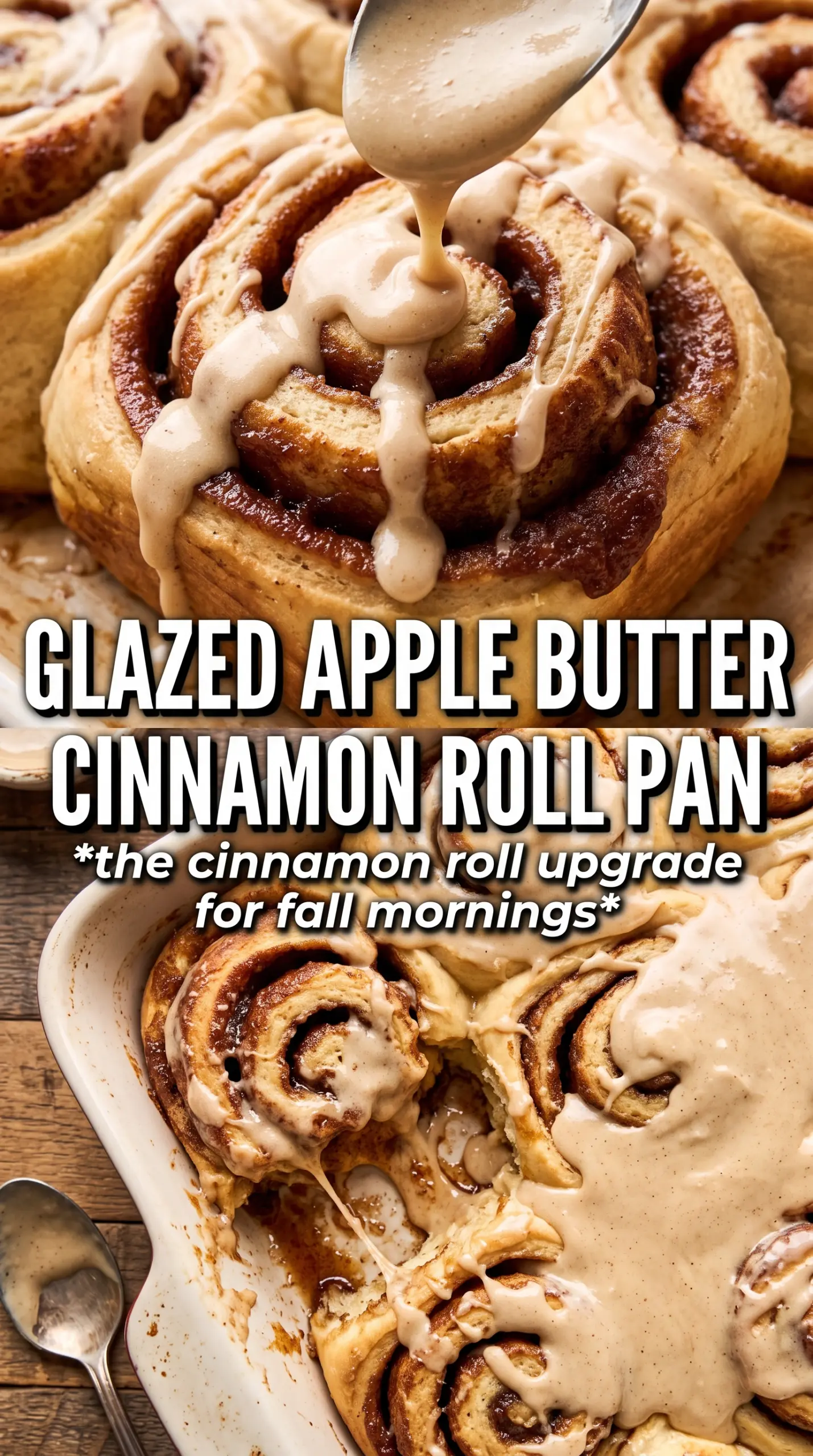
Soft, tall cinnamon rolls are already hard to resist, but the apple butter in these takes them somewhere better: deeper, fruitier, and just a little richer than the usual brown-sugar filling. The swirls bake up sticky at the edges and pillowy in the center, and that cream cheese glaze melts into all the nooks while the rolls are still warm enough to soak it in.
What makes this version work is the balance. Apple butter brings concentrated apple flavor without extra chopping or extra moisture, so the filling stays thick instead of leaking out of the spiral. A touch of nutmeg rounds out the cinnamon, and the dough has enough butter and egg to stay tender after baking instead of turning bready and dry.
Below, I’m walking through the part that matters most: getting a tight roll so the filling stays in place and the centers bake evenly. There’s also a note on the glaze timing, because that’s where these go from good to the kind of pan people keep sneaking back to after breakfast.
The rolls baked up super fluffy and the apple butter filling stayed put instead of bubbling out everywhere. I glazed them while they were warm and the centers came out soft, not doughy.
These apple butter cinnamon rolls turn out soft, swirled, and bakery-style with a glaze that melts into every spiral.
The Trick to Keeping the Apple Butter Filling Inside the Spiral
The biggest mistake with filled cinnamon rolls is spreading the filling all the way to the edge and then rolling too loosely. That gives the filling an easy escape route. Leave a slim border along one long edge, and roll the dough with steady tension so the log stays snug without squeezing the filling out.
Apple butter is thicker than fresh apples or applesauce, which is why it works here. It bakes into a concentrated layer instead of turning watery, but it still needs help from the brown sugar and softened butter to stay spreadable. If the dough starts springing back while you roll, let it rest for a few minutes and try again rather than fighting it.
- The soft butter under the apple butter helps the filling cling to the dough instead of sliding around.
- Brown sugar adds the sticky structure that keeps the swirls defined after baking.
- Cinnamon and nutmeg need that fat and sugar base to bloom in the oven instead of tasting flat.
- A tight seam on the finished log keeps the rolls from uncoiling as they rise.
What Each Ingredient Is Doing in These Rolls
Warm milk wakes up the yeast without shocking it. If it feels hot on your wrist, it’s too hot for the yeast. Warm, not steamy, is the target.
Yeast gives these rolls their lift and that soft pull-apart crumb. If your yeast doesn’t foam after a few minutes, start over before you mix the dough. Flat yeast means flat rolls.
Melted butter, eggs, and vanilla build a rich dough that stays tender after baking. Butter gives flavor, eggs give structure, and vanilla quietly rounds out the apple butter filling so the whole pan tastes finished.
Apple butter is the ingredient that makes this recipe different. It gives you deep apple flavor without cooking down fresh fruit, and it stays thick enough to swirl cleanly. Use a smooth apple butter if you want tidy spirals; a chunkier one will still work, but the rolls won’t look as neat.
Cream cheese in the glaze matters for the tang. A plain powdered sugar glaze would taste fine, but it wouldn’t cut through the sweetness the same way. Let the cream cheese soften fully so the glaze beats smooth.
Rolling, Cutting, and Baking Without Squishing the Swirls
Building the Dough
Mix the dough until it comes together in a soft, shaggy mass, then knead until it turns smooth and elastic. By hand, that takes about 8 minutes; in a mixer, stop when the dough clears the sides and still feels slightly tacky. If you add too much flour here, the rolls bake up dense instead of plush, so hold back unless the dough is truly sticky and unmanageable.
Spreading the Filling
Roll the dough into a 12×18 rectangle with even pressure so the thickness stays consistent. Spread the softened butter first, then the apple butter, then the brown sugar and spices. If the filling tears the dough, the dough is too thin in that spot, and the spiral will likely leak there in the oven.
Cutting Clean Rolls
Roll the log tightly, then use a sharp knife or unflavored dental floss to cut 12 even pieces. A sawing motion crushes the spiral, which makes the rolls rise unevenly. Floss gives you the cleanest edge, especially if the log is very soft from the apple butter filling.
The Final Rise and Bake
Arrange the rolls in a greased 9×13 pan with a little space between each one, then let them rise until puffy and touching. They should look expanded and marshmallow-soft before they go into the oven. Bake until the tops are golden and the centers spring back lightly when nudged; if the middle still looks wet or slumps when pressed, give them a few more minutes.
Make Them Ahead for a Slow Morning
Shape the rolls, place them in the pan, cover tightly, and refrigerate overnight. In the morning, let them sit at room temperature until they look puffy again before baking. Cold rolls need more oven time, and baking them straight from the fridge usually gives you browned tops before the centers are done.
Dairy-Free Version
Swap the milk for an unsweetened dairy-free milk, use a plant-based butter, and replace the cream cheese with a dairy-free cream cheese alternative. The texture stays close, though the glaze will be a little softer and less tangy. Don’t choose a thin, watery milk substitute or the dough can lose some richness.
Extra Apple Spice
Add a small pinch of cardamom or allspice to the filling if you want a warmer, more spiced finish. Keep the amount modest so it doesn’t drown out the apple butter. This version tastes a little more holiday-leaning and works well if your apple butter is on the sweeter side.
Storage and Reheating
- Refrigerator: Store covered for up to 4 days. The rolls will firm up a bit because of the butter in the dough and glaze.
- Freezer: Freeze baked rolls without glaze for up to 2 months. Wrap them well so the surface doesn’t dry out, then thaw before reheating and glazing.
- Reheating: Warm individual rolls in the microwave for 20 to 30 seconds or the pan covered in a low oven. High heat dries out the edges fast, so go low and just heat until soft again.
Questions I Get Asked About This Recipe
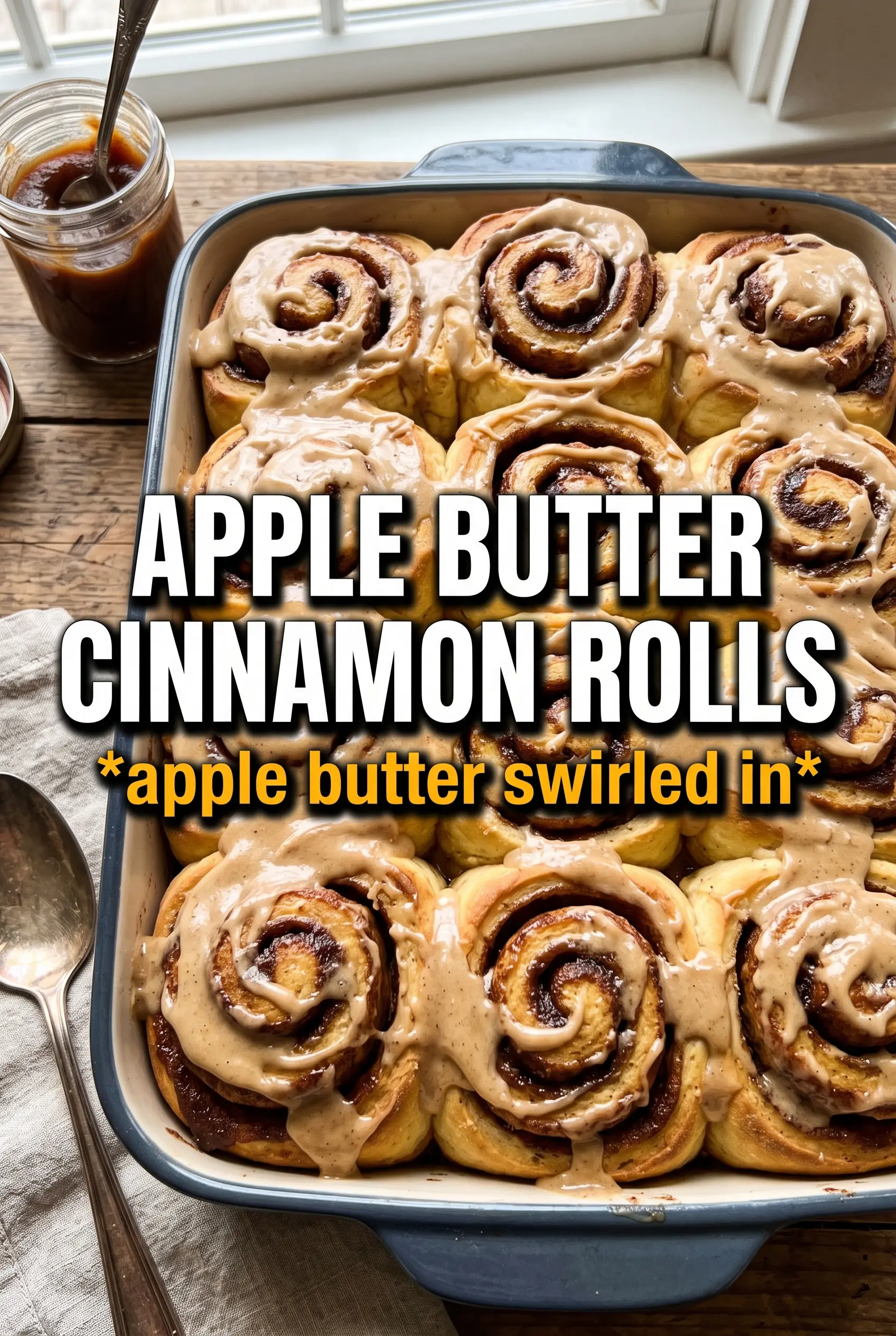
Apple Butter Cinnamon Rolls
Ingredients
Equipment
Method
- Mix warm milk and yeast together, then add sugar, melted butter, eggs, vanilla, flour, and salt to form a soft dough. Knead for 8 minutes until smooth and elastic.
- Place dough in a lightly greased bowl, cover, and let rise for 1 hour until doubled in size (warm, draft-free spot).
- Roll the dough into a 12x18 rectangle, then spread softened butter over the surface in an even layer. Spread apple butter thickly over the butter so it stays visible at the edges.
- Sprinkle brown sugar, cinnamon, and nutmeg evenly over the apple butter. Use a light hand so the spices are distributed in thin streaks.
- Roll the dough tightly into a log, then cut into 12 rolls. Arrange rolls in a greased 9x13 baking dish.
- Cover and let the rolls rise for 45 minutes until puffy and touching lightly in the pan. Preheat the oven during the last 10 minutes.
- Bake at 375F for 22-25 minutes, until the tops turn golden and the centers look set. If needed, rotate the pan halfway through for even browning.
- Beat cream cheese glaze ingredients until smooth, then drizzle over warm rolls. Let glaze set for 5 minutes before serving.