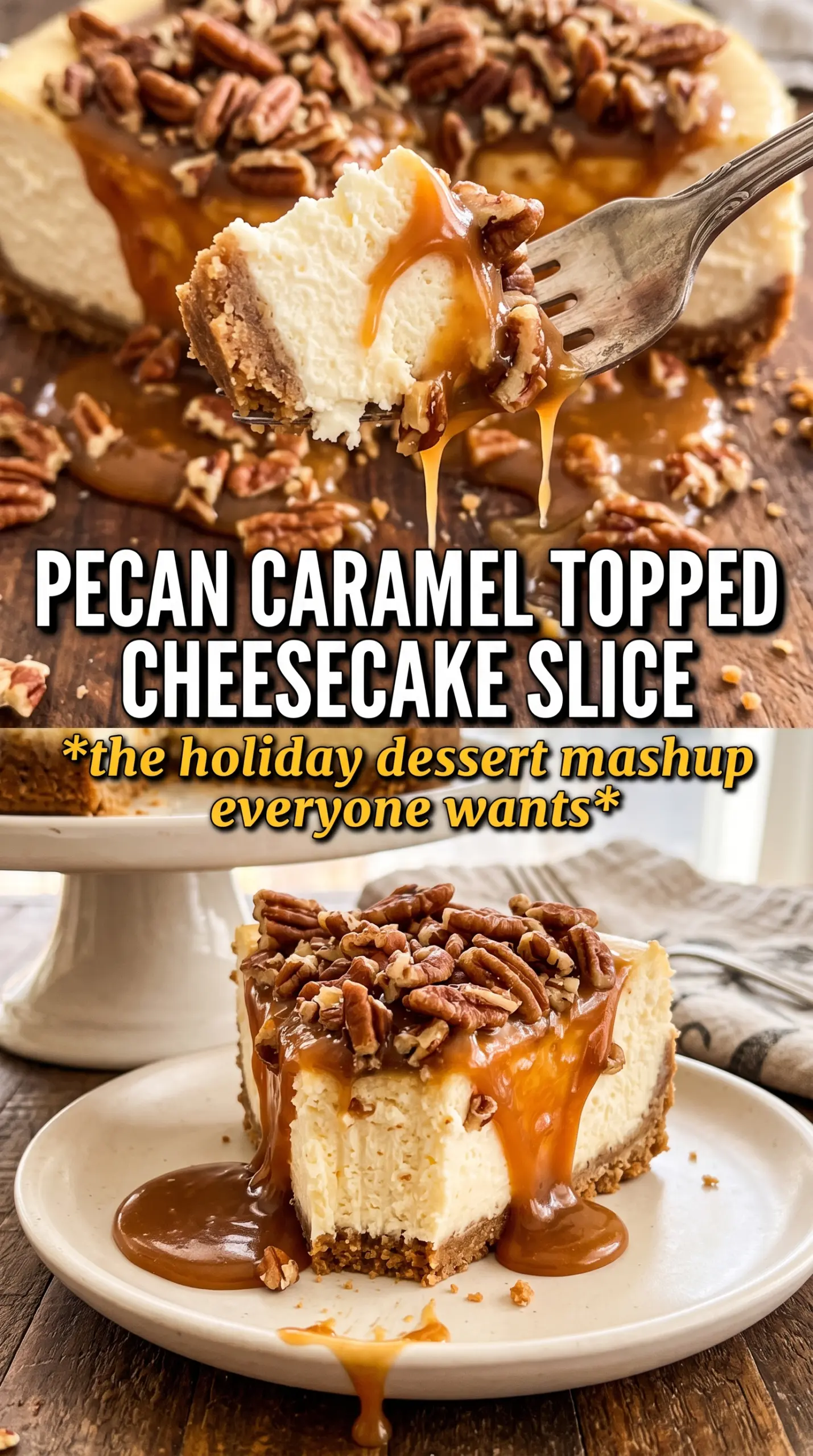
Pecan pie cheesecake lands with the kind of contrast that makes people pause after the first bite: crisp graham crust, smooth tangy filling, and a glossy pecan topping that tastes like the best part of pie filling spooned over dessert. The layers work because none of them tries to do everything. The cheesecake stays clean and creamy, the topping stays sticky and nutty, and the crust gives you the structure to cut a neat slice instead of a slump on the plate.
The trick is treating each layer like its own job. A water bath keeps the cheesecake gentle in the oven, which helps prevent the dry edges and cracks that can ruin a dessert this rich. The pecan topping is cooked just long enough to thicken before the nuts go in, so it settles into that caramel-like sheen instead of turning grainy or hard. It’s the kind of dessert that looks bakery-level but still makes sense in a real home kitchen.
Below, I’ve included the one timing detail that matters most for clean slices, plus a few smart swaps if you need to adjust the crust or make the topping ahead.
The cheesecake baked up smooth with no cracks, and the pecan topping set just enough to slice cleanly without running everywhere. The brown sugar in the filling gave it a deeper flavor than plain cheesecake.
Save this Pecan Pie Cheesecake for the dessert table when you want creamy cheesecake and sticky pecan topping in one clean slice.
The Water Bath Is What Keeps the Cheesecake Slice Neat
The cheesecake layer is rich enough to crack if it bakes too fast. That’s why the water bath matters here: it softens the heat around the pan and gives the filling time to set from the edges inward instead of puffing, splitting, and collapsing. If you’ve ever had a cheesecake that looked perfect in the oven and then tore down the middle as it cooled, this is the part that fixes it.
Pull the cake when the outer edge is set and the center still has a slight wobble. It should look like it’s barely moving in the middle, not sloshing. The residual heat finishes the job during cooling, and that slow finish is what gives you that dense, creamy texture instead of a dry one. Don’t chase a fully firm center in the oven or you’ll overbake the filling before it has a chance to settle.
What Each Layer Is Really Doing Here
- Graham cracker crumbs — These give the crust its classic sweet, sandy texture. Crush them fine so the crust packs tightly; larger crumbs can make the base fragile when you slice it.
- Brown sugar — It shows up in both the crust and filling, and that’s not accidental. In the crust, it adds molasses depth and helps the crumbs brown; in the cheesecake, it gives the filling a warmer, almost caramel note that plain white sugar can’t match.
- Cream cheese — Use full-fat blocks, not tub spread. The block style gives you the thick, dense structure you need for a cheesecake that can stand under the pecan topping without turning loose or fluffy.
- Sour cream — This is what keeps the filling from tasting heavy. It adds a little tang and softens the texture, so the cheesecake tastes balanced instead of just rich.
- Heavy cream and corn syrup — These are the keys to the topping staying glossy and spoonable. The cream adds body, while the corn syrup helps keep the sugar from crystallizing as it cools.
- Whole pecans — Halves or large pieces give you the best look and the most noticeable crunch. If you chop them smaller, the topping will still taste right, but you lose that classic pecan pie appearance on top of the slice.
Building the Layers Without Overmixing the Filling
Pressing and Prebaking the Crust
Mix the graham crumbs, brown sugar, and melted butter until every crumb looks evenly moistened, then press it into the bottom of the springform pan with firm, even pressure. A measuring cup works well for this because it packs the crust flat without leaving soft spots. Bake it for the full 10 minutes so it sets before the filling goes in; a raw crust can turn soggy under all that cheesecake.
Mixing the Cheesecake the Right Way
Beat the cream cheese until it’s smooth before anything else goes in. If the cream cheese starts out lumpy, the lumps stay lumpy, no matter how long you mix later. Add the brown sugar, then the eggs one at a time, mixing only until each one disappears. Overbeating after the eggs go in whips too much air into the batter, and that extra air can cause cracks as the cake cools.
Cooling Before the Topping Goes On
Let the baked cheesecake cool completely before the topping touches it. If the cake is still warm, the pecan layer can slide, sink, or melt into the surface instead of sitting on top as a clean layer. Chill it for the full six hours if you want slices that hold their shape. That waiting time is the difference between a soft cheesecake and one you can serve neatly.
Cooking the Pecan Topping Until It Thickens
Bring the butter, brown sugar, cream, and corn syrup to a gentle simmer and let it bubble for about 3 minutes. You’re looking for the mixture to thicken slightly and lose that raw sugar look. Stir in the pecans, vanilla, and salt, then let it cool for about 15 minutes before spooning it over the cheesecake. If you pour it on while it’s too hot, it can run off the sides and soften the top layer.
How to Adapt This Cheesecake Without Losing the Pecan Pie Finish
Gluten-Free Crust Swap
Use certified gluten-free graham-style crumbs in the crust and keep the rest of the recipe the same. The filling and topping are naturally gluten-free, so the crust is the only part you need to change. The texture stays nearly identical as long as you still pack and pre-bake it.
Dairy-Free Version
A dairy-free cream cheese and sour cream alternative will work, but the filling will be a little softer and slightly less tangy. Use a brand that bakes well, not a whipped spread, and expect the cheesecake to chill a bit longer before it slices cleanly. The pecan topping can stay the same if you swap in a plant-based butter and a rich non-dairy cream.
Make-Ahead Timing for the Best Slice
Bake the cheesecake a day ahead if you can. The flavor deepens overnight and the texture sets up even better, which makes slicing much cleaner. Hold the pecan topping separately, then spoon it on right before serving so the crust stays crisp.
Smaller Nut Pieces for Easier Serving
If you want easier slicing, chop about half the pecans and leave the rest whole. That gives you a topping that spreads more evenly while still keeping the look and crunch of a classic pecan pie finish. It’s a small change, but it keeps the topping from sliding off in big clumps.
Storage and Reheating
- Refrigerator: Store covered for up to 5 days. The crust softens a little over time, but the cheesecake stays creamy.
- Freezer: Freeze the cheesecake without the pecan topping for up to 2 months. Wrap it tightly, then thaw overnight in the refrigerator before adding the topping.
- Reheating: This dessert is best served cold or cool, not reheated. If the topping is too firm straight from the fridge, let the slice sit at room temperature for 15 to 20 minutes so the caramel layer loosens a bit.
Questions I Get Asked About This Recipe
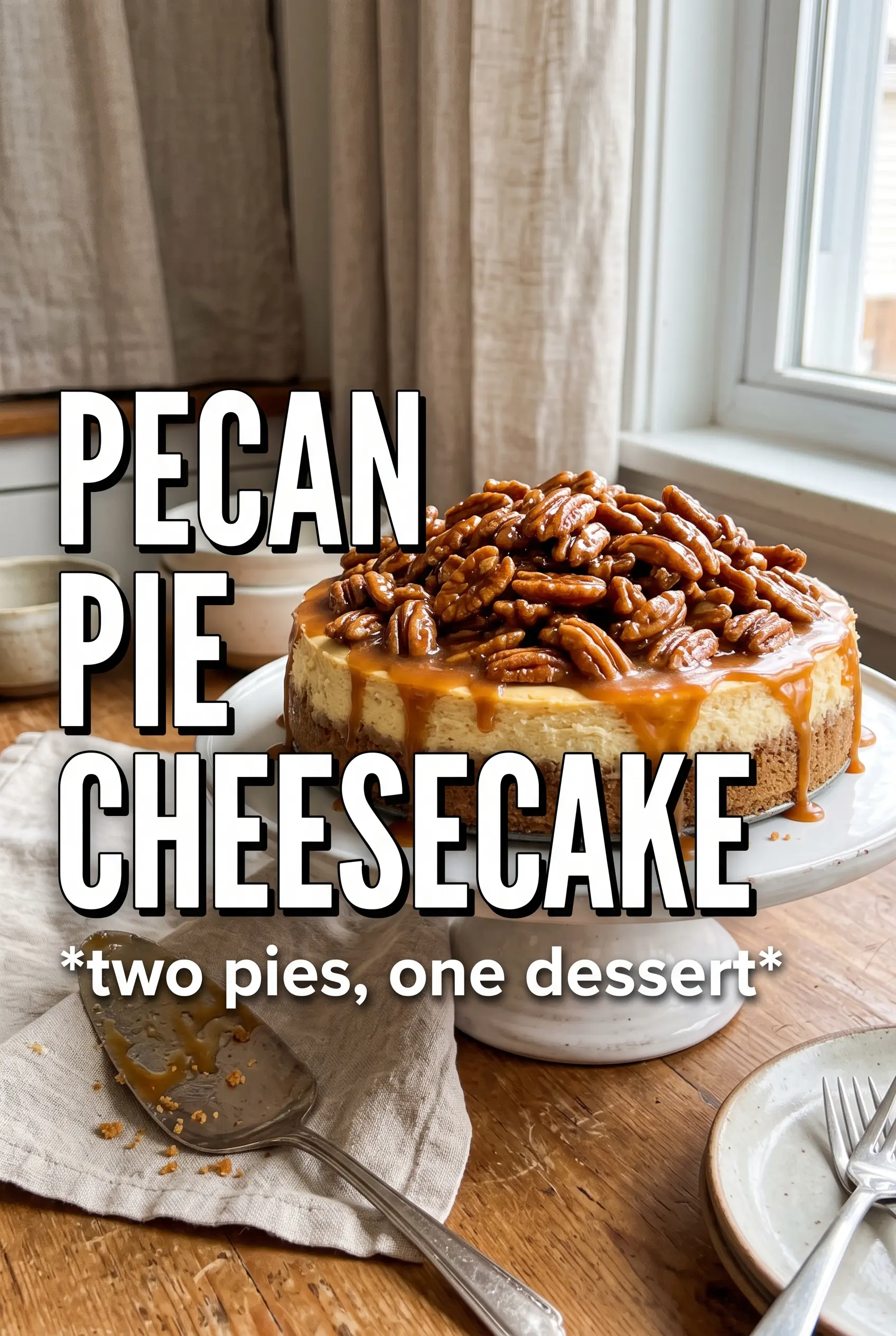
Pecan Pie Cheesecake
Ingredients
Equipment
Method
- Preheat the oven to 325F, then press graham cracker crumbs, brown sugar, and melted butter into a 9-inch springform pan to form an even crust layer with compact edges.
- Bake the crust at 325F for 10 minutes, until set and lightly fragrant, then transfer to a cooling rack.
- Beat the cream cheese and brown sugar until smooth, then beat in eggs one at a time, followed by sour cream, vanilla, and cinnamon until the batter looks glossy.
- Pour the cheesecake batter over the baked crust and smooth the top.
- Bake in a water bath at 325F for 60-65 minutes, until the center is just set with a slight jiggle.
- Cool the cheesecake completely at room temperature, until no longer warm to the touch.
- Refrigerate the cheesecake for 6 hours, covered, until fully chilled and firm for slicing.
- In a saucepan over medium heat, melt unsalted butter with packed brown sugar, heavy cream, and corn syrup, stirring until the mixture is smooth.
- Simmer the topping for 3 minutes, until it thickens slightly and looks cohesive.
- Stir in whole pecans, vanilla, and salt, then cool for 15 minutes until warm and thickened.
- Pour the pecan pie topping over the chilled cheesecake just before serving so the crust stays crisp and the topping retains its texture.