Pecan shortbread, tangy cream cheese filling, silky chocolate pudding, and a glossy caramel finish turn Turtle Lush into the kind of layered dessert people keep reaching for long after the first square. The crust stays tender but sturdy, the pudding settles into a clean layer instead of slipping around, and the top gets that classic turtle look with pecans and toffee bits scattered over the cream. It slices neatly after chilling, which is half the battle with a dessert this loaded.
What makes this version work is the balance between the rich layers. The crust uses powdered sugar, which gives it a short, sandy tenderness instead of a hard cookie base, and the pecans add just enough bite without making it crumbly. The cream cheese layer gets folded with whipped topping after beating smooth, so it stays light instead of dense. Then the pudding is mixed just until thick, which keeps it spreadable and helps it set cleanly under the topping.
Below, I’ve included the little details that keep the layers distinct, plus the swaps I’d use when you need to work with what’s in the kitchen.
The crust held together perfectly and the pudding layer set up in the fridge without weeping. I made it the night before and the caramel drizzle still looked beautiful the next day.
Love the creamy layers and caramel drizzle in this Turtle Lush? Save it to Pinterest for the dessert table when you want a chilled make-ahead treat that slices cleanly.
The Part That Keeps Turtle Lush From Turning Soupy
Layered lush desserts only work when each layer has enough body to sit on the one beneath it. The most common mistake is rushing the chill time or spreading a filling that’s still warm, thin, or loose. That’s how you end up with chocolate seeping into the cream cheese layer and a dessert that tastes fine but cuts badly.
The crust needs to cool all the way before anything creamy goes on top. If it’s even slightly warm, the cream cheese layer softens and the whole dessert starts sliding. The pudding should be whisked until it thickens, then spread right away while it’s still smooth and cohesive. Once the dessert is assembled, the refrigerator does the real work; four hours is the minimum, and overnight gives you the cleanest slices.
- Cooling the crust completely keeps the dairy layers from melting into it and helps the dessert hold clean squares.
- Mixing the pudding just until thick gives you a spreadable layer without overworking it into a loose mixture.
- Chilling long enough lets the pudding and cream cheese layers firm up together, which is what makes the texture sliceable.
What Each Layer Is Actually Doing Here
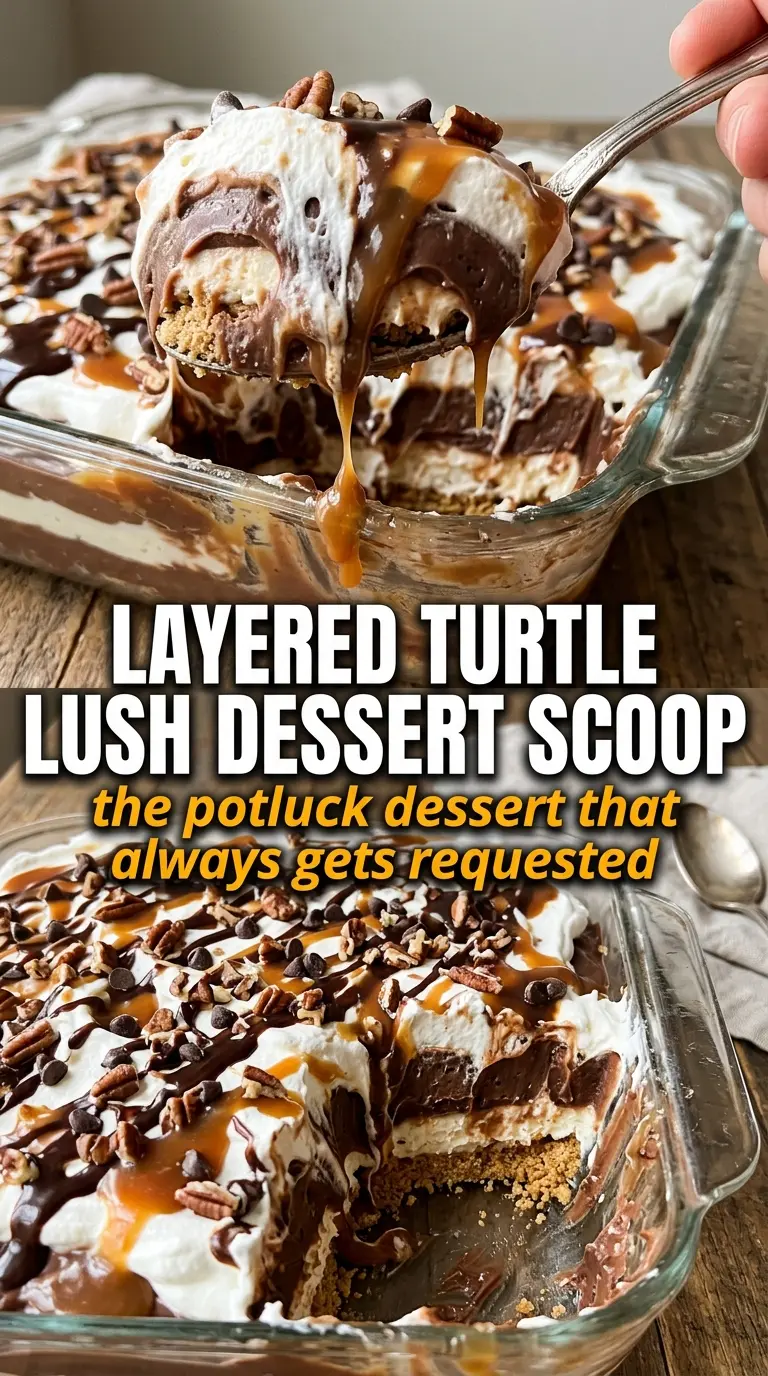
- Flour, powdered sugar, butter, and pecans for the crust create a shortbread base that’s tender but sturdy. Powdered sugar helps the crust bake into a delicate, sandy layer instead of a crisp cookie shell, and the chopped pecans bring that turtle-dessert flavor from the bottom up. Butter should be cold when it goes in, because soft butter makes the crust greasy instead of crumbly.
- Cream cheese gives the middle layer its tang and structure. Full-fat cream cheese works best here; low-fat versions can taste thinner and set softer. Beat it until completely smooth before folding in the whipped topping, or you’ll see little lumps in the finished dessert.
- Instant chocolate pudding and milk make the filling fast and reliable. Instant pudding thickens without heat, which is exactly what you want in a layered dessert that needs to chill cleanly. Whole milk gives the richest result, but 2% works if that’s what you keep on hand.
- Whipped topping, caramel, chocolate sauce, pecans, and toffee bits finish the dessert with contrast. The topping keeps the top light, while the sauces and crunchy bits give you the turtle candy effect in every bite. Use a thick caramel sauce if you can; very thin ice cream topping tends to run when sliced.
Building the Layers So They Stay Clean
Press and bake the crust first
Mix the crust until the butter is worked in and the texture looks like damp sand with small pecan pieces throughout. Press it firmly into the baking dish so it bakes into one even layer; loose spots will crumble when you serve it. Bake until the edges look lightly golden and the top smells nutty, then let it cool completely before moving on. If you add the filling too soon, the crust softens and loses that shortbread texture.
Make the cream cheese layer smooth before folding
Beat the cream cheese, powdered sugar, and vanilla until the mixture is silky and there are no pale lumps left on the bowl. Fold in the whipped topping gently so you keep the layer light instead of dense and whipped flat. Spread it all the way to the edges in an even layer, because gaps at the sides make the chocolate pudding drift downward when you slice it. This layer should look fluffy and hold its shape, not run.
Whisk the pudding until it starts to thicken
Combine the instant pudding mix and milk, then whisk until it noticeably thickens and the whisk leaves trails behind it. Don’t wait until it becomes stiff in the bowl; by then it’s harder to spread and can tear the cream layer underneath. Pour or spoon it over the cream cheese layer and smooth it gently. If the pudding is too thin, it hasn’t had enough time to set, and the dessert won’t hold neat layers.
Finish with toppings after the pudding settles
Spread the whipped topping over the pudding, then drizzle on caramel and chocolate sauce. Add the pecans and toffee bits last so they stay on top instead of sinking into the cream. Chill the dessert for at least four hours, though overnight gives the cleanest cut and the most defined layers. Use a sharp knife wiped clean between cuts if you want those crisp bakery-style squares.
How to Adapt Turtle Lush Without Losing the Good Parts
Gluten-Free Crust Swap
Use a gluten-free all-purpose flour blend in place of the regular flour in the crust. The shortbread style still works, but the texture may be a little more delicate, so press it firmly and let it cool fully before layering. The flavor stays rich and buttery, which is what matters most here.
Nut-Free Version
Leave the pecans out of the crust and use the same amount of flour in their place, then skip the pecan topping and replace it with extra toffee bits or chocolate shavings. You lose the classic turtle flavor, but you keep the creamy layers and the same sliceable structure. This is the easiest way to serve it when nuts are a concern.
Less-Sweet Cream Cheese Layer
Cut the powdered sugar in the cream cheese layer slightly if you prefer a sharper tang. The filling will taste less candy-like and a little more balanced against the pudding and caramel, though it won’t be quite as airy if you reduce it too much. Keep the vanilla in place so the layer still tastes rounded.
Storage and Reheating
- Refrigerator: Store covered for up to 4 days. The crust softens a little over time, but the dessert stays good and sliceable.
- Freezer: It freezes better than you might expect if you skip the final drizzles and pecan topping until after thawing. Wrap tightly and freeze for up to 1 month, then thaw in the refrigerator.
- Reheating: Don’t reheat this dessert. Serve it cold straight from the refrigerator for the cleanest texture and the best layers.
Questions I Get Asked About This Recipe
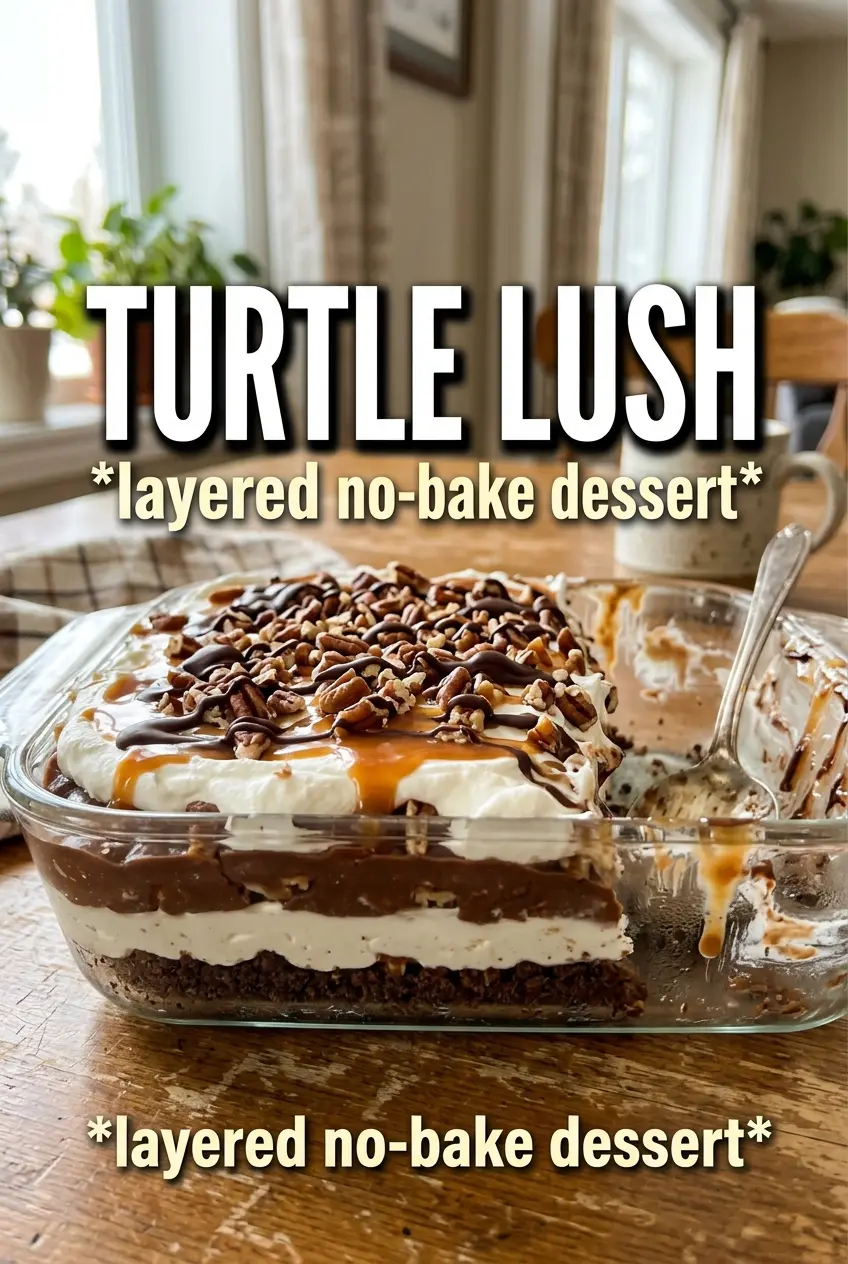
Turtle Lush
Ingredients
Equipment
Method
- Press the pecan shortbread crust mixture into an even layer and bake at 350°F for 15 minutes, until set and lightly golden. Remove and cool completely before assembling.
- Beat the cream cheese, powdered sugar, and vanilla until smooth and creamy, with no lumps. Fold in the whipped topping until combined, then spread over the cooled crust.
- Whisk the instant chocolate pudding mix with the milk until thick, smooth, and no dry pockets remain. Spread the thick pudding over the cream cheese layer.
- Spread the remaining whipped topping over the pudding in an even layer. Drizzle caramel sauce and chocolate sauce over the top, then scatter pecan halves and toffee bits for a layered look.
- Refrigerate for 4 hours to set the layers before slicing into squares. Serve chilled.