Rigatoni coated in a thick ranch cream sauce, dotted with shredded chicken and crisp bacon, is the kind of pasta that disappears fast once it hits the table. The sauce clings to every tube, the cheddar melts into the cream instead of sitting on top of it, and the bacon stays crunchy enough to give each bite a little snap. It’s rich, but not heavy in the way a rushed cream sauce can be when it turns grainy or thin.
The trick is keeping the sauce on a gentle simmer and adding the cheese after the cream has had a minute to reduce. That gives the ranch seasoning time to bloom and the dairy time to thicken before the pasta goes back in. I also like using rigatoni or penne here because the ridges catch the sauce better than long noodles ever could, and the bacon gets sprinkled on at the end so it stays distinct instead of going soft in the pot.
Below you’ll find the small details that make this pasta work the way it should, plus a few smart swaps if you need to stretch it, lighten it up, or use what you already have on hand.
The sauce thickened up perfectly and coated the rigatoni instead of pooling at the bottom. I loved that the bacon stayed crisp on top, and my kids asked for seconds before I even sat down.
Save this creamy chicken bacon ranch pasta for the nights when you want a thick, cheesy sauce and crispy bacon in one pan.
The Reason This Sauce Stays Creamy Instead of Breaking
The biggest mistake in a ranch pasta like this is rushing the dairy. Heavy cream can handle heat, but it still needs a calm simmer, not a hard boil. If the sauce gets too aggressive before the cheese goes in, the fat can separate and leave you with a greasy, loose pan instead of a glossy sauce that coats the pasta.
The other thing that matters is the order. Garlic goes in first for a minute just to soften its raw edge, then the cream and broth build the base, and the seasoning gets a few minutes to dissolve and thicken the liquid before the cheese arrives. That short simmer gives the sauce body before the cheddar and parmesan have a chance to turn it rich and clingy.
- Keep the heat at medium to medium-low once the cream is in — a hard boil is what causes a broken, grainy sauce.
- Add the cheese off the hottest part of the burner if your stove runs hot — gentler heat helps it melt smooth instead of clumping.
- Use the reserved pasta water only if needed — it loosens the sauce without watering down the flavor, and a few tablespoons usually go farther than you think.
- Let the sauce thicken before the pasta goes back in — it should lightly coat a spoon, not run off like soup.
What the Cheese, Bacon, and Ranch Seasoning Are Each Doing Here
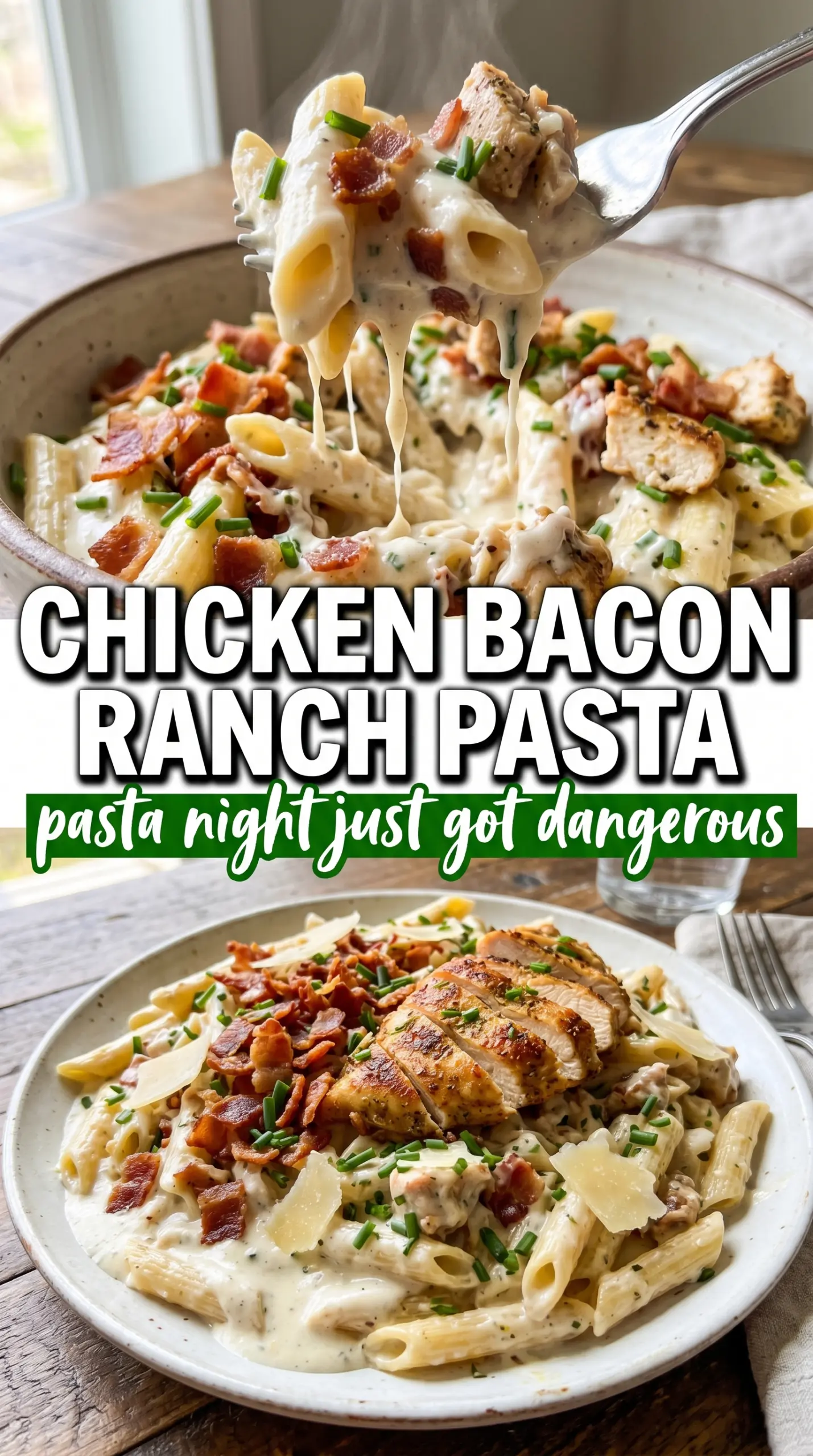
Heavy cream gives the sauce its body and keeps the ranch seasoning from tasting sharp or dusty. Half-and-half can work in a pinch, but it makes a thinner sauce and you’ll need more reduction time. If you want the same silky finish, use the cream called for here.
Sharp cheddar is the cheese that makes this taste like more than ranch pasta. Mild cheddar melts fine, but sharp cheddar gives you that deeper, saltier pull through the sauce. Parmesan adds the savory edge that keeps the dish from tasting flat, especially once the pasta and chicken are mixed in.
Bacon is more than garnish. It brings crunch and smoke, and it cuts through the richness so each bite doesn’t blur together. Cook it until crisp, then crumble it after draining; if it sits in the sauce too long, it softens fast. Ranch seasoning carries the herb-and-onion backbone of the dish, and the packet-style mix works better than trying to mimic it one spice at a time unless you already know the blend you like.
Building the Pasta So Every Bite Gets Sauce
Cook the Pasta One Minute Shy
Boil the rigatoni in well-salted water until it’s just al dente, then drain it before it goes fully soft. The pasta finishes in the sauce, so that last minute matters more than it sounds. If you cook it all the way through in the pot, it turns mushy once it absorbs the cream.
Start the Sauce in the Same Pot
Use the same pot after draining the pasta. The little starch left behind helps the sauce settle onto the noodles, and the pot already holds a bit of warmth. Sauté the garlic for about a minute only until fragrant; if it browns, it turns bitter and that bitterness carries through the whole dish.
Let the Cheese Melt Before the Pasta Goes Back
Once the sauce has thickened slightly, add the cheddar and parmesan gradually and stir until smooth. If the cheese goes in all at once or the heat is too high, it can seize into strings instead of melting into the cream. When the sauce looks glossy and slightly thick, add the chicken and pasta and toss until every piece is coated.
Finish With Bacon and Chives
Save the bacon for the very end so it stays crisp and distinct. Chives add a fresh, mild onion note that cuts the richness without fighting the ranch seasoning. Serve it right away, because this pasta is at its best when the sauce is still loose enough to cling and the bacon still crunches.
How to Adapt This for a Bigger Pan, a Lighter Bowl, or No Bacon
Make It Without Bacon
Leave the bacon out and add a little extra parmesan plus a pinch of smoked paprika if you want a hint of that savory depth back. You lose the crunch, but the sauce still carries the ranch-and-cheddar combination well. A handful of toasted breadcrumbs on top also gives you the texture you’d miss from the bacon.
Use Rotisserie Chicken for the Fastest Version
Rotisserie chicken works perfectly here because the sauce is doing the heavy lifting. Shred it finely so it blends into the pasta instead of sitting in big chunks. This is the best shortcut when you want dinner on the table fast without losing the texture of the dish.
Lighten It Up With Half-and-Half
Half-and-half will work, but the sauce needs a little more time to reduce and won’t be as rich or thick. Keep the heat low and let it simmer a bit longer before adding cheese. If you go this route, don’t skip the pasta water at the end, because it helps the thinner sauce still cling to the noodles.
Storage and Reheating
- Refrigerator: Store in an airtight container for up to 4 days. The sauce will thicken as it chills.
- Freezer: It freezes, but the cream sauce can separate a little on thawing. For the best texture, freeze only if you don’t mind a softer sauce after reheating.
- Reheating: Warm gently on the stove or in the microwave with a splash of milk, cream, or broth. Stir often and keep the heat low, because high heat is what makes the cheese turn oily and grainy.
Questions I Get Asked About This Recipe
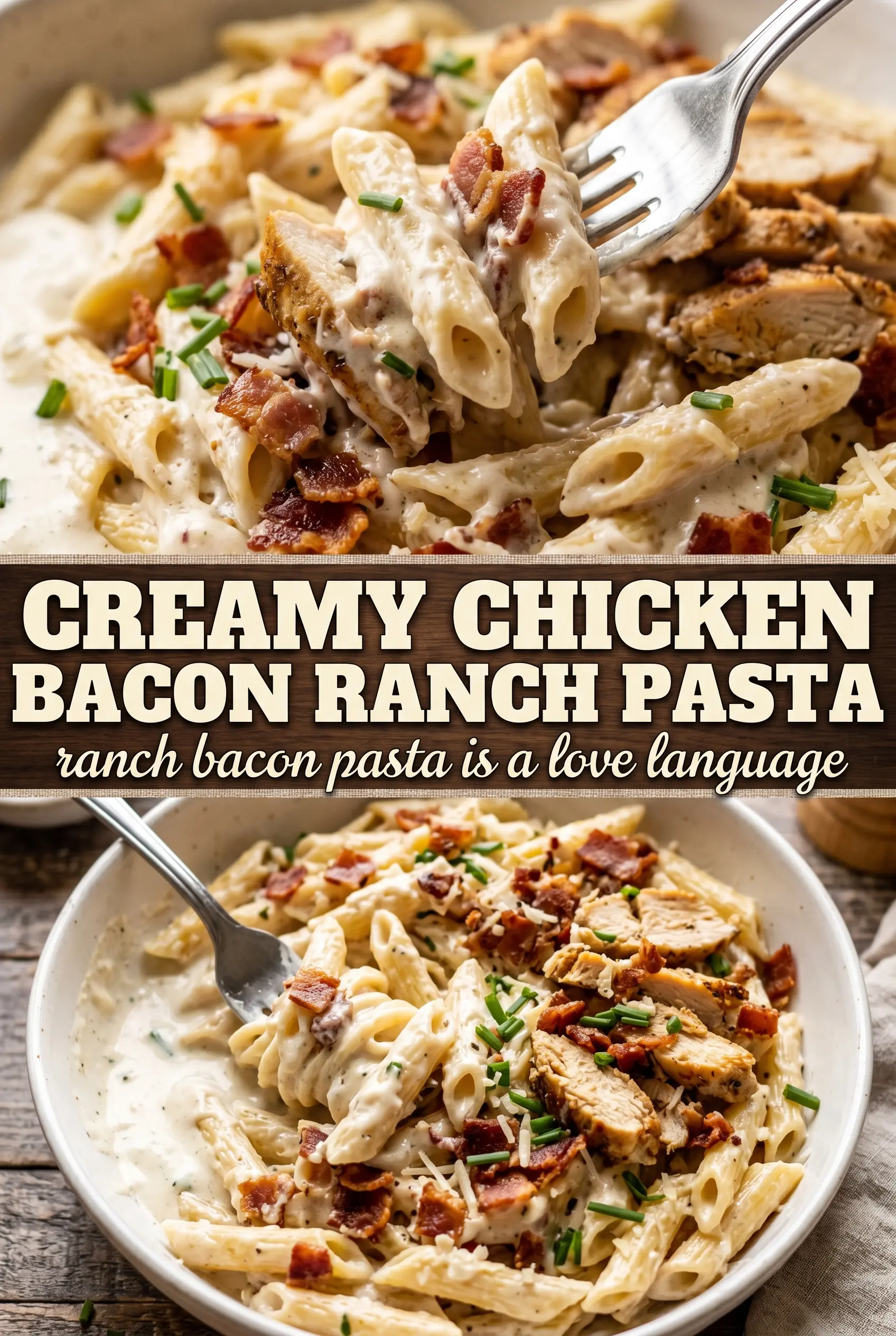
Creamy Chicken Bacon Ranch Pasta
Ingredients
Equipment
Method
- Bring a large pot of salted water to a rolling boil, then cook the rigatoni or penne until al dente. Reserve 1/2 cup pasta water and drain the pasta.
- In the same pot over medium heat, sauté the minced garlic for 1 minute until fragrant. Add the heavy cream and chicken broth and bring to a simmer.
- Stir in the ranch seasoning mix, then simmer for 3–4 minutes until slightly thickened. Whisk occasionally so the seasoning dissolves evenly.
- Add the shredded cheddar and grated parmesan, then stir until fully melted and smooth. If the sauce looks too thick, loosen it with a splash of reserved pasta water.
- Return the drained pasta to the pot and add the shredded chicken, then toss to coat the pasta in the ranch sauce. Add pasta water as needed to loosen and help the sauce cling to the noodles.
- Top with crumbled bacon and fresh chives, then serve immediately. Finish with a pinch of salt and black pepper to taste if needed.