French Onion Chicken Orzo Casserole brings all the deep, slow-cooked flavor of onion soup into a single skillet dinner with tender chicken, creamy orzo, and a bubbling Gruyère top. The onions do the heavy lifting here. Once they turn sweet and mahogany-colored, they melt into the broth and coat every bite instead of sitting on top as an afterthought.
What makes this version work is patience at the beginning and restraint at the end. The onions need enough time to lose their raw bite and build real color, and the chicken only needs a quick sear before the liquid goes in. That keeps the meat juicy and gives the pan enough browned bits to deepen the sauce without making the orzo heavy.
Below, I’ll walk through the caramelization step that matters most, the ingredient swaps that still keep the casserole balanced, and a few ways to adapt it if you need a different cheese or want to make it ahead.
The onions got properly jammy and the orzo baked up creamy without turning mushy. My husband kept going back for “just one more spoonful” because the cheese crust on top was browned in all the right spots.
Save this French Onion Chicken Orzo Casserole for the nights when you want caramelized onions, creamy orzo, and a crisp Gruyère top in one pan.
The Reason the Onions Need Their Own Head Start
The biggest mistake in a dish like this is rushing the onions until they only look soft. Soft onions taste flat. Deeply caramelized onions bring sweetness, color, and that French onion depth that makes the whole casserole taste layered instead of just cheesy.
Keeping the heat at medium-low matters more than speed. If the pan runs hot, the onions brown on the outside before they collapse and concentrate, and you end up with sharp, uneven flavor. A pinch of salt at the beginning helps them release moisture, and the long stir-and-wait rhythm gives them time to turn jammy without sticking badly.
What Each Ingredient Is Actually Doing in This Dish
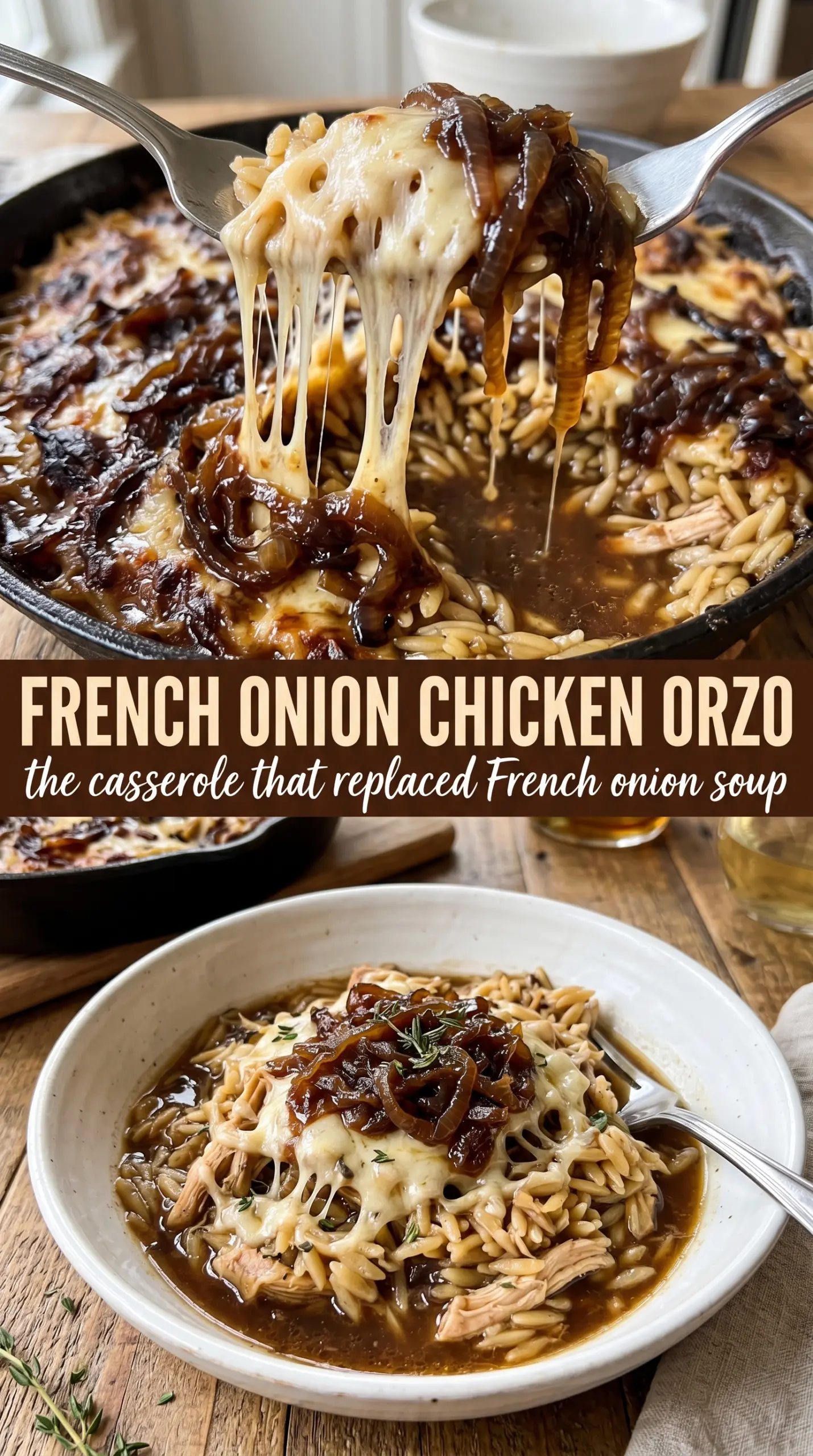
- Yellow onions — These are the backbone of the dish. Sweet onions can work in a pinch, but yellow onions give you the best balance of sweetness and savory depth once they caramelize.
- Gruyère — This is the cheese that gives the casserole its French onion character. It melts smoothly, browns well, and has that nutty edge that mozzarella can’t fully replace.
- Beef broth plus chicken broth — The beef broth adds the dark, savory base you expect from French onion flavor, while the chicken broth keeps the casserole from tasting too heavy. All chicken broth will work, but the result is lighter and less complex.
- Orzo — Orzo thickens the casserole as it bakes and turns the broth into a creamy sauce. Standard orzo is the right choice here; larger pasta won’t absorb liquid the same way and the texture changes completely.
- Worcestershire sauce — This gives the dish a subtle fermented depth that echoes the long-cooked flavor of onion soup. It disappears into the background, but you’d notice if it were missing.
Building the Skillet So the Orzo Bakes Creamy, Not Soupy
Caramelizing the onions properly
Melt the butter with the olive oil first, then add the onions with a pinch of salt and give them time. They’ll look like too much at the start, then collapse, then turn glossy and sticky as the moisture cooks off. Don’t crank the heat to speed this along. If the onions start catching before they turn deep gold, lower the heat and keep going; burnt spots taste bitter, while evenly caramelized onions taste sweet and round.
Searing the chicken in the onion base
Push the onions to one side of the skillet and let the chicken hit the hot pan directly. You’re looking for golden edges, not full cooking, because the oven will finish the job. If the pan is crowded, the chicken steams and turns pale, which means you lose the browned flavor that helps the final sauce taste like it’s been cooking all day.
Letting the orzo absorb the liquid in the oven
Once the garlic, broth, Worcestershire, and thyme go in, stir well and bring everything to a simmer before the cheese goes on top. The liquid needs to be hot when the skillet goes in so the orzo starts cooking right away. Bake uncovered until the pasta is tender and the top is bubbling with browned spots. If it comes out looking loose, give it five more minutes; the sauce tightens as it rests.
The five-minute rest that makes serving easier
Let the casserole sit before you scoop it. That short rest gives the broth time to settle into the orzo, so the dish turns creamy instead of runny on the plate. If you cut into it immediately, the sauce will look thinner than it really is. Waiting a few minutes also keeps the cheese from sliding off in a molten sheet.
How to Adapt It When You Need a Different Cheese, Grain, or Dairy-Free Version
Swap the Gruyère for Swiss or provolone
Swiss gives you a similar nutty melt, while provolone leans milder and stretchier. Both work, but neither has quite the same depth as Gruyère, so the casserole will taste a little less like classic French onion soup.
Make it gluten-free with gluten-free orzo
Use a gluten-free orzo that holds up well in baked dishes, and keep a close eye on the liquid near the end of baking. Some gluten-free pastas soften faster, so check for tenderness a few minutes early and pull it once the center is just cooked.
Go dairy-free with olive oil and a meltable plant-based cheese
Replace the butter with all olive oil and use a dairy-free cheese that actually melts, not one that just dries out on top. You’ll lose some of the richness that butter and Gruyère bring, but the caramelized onions and broth still give the casserole plenty of character.
Use rotisserie chicken instead of raw chicken
Stir in shredded rotisserie chicken after the broth goes in, then move straight to the cheese and oven. This cuts the active cooking time, but you’ll miss the browned flavor from searing the chicken in the skillet, so the dish tastes a little lighter and less roasty.
Storage and Reheating
- Refrigerator: Store covered for up to 4 days. The orzo will keep absorbing sauce, so the casserole gets thicker by day two.
- Freezer: It freezes, but the pasta softens a bit after thawing. Freeze in airtight portions for up to 2 months for the best texture.
- Reheating: Warm gently in the oven at 325°F with a splash of broth or water covered loosely with foil. Microwaving on high can dry out the chicken and make the cheese separate at the edges.
Answers to the Questions Worth Asking
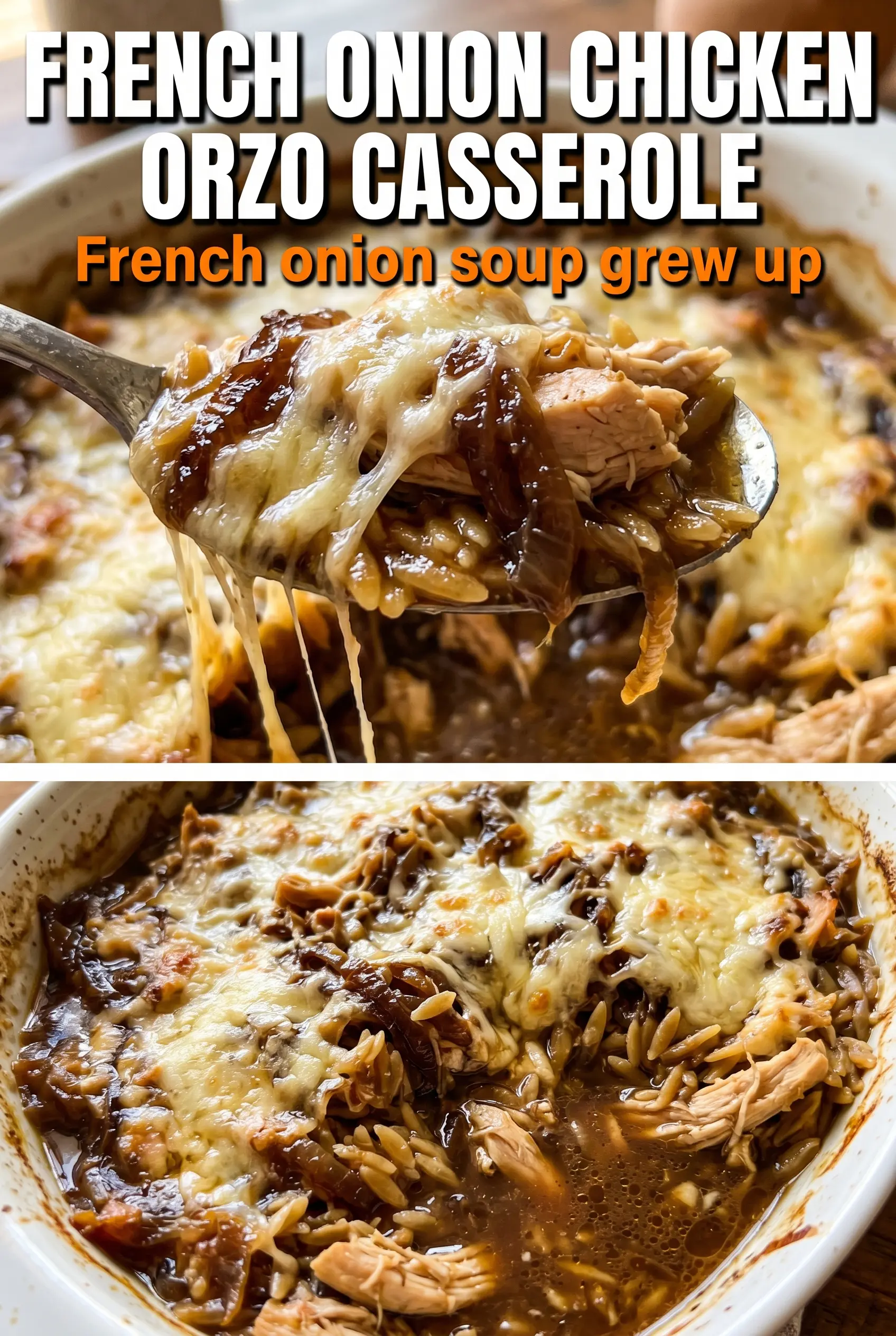
French Onion Chicken Orzo Casserole
Ingredients
Equipment
Method
- Melt butter with olive oil in a large oven-safe skillet over medium-low heat, then add sliced onions with a pinch of salt and stir to coat.
- Cook for 25–30 minutes, stirring occasionally, until the onions are deeply caramelized with a dark golden color and soft texture.
- Preheat the oven to 375°F while the onions finish caramelizing.
- Push onions to the side in the skillet, add chicken pieces, and sear for 2–3 minutes per side until golden.
- Add garlic, dry orzo pasta, beef broth, chicken broth, Worcestershire sauce, and fresh thyme leaves, then stir to combine and bring to a simmer.
- Top evenly with shredded Gruyère cheese so it covers the surface in a thick, even layer.
- Transfer the skillet to the oven and bake uncovered for 20–25 minutes until the orzo is cooked through and the cheese is golden and bubbling.
- Let the casserole rest for 5 minutes before serving so the sauce thickens slightly.