Griddle smashed potatoes hit the table with the kind of crunch that makes people reach in before they’ve even sat down. The edges turn deeply crisp while the centers stay fluffy, and when you finish them with cheddar, bacon, sour cream, and chives, they eat like the best parts of a loaded baked potato and a diner-style skillet side all at once.
The trick is getting the potatoes tender first, then letting them cool just enough to hold together when smashed. On the griddle, the combination of olive oil and butter gives you the right balance of high-heat browning and rich flavor, and the garlic cooks alongside the potatoes so it perfumes the fat instead of burning in a dry pan.
Below, I’ll walk you through the one part that matters most for crisp edges, plus a few ways to adapt these when you want them extra cheesy, dairy-free, or easier to prep ahead.
The potatoes got that shattering crisp crust on the griddle and the middle stayed fluffy. I added the cheese right at the end and it melted into all the little ridges perfectly.
Love these griddle smashed potatoes? Save them for the nights when you want crispy edges, melty cheese, and an easy loaded side dish.
The Smash That Gives You Crispy Edges Instead of a Broken Potato Pile
The biggest mistake with smashed potatoes is pressing them too early or too hard before they’ve had a chance to dry out a little. If the potatoes are still steaming wet when they hit the griddle, they soften the fat around them and you end up with pale bottoms instead of a crust that releases cleanly.
Cooling them for a few minutes after boiling matters more than people think. They should be tender enough to flatten without resistance, but not so hot that they collapse into mash the second the spatula lands. A good smash turns the potato into more surface area, and surface area is what crisps.
- Baby potatoes — Small potatoes hold their shape better than large russets here. Waxy or mixed baby potatoes give you a creamy middle and sturdier edges that can take a heavy smash.
- Olive oil and butter — The oil keeps the griddle hot enough for browning, while the butter adds flavor and helps the crust go deep gold. Use both if you can.
- Garlic — Adding minced garlic to the hot fat gives the potatoes a savory, toasty finish. It burns fast, so keep it moving and let it cook in the drippings rather than under direct high heat for too long.
- Cheddar, bacon, sour cream, and chives — These turn a crisp side into a loaded one. Sharp cheddar gives the best contrast to the potatoes, and the sour cream should go on at the end so it stays cool and tangy instead of melting away.
What Each Ingredient Is Actually Doing in These Loaded Potatoes
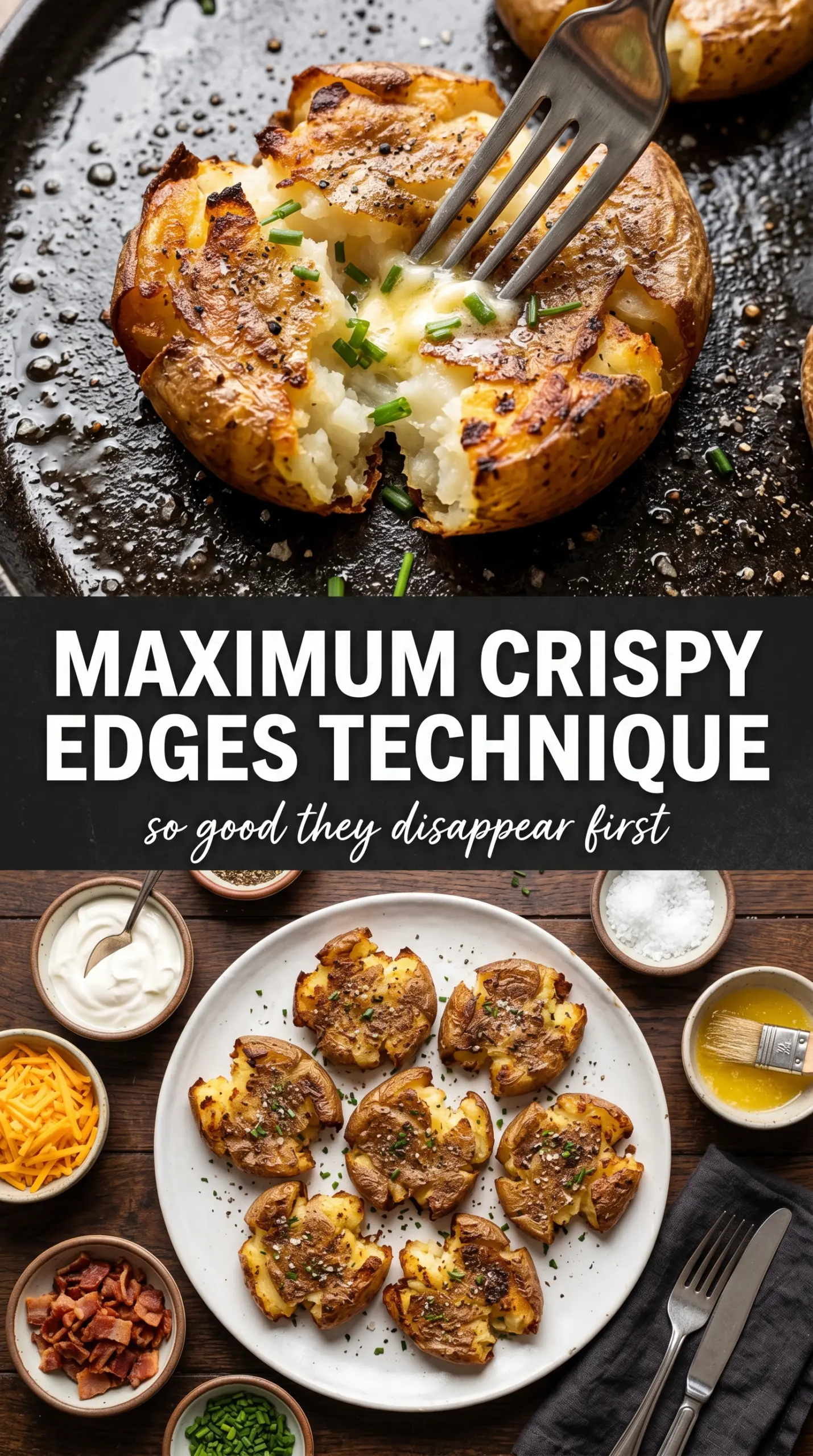
- Baby potatoes — These are the backbone of the recipe. Their thin skins crisp up well, and their size makes them easy to smash into even rounds without falling apart. If you only have larger potatoes, cut them into thick chunks after boiling, but the texture won’t be quite as clean.
- Olive oil — This gives you the high-heat base for browning. A neutral oil works in a pinch, but olive oil adds a little more flavor and helps the potatoes develop a richer crust.
- Butter — Butter is there for flavor and color. It also helps the smashed potatoes pick up that diner-style finish on the griddle. If you need dairy-free, use all oil and expect a slightly less rich taste.
- Garlic — Fresh minced garlic is worth using here. It perfumes the whole dish and clings to the crispy edges. Garlic powder won’t give the same savory bite.
- Cheddar cheese — Sharp cheddar melts best and gives the strongest payoff over the crispy potatoes. Pre-shredded cheese works, but freshly grated melts smoother.
- Bacon, sour cream, and chives — These toppings build the loaded finish. Bacon adds salt and crunch, sour cream cools the heat, and chives keep the whole dish from tasting too heavy.
Getting the Potatoes Crisp on the Griddle Without Burning the Garlic
Boiling Until the Centers Give Way
Start by boiling the baby potatoes until a knife slips in with little resistance, about 15 to 20 minutes depending on their size. Drain them well, then let them sit for a few minutes so surface moisture can evaporate. If they’re waterlogged, they’ll steam when they hit the griddle and the crust will lag behind.
Setting Up the Hot Surface
Heat the griddle to medium-high before the potatoes go down, then add the oil and butter. You want the fat shimmering and the butter foaming, not smoking hard. That’s the sweet spot for fast browning without a bitter, burnt edge.
Smashing and Searing
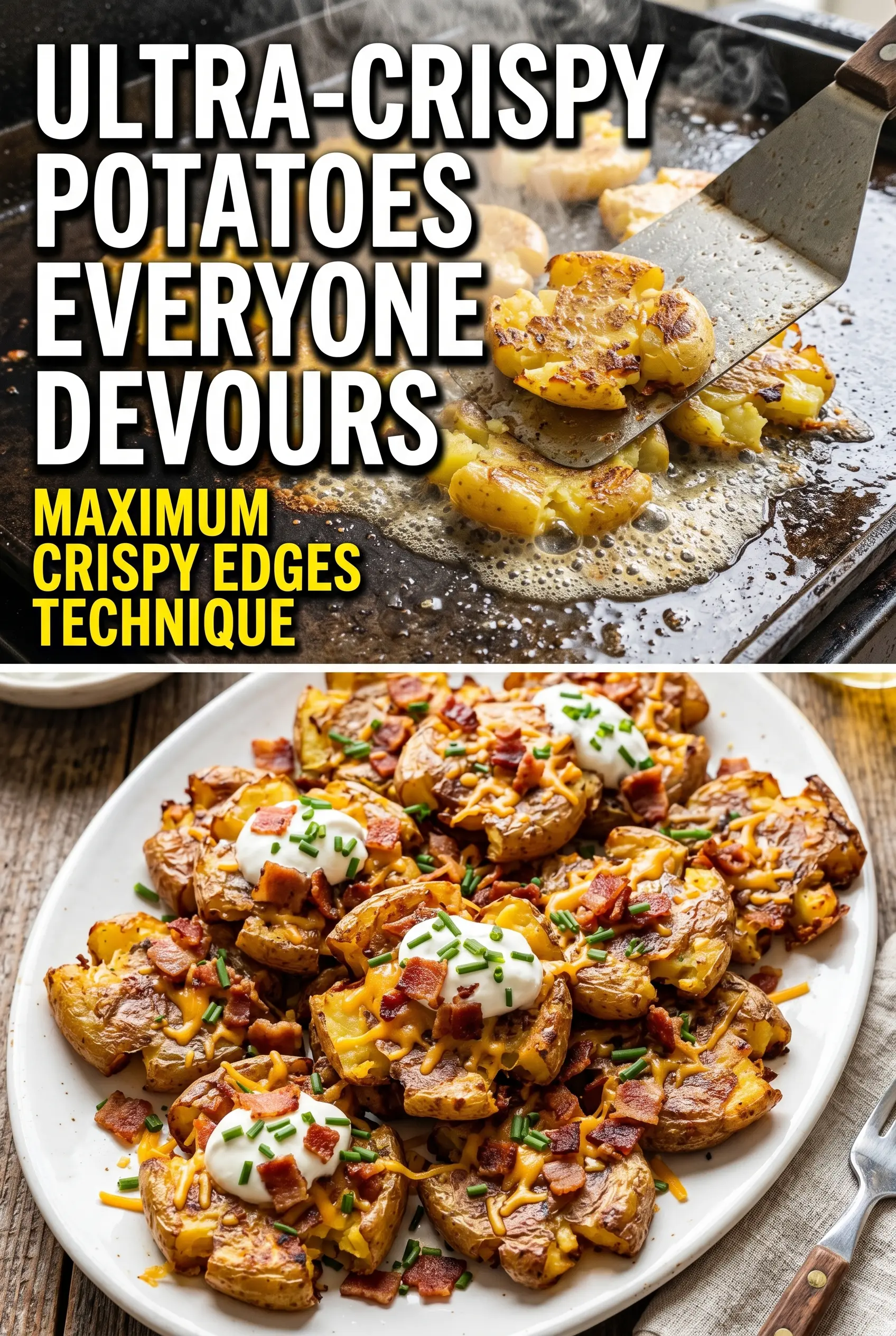
Place the potatoes on the griddle and press them flat with a heavy spatula. Don’t drag them around after the smash; leave them alone so the underside can set. Add the garlic around the potatoes, not directly under the center of each one, and let it toast in the fat until fragrant. If you keep flipping early, the crust won’t have time to form.
Finishing the Loaded Topper
When both sides are crisp and deeply golden, pile on the cheddar while the potatoes are still hot so it melts into the rough edges. Add the bacon, then finish with a spoonful of sour cream and a shower of chives. Serve them right away, because the crust is at its best the moment it comes off the griddle.
How to Adapt These for Different Tables and Different Diets
Make Them Dairy-Free
Use all olive oil instead of the butter and skip the sour cream, or replace it with a dairy-free sour cream after cooking. You’ll lose a little of the rich diner-style flavor, but the potatoes will still crisp well and the bacon will carry plenty of savoriness.
Make Them Vegetarian
Leave off the bacon and finish with extra chives and a little smoked paprika if you want that smoky edge back. The potatoes still taste full and satisfying, especially if you use sharp cheddar and don’t skimp on the salt.
Swap the Toppings for What’s in the Fridge
Try Monterey Jack, pepper jack, or even a little Parmesan instead of cheddar, depending on what you have. Just keep the cheese layer thin so it melts without burying the crisp surface you worked for.
Storage and Reheating
- Refrigerator: Store leftovers in an airtight container for up to 3 days. The crust softens, but the flavor holds up well.
- Freezer: These freeze okay without the sour cream, but the texture won’t be as crisp after thawing. Freeze the cooked potatoes on a tray first, then pack them tightly.
- Reheating: Reheat on a hot skillet, griddle, or in the oven at 425°F until the edges crisp again. The microwave will soften them completely, which is the one thing that works against this recipe.
Answers to the Questions Worth Asking
Griddle Smashed Potatoes
Ingredients
Equipment
Method
- Boil the baby potatoes until tender, about 15-20 minutes, then drain and cool slightly. The potatoes should be soft when pierced but not falling apart.
- Heat a griddle (or cast iron skillet) to medium-high and add the olive oil and butter. You should see the butter melt and the oil shimmer.
- Place the potatoes on the griddle and smash completely flat with a heavy spatula. Press firmly until you get even, flattened potato rounds.
- Add the minced garlic around the potatoes and cook for 6-7 minutes until a crispy golden crust forms. Look for deep golden edges and a firm, textured surface.
- Flip the potatoes and cook another 5-6 minutes until both sides are crispy. The second side should match the first with crisp, browned corners.
- Top the hot crispy potatoes with shredded cheddar cheese, cooked and crumbled bacon, sour cream, and chopped chives before serving. The cheese should begin to melt immediately from the heat.