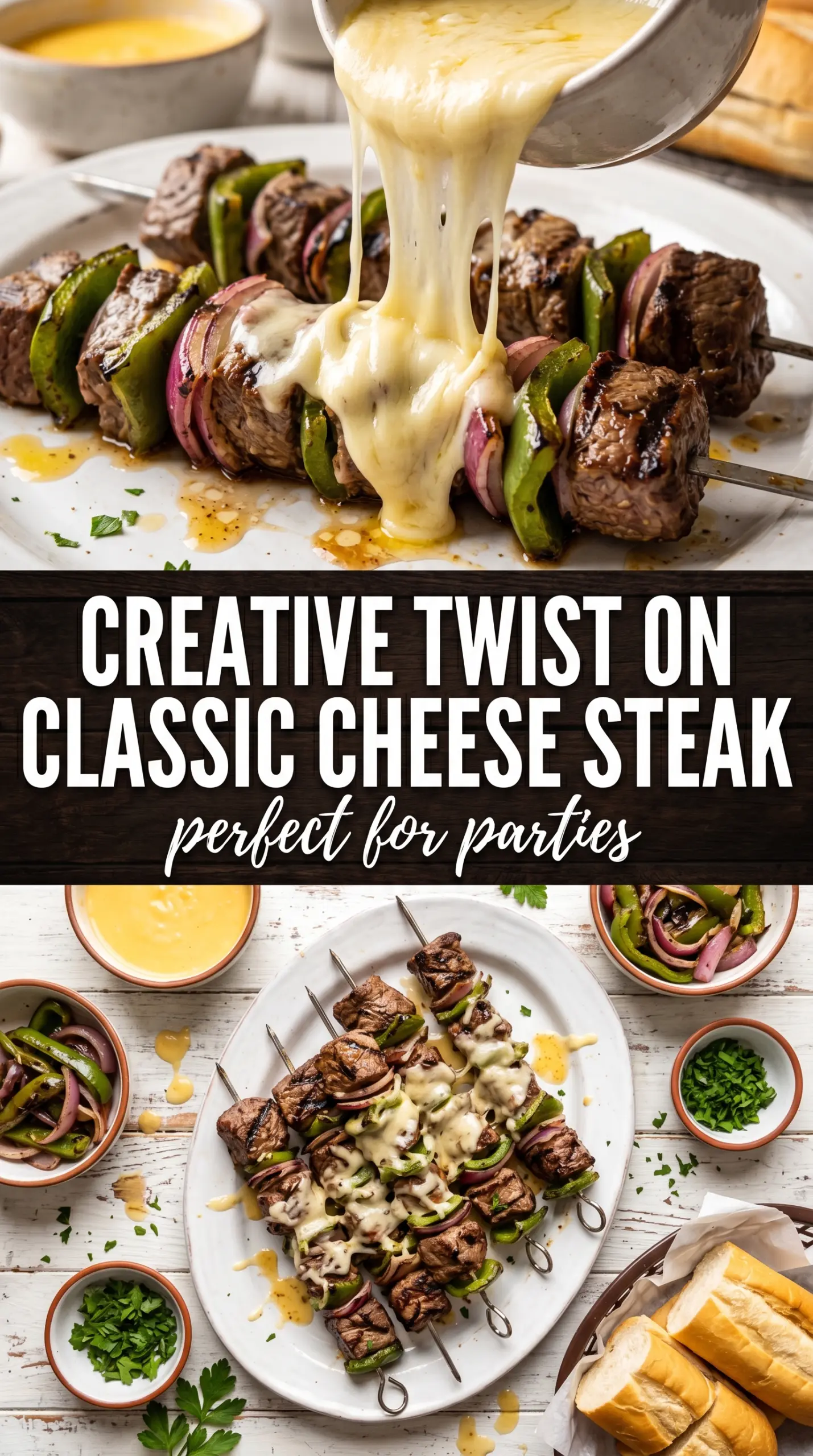
Grilled Philly cheese steak kabobs bring all the best parts of a classic cheesesteak to the grill: charred beef edges, sweet peppers, tender onions, and that salty, melty provolone finish. The skewer format keeps the steak and vegetables in direct contact with the heat, so you get a little caramelization on everything instead of a steaming skillet full of softer filling.
Ribeye is the right cut here because it stays juicy over high heat and still tastes rich after a fast grill. The Worcestershire, garlic powder, and onion powder build the savory backbone before the kabobs ever hit the flames, and the vegetables are cut large enough to hold up without falling apart. The trick is keeping the pieces close in size so the beef and vegetables finish together instead of one burning while the other stays raw.
Below, I’m walking through the best way to thread and grill these kabobs so the steak stays tender and the cheese melts cleanly at the end. I’ve also included a few smart swaps and the one reheating tip that keeps leftovers from turning dry.
The steak stayed juicy and the peppers still had a little bite, which is exactly what I wanted. Melting the provolone right on the kabobs was the best part — it held onto the meat instead of sliding off everywhere.
Love the charred steak, peppers, and melty provolone in these Philly cheese steak kabobs? Save them to Pinterest for your next easy grill night.
The Secret to Keeping the Steak Juicy on a Hot Grill
The biggest risk with kabobs like this is overcooking the beef while you wait for the vegetables to soften. Ribeye gives you a little cushion because of the marbling, but it still needs fast, direct heat and a short grill time. If the grill runs too hot, the outside can dry out before the cheese even gets a chance to melt.
Cutting the steak into 1.5-inch cubes helps here. Smaller pieces cook too fast and get chewy; larger pieces take too long and throw off the whole skewer. The goal is a browned exterior, a tender center, and vegetables that still taste like themselves instead of collapsing into mush.
- Ribeye — This cut has enough fat to stay tender over the grill. Strip steak works in a pinch, but it won’t have the same rich, juicy bite.
- Bell peppers and onion — These add sweetness and balance the beef. Cut them into sturdy chunks so they char instead of softening too quickly.
- Mushrooms — They soak up the seasoning and bring that savory, steakhouse feel. Use cremini if you want a deeper flavor, or skip them if your crowd prefers a more traditional cheesesteak vibe.
- Provolone — This is the finish that ties everything together. It melts smoothly without turning greasy, which is why it works better here than a sharper, crumbly cheese.
What Each Ingredient Is Actually Doing on These Kabobs
- Olive oil — It helps the seasonings cling and keeps the steak from sticking to the grill. You don’t need a fancy bottle here; a basic extra-virgin olive oil is fine.
- Worcestershire sauce — This adds the deep savory note that makes the kabobs taste like more than grilled beef and vegetables. Don’t swap it for plain soy sauce unless you want a saltier, less rounded result.
- Garlic powder and onion powder — These season the meat evenly without burning the way fresh minced garlic can on a hot grill. That matters more than you’d think.
- Hoagie rolls — Optional, but they turn the kabobs into a true sandwich meal. Toast them lightly so they can catch the melted cheese without going soggy.
Grilling the Kabobs Without Losing the Cheese
Seasoning the Steak First
Toss the steak cubes with the oil, Worcestershire, garlic powder, onion powder, salt, and pepper before anything else. That quick marinade coats the meat and seasons the surface, which matters because kabobs cook fast and don’t have much time to build flavor on the grill. Let the steak sit while you cut the vegetables and thread the skewers, and don’t leave it sitting for hours or the texture can turn a little soft.
Threading for Even Cooking
Alternate the beef with peppers, onion, and mushrooms so every skewer gets a mix of flavors and heat exposure. Keep the pieces snug but not packed tight; if the food is jammed together, the edges steam instead of browning. If you use wooden skewers, soak them long enough that they don’t scorch over medium-high heat.
Grilling for Color, Not Just Doneness
Cook the kabobs over medium-high heat for 10 to 15 minutes, turning every 3 to 4 minutes. You’re looking for charred edges on the vegetables and steak that still has a little spring when pressed, not rock-hard cubes. If the flames start licking up around the oil, move the skewers to a cooler spot for a minute instead of letting the outside blacken before the center is ready.
Melting the Provolone at the End
Lay a slice of provolone over each kabob during the last minute and close the grill lid. That trapped heat melts the cheese evenly without drying it out or letting it slide off the skewers. Pull the kabobs as soon as the cheese goes glossy and starts to slump over the meat.
How to Adapt These Kabobs for Different Kitchens and Crowds
Dairy-Free Version
Skip the provolone and serve the kabobs with a little warm garlic oil or dairy-free cheese if you use one that melts well. You’ll lose the classic cheesesteak finish, but the grilled beef and vegetables still carry the dish.
Gluten-Free Serving Option
The kabobs themselves are naturally gluten-free if your Worcestershire sauce is certified gluten-free. Serve them over rice, mashed potatoes, or straight off the skewer instead of using hoagie rolls.
No Grill, Same Idea
A grill pan or broiler works if the weather won’t cooperate. You won’t get quite the same smoky edge, so let the pan get hot before the skewers go on and use the broiler at the end just long enough to melt the cheese.
Storage and Reheating
- Refrigerator: Store leftovers for up to 3 days. The vegetables will soften a bit, but the flavor stays good.
- Freezer: Freezing isn’t ideal once the kabobs are cooked, since the peppers and onion lose their texture. If you want to freeze ahead, freeze the seasoned raw steak separately from the cut vegetables.
- Reheating: Warm the meat and vegetables in a covered skillet over low heat or in a 300°F oven until heated through. Don’t blast them in the microwave for too long or the steak will tighten up and turn dry.
Questions I Get Asked About This Recipe

Grilled Philly Cheese Steak Kabobs
Ingredients
Equipment
Method
- Toss the ribeye steak cubes with olive oil, Worcestershire sauce, garlic powder, onion powder, salt, and pepper until evenly coated.
- Thread beef, peppers, onions, and mushrooms onto skewers, alternating ingredients so each skewer has colorful portions all the way through.
- Grill the kabobs over medium-high heat for 10-15 minutes, turning every 3-4 minutes until the steak reaches desired doneness.
- In the last minute of grilling, drape provolone cheese slices over the kabobs and close the grill lid to melt, until you see glossy, melted cheese.
- Serve the kabobs on hoagie rolls or as-is with the melted cheese on top.