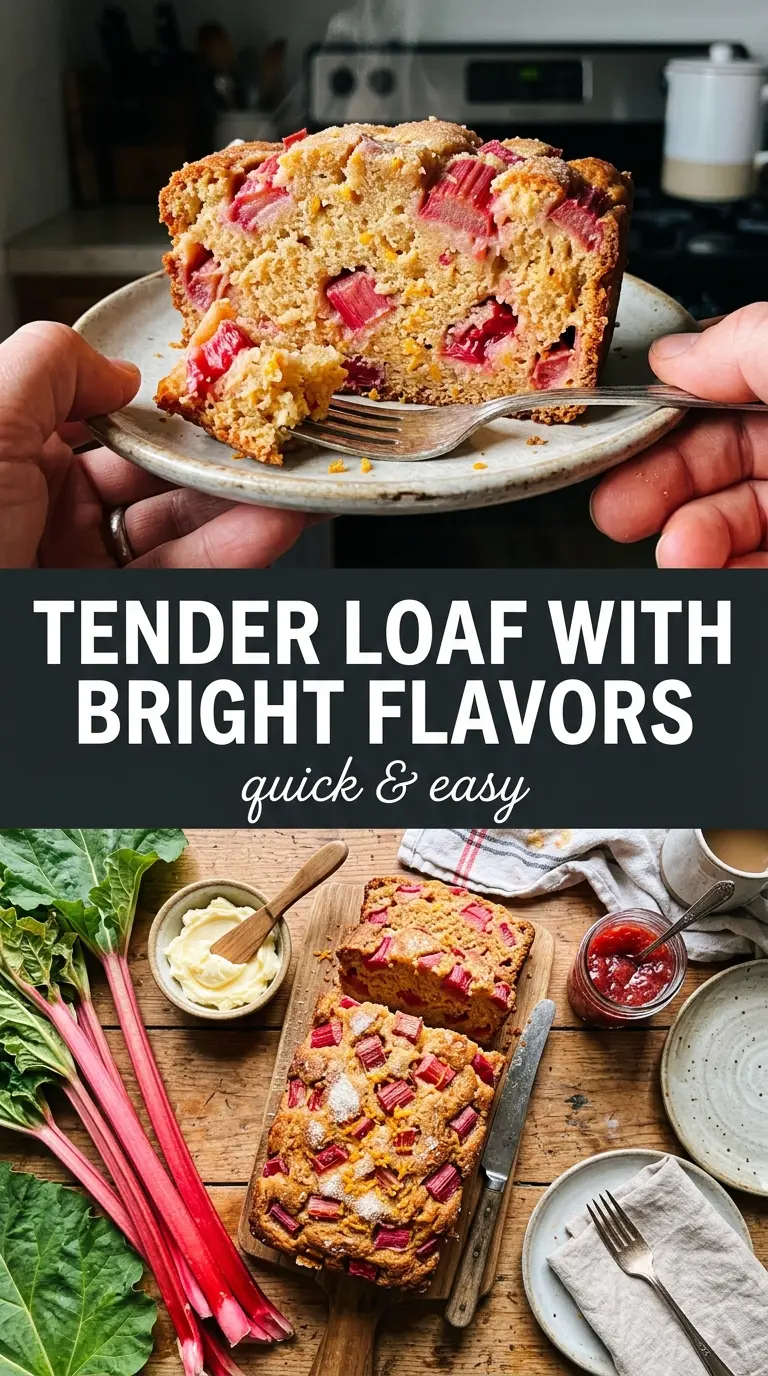
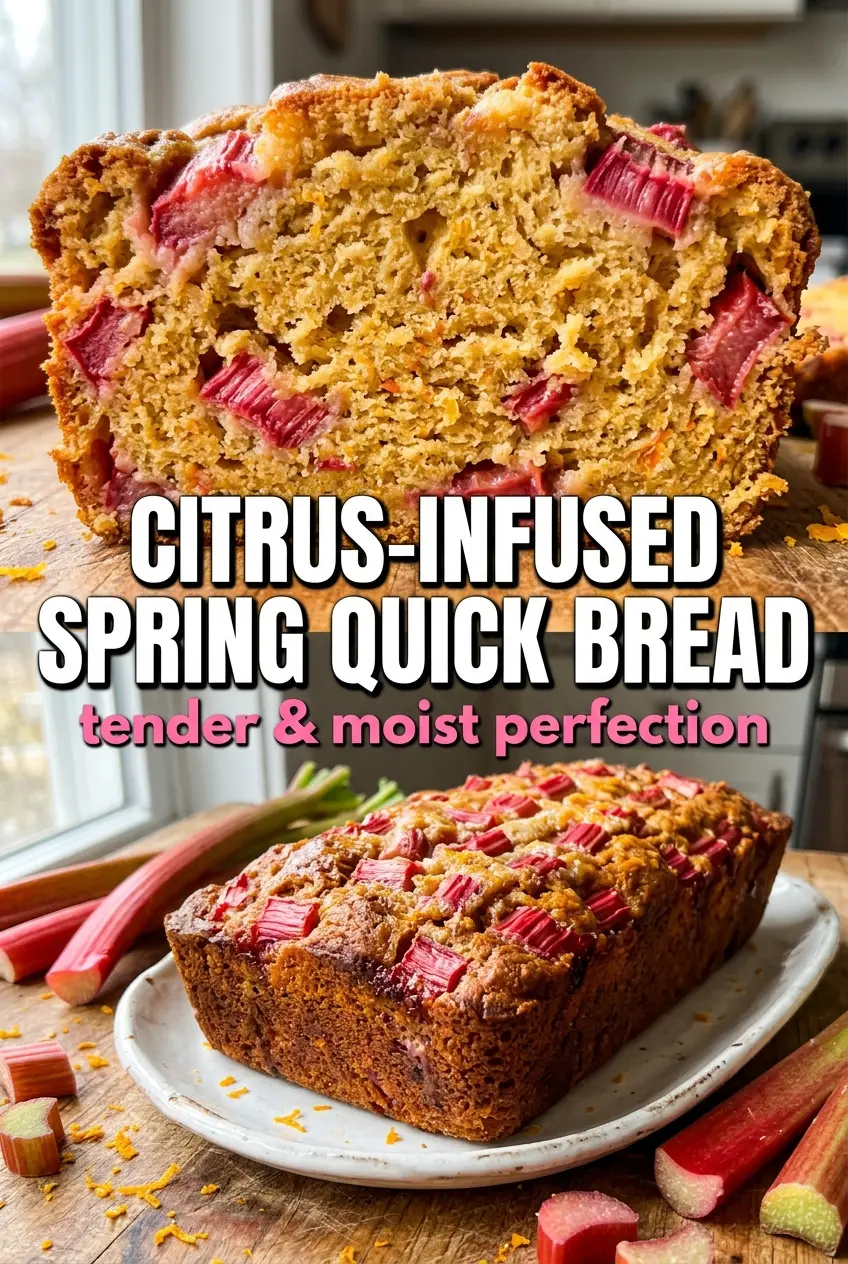
Orange Rhubarb Bread bakes up with a tender crumb, bright citrus perfume, and little bursts of tart rhubarb that keep each slice from tasting flat or overly sweet. The glaze melts into the top just enough to give it a glossy finish without turning the loaf sticky, and the whole thing feels like the kind of breakfast bread that disappears by the second day.
The balance matters here. Rhubarb brings sharpness, so the orange juice and zest do more than flavor the loaf — they round out the tart edges and keep the sugar from taking over. Stirring the batter only until it comes together is what keeps the texture soft instead of dense, and folding the rhubarb in at the end helps it stay evenly distributed instead of sinking to the bottom.
Below you’ll find the exact cues I watch for when the loaf is done, plus a few swaps that work if your rhubarb is extra tart or you want to skip the glaze.
The orange zest came through beautifully and the rhubarb stayed little tender pops instead of disappearing into the batter. Mine was done right at 54 minutes and sliced cleanly after cooling, which never happens with quick breads in my kitchen.
Save this orange rhubarb bread for the mornings when you want a tender quick bread with a bright citrus glaze and tart rhubarb in every slice.
The Trick to Keeping Rhubarb from Turning the Loaf Gummy
Rhubarb brings a lot of moisture with it, and that is the part that trips people up. If it is chopped too large, it can leave wet pockets in the crumb; if it is stirred in too aggressively, the batter gets overworked and the loaf turns heavy. Finely dicing the rhubarb gives you small, even pieces that soften during baking without flooding the batter.
The other thing that matters is the mixing order. Dry ingredients go together first, then the wet ingredients are stirred in just until the flour disappears. That keeps the quick bread tender. Once the rhubarb goes in, fold only enough to distribute it. You want streaks of fruit throughout the loaf, not a beaten-up batter.
What the Orange Juice and Zest Are Really Doing Here
- Orange juice — This is the moisture and flavor base for both the loaf and the glaze. Fresh juice tastes cleaner and brighter than bottled, and it keeps the bread from leaning too sweet.
- Orange zest — The zest carries the strongest orange aroma, so don’t skip it. It gives the loaf that bakery-style citrus top note that juice alone can’t deliver.
- Rhubarb — Fresh rhubarb is worth using here because it holds its shape and gives the bread those soft tart bites. Frozen rhubarb can work if you thaw and drain it well first, or the batter can turn wet.
- Vegetable oil — Oil keeps the crumb moist for days, which is exactly what you want in a quick bread. Butter would add flavor, but it also firms up more as the loaf cools.
- Powdered sugar glaze — The glaze is thin enough to soak into the warm top without running off completely. If you want a lighter finish, use a little less orange juice and drizzle slowly.
Baking the Loaf So It Stays Tender All the Way Through
Mix the Dry Base First
Whisk the flour, sugar, baking soda, and salt together until the mixture looks uniform and no clumps of baking soda are visible. That even distribution matters because quick bread batter doesn’t get much mixing later. If the dry ingredients are streaky, the loaf can rise unevenly and taste off in spots.
Bring the Wet Ingredients Together Gently
Beat the eggs, oil, orange juice, and zest just until combined. You’re not trying to add volume here, only to emulsify the mixture so it blends smoothly into the dry ingredients. If the eggs and oil separate before going in, the batter will still bake up fine, but it takes a little longer to mix evenly.
Fold in the Rhubarb Without Beating the Batter
Once the wet and dry ingredients are combined, stop as soon as you no longer see dry flour. Then fold in the rhubarb with a spatula and scrape the bowl well. Overmixing is the fastest way to get a tight, rubbery loaf, and this batter only needs a few turns to come together.
Watch for the Center to Set
Bake in a greased 9×5-inch loaf pan at 350°F until a toothpick comes out clean from the center, usually 50 to 55 minutes. The top should be golden and slightly cracked, and the loaf should spring back when pressed lightly. If the top browns before the middle is done, lay a loose piece of foil over it for the last 10 to 15 minutes.
Glaze While the Loaf Is Still Warm
Let the bread cool in the pan for 10 minutes, then turn it out onto a rack. Drizzle the glaze over the warm loaf so a little of it melts into the crust, but don’t pour it on while the bread is steaming hot or it will slide right off. Warm bread takes the glaze better; fully cooled bread gives you a thicker finish.
How to Adjust This Loaf Without Losing the Soft Crumb
Make It Dairy-Free Without Changing a Thing
This loaf is already dairy-free as written, which makes it an easy choice when you want a breakfast bread that doesn’t need any special substitutions. The oil-based batter stays moist, and the orange glaze comes together with just powdered sugar and juice.
Skip the Glaze for a Less Sweet Loaf
If you want the bread to taste more like breakfast than dessert, leave off the glaze entirely. The loaf still has plenty of orange flavor from the juice and zest, and the rhubarb keeps it bright instead of flat.
Use Frozen Rhubarb When Fresh Isn’t Available
Frozen rhubarb works if you thaw it first and drain away the excess liquid before folding it into the batter. If you skip that step, the loaf can bake up gummy in the center and sink a little after cooling.
Turn It Into Muffins
Divide the batter into lined muffin cups and bake until the centers spring back and a tester comes out clean, usually in about 18 to 22 minutes. You’ll lose the dramatic loaf slice, but you gain faster baking and easy portioning.
Storage and Reheating
- Refrigerator: Keep tightly wrapped for up to 4 days. The crumb stays moist, though the glaze softens a bit.
- Freezer: Freeze the unglazed loaf or individual slices wrapped well for up to 2 months. Add the glaze after thawing for the best texture.
- Reheating: Warm slices briefly in the microwave or toaster oven. Too much heat dries quick bread out fast, so just warm until the center is no longer cold.
Answers to the Questions Worth Asking
Orange Rhubarb Bread
Ingredients
Equipment
Method
- Preheat the oven to 350°F and grease a 9x5-inch loaf pan.
- Whisk together all-purpose flour, sugar, baking soda, and salt.
- Beat eggs, vegetable oil, orange juice, and orange zest until combined.
- Pour the wet ingredients into the dry ingredients and stir until just mixed, then fold in the finely diced rhubarb.
- Pour batter into the prepared loaf pan and bake at 350°F for 50–55 minutes, until a toothpick comes out clean and the top looks set.
- Cool the bread in the pan for 10 minutes, then turn it out onto a wire rack so steam escapes and the loaf firms up.
- Mix powdered sugar and orange juice for the glaze, then drizzle over warm bread so it soaks slightly and forms a light sheen.
- Cool for an additional 20 minutes before slicing for the moist crumb to finish setting.