Ruby-pink rhubarb syrup has a way of making the whole kitchen feel a little more useful. It’s bright, tangy, and just sweet enough to pour over pancakes, stir into sparkling water, or shake into a cocktail without getting lost. Canning it turns a short rhubarb season into jars you can pull out for months, and the color alone makes it worth the effort.
This version keeps the ingredient list short on purpose. Rhubarb brings the sharp flavor and that jewel-toned color, while sugar gives the syrup body and preserves it. A little lemon juice helps the flavor stay lively and nudges the acidity in the right direction for safe water-bath processing. The key is straining well and boiling the syrup long enough for the sugar to fully dissolve before it goes into the jars.
Below, I’ll walk through the part that matters most when you want a clean, clear syrup instead of something cloudy or thin. I’ve also added notes for using the syrup in drinks and over breakfast, plus a few simple variations if you want to shift the sweetness or spice it up a little.
The syrup came out crystal clear and that ruby color was gorgeous in the jars. I used it in iced tea and on pancakes, and it held its bright rhubarb flavor without tasting overly sweet.
Like this ruby-pink rhubarb syrup? Save it to Pinterest for pancake mornings, sparkling drinks, and cocktail hour.
The Part That Keeps Rhubarb Syrup Clear Instead of Cloudy
Most people rush the straining step and end up with a syrup that looks muddy instead of bright. Rhubarb softens fast, but it also breaks down into a lot of pulp, and if you squeeze that pulp too aggressively through a loose strainer, you can push fine solids back into the liquid. A fine mesh strainer lined with cheesecloth gives you a cleaner result, and pressing just enough to extract the liquid without grinding the pulp is the difference between translucent syrup and something that settles in the jar.
The other place this recipe can go sideways is the final boil. If the sugar isn’t fully dissolved before the syrup goes into the jars, it can crystallize later or leave the texture gritty at the bottom. Keep it at a steady boil for the full 5 minutes after the sugar goes in, then fill the jars while the syrup is still hot so it seals and stays pourable.
What the Rhubarb, Sugar, and Lemon Juice Are Each Doing
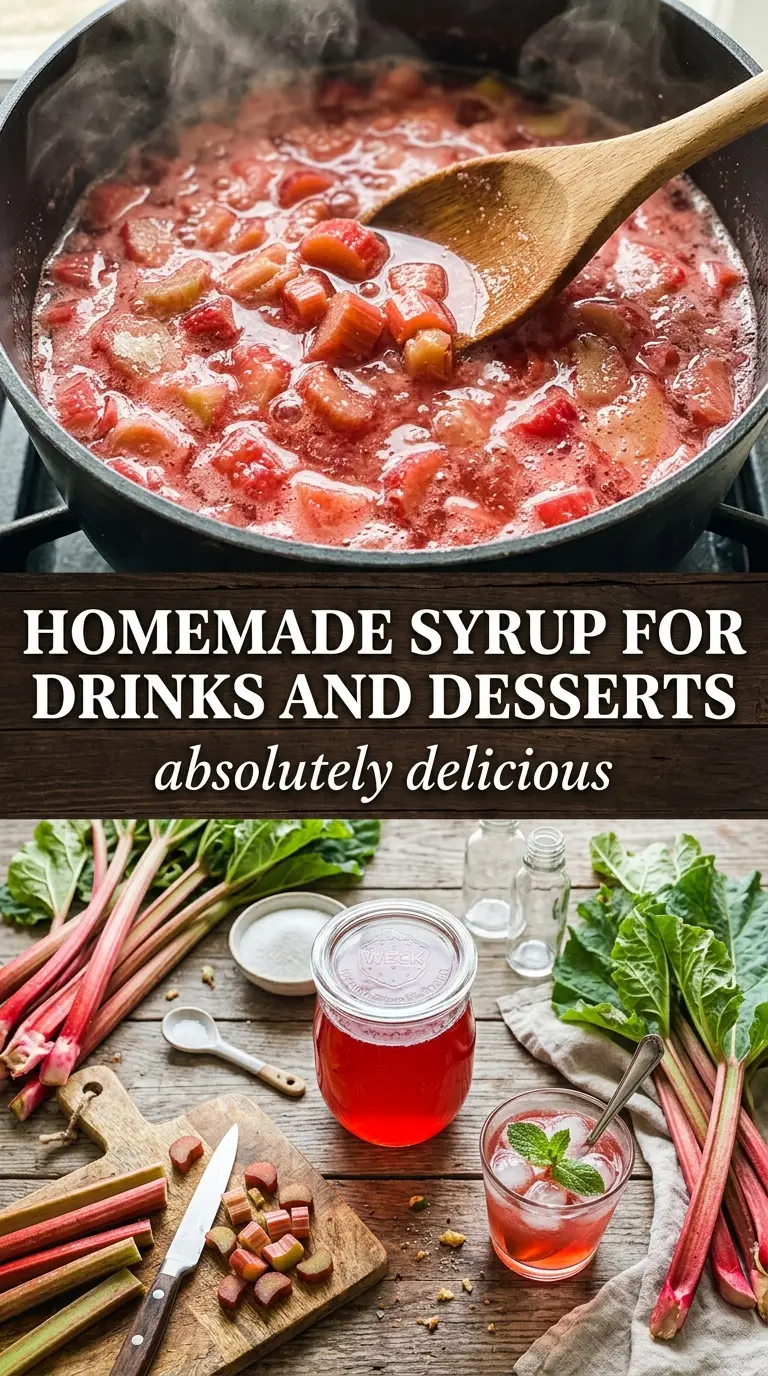
- Rhubarb — Fresh rhubarb gives this syrup its sharp, clean flavor and that unmistakable pink color. Older stalks work fine here, but the best color usually comes from deep red stalks. Frozen rhubarb also works; use it straight from frozen and expect a little more liquid in the pot.
- Sugar — Sugar isn’t just sweetening the syrup. It gives the finished canning liquid body and helps preserve it. Cutting it down too far makes the syrup taste thin and shortens the shelf life once opened.
- Lemon juice — This sharpens the flavor and helps the syrup taste brighter instead of flat. Bottled lemon juice is fine for canning because consistency matters more than fresh juice here. Don’t skip it unless you’re changing the recipe for a tested preserve formula.
- Water — Water pulls the flavor out of the rhubarb before the syrup is strained and concentrated. The 4 cups are there to give the fruit enough room to release its flavor without scorching at the bottom of the pot.
How to Cook Down the Fruit and Bottle the Syrup Cleanly
Softening the Rhubarb
Combine the chopped rhubarb and water in a large pot and bring it to a boil, then lower the heat and let it simmer until the rhubarb turns completely soft and starts collapsing. You’re looking for fruit that falls apart when stirred, not pieces that still hold their shape. If the heat is too high, the pot can reduce too quickly before the rhubarb fully gives up its juice, which leaves you with less syrup than you expected.
Straining Without Clouding the Syrup
Set a fine mesh strainer over a bowl or line it with cheesecloth for a cleaner finish, then pour in the cooked rhubarb mixture and let it drain before pressing gently. The goal is to extract the liquid, not mash the pulp through the cloth. You should end up with about 4 cups of juice; if you’re short by a little, don’t keep squeezing the pulp dry, because that’s when the syrup turns cloudy and can pick up a slightly bitter edge.
Cooking the Syrup and Filling the Jars
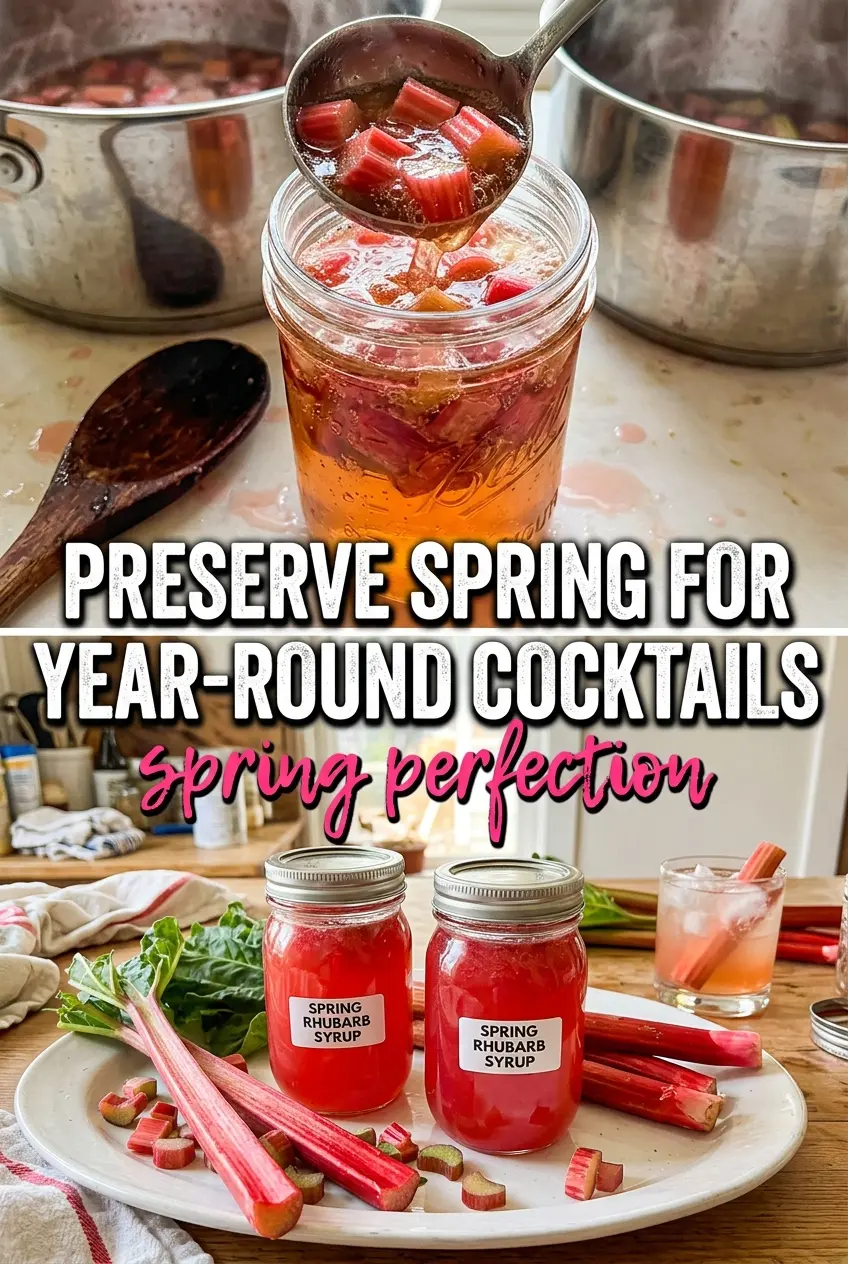
Return the strained juice to the pot, add the sugar and lemon juice, and bring it back to a boil. Stir until the sugar disappears completely, then let it simmer for 5 minutes so the syrup finishes dissolving and thickens slightly. Ladle the hot syrup into sterilized pint jars, leaving 1/4-inch headspace, wipe the rims, and process in a boiling water bath for 10 minutes. If the jars don’t seal, refrigerate that jar and use it first.
Three Ways to Adjust Rhubarb Syrup Without Losing the Point
Make it less sweet for cocktails
Cut the sugar slightly only if you plan to use the syrup quickly and keep it refrigerated after opening. The texture will be a little thinner, and the rhubarb will taste sharper, which works well in spritzes and gin drinks. For canning, don’t reduce the sugar unless you’re following a tested low-sugar preserve formula.
Add vanilla for a softer breakfast topping
A small splash of vanilla after the syrup comes off the heat makes it taste rounder and less tart over pancakes or waffles. It mellows the rhubarb, but it also shifts the flavor away from the bright, clean edge that works best in drinks. I’d use this version when the syrup is headed for yogurt, toast, or oatmeal.
Use frozen rhubarb when fresh isn’t around
Frozen rhubarb works well and doesn’t need to thaw before going into the pot. It breaks down quickly and releases a lot of liquid, which makes the simmering stage move faster. The syrup may be a touch lighter in color, but the flavor still comes through.
Storage and Reheating
- Refrigerator: Once opened, keep the syrup refrigerated for up to 3 weeks. The flavor stays bright, though it may thicken slightly when chilled.
- Freezer: You can freeze the syrup in freezer-safe containers if you want to skip canning, but leave room for expansion. Thaw in the refrigerator and shake or stir before using.
- Reheating: Warm only the amount you need over low heat or in short bursts in the microwave. Don’t boil it again unless you’re using it for a drink or recipe that specifically needs it hot, because extra heat can dull the color and make the syrup taste flatter.
Answers to the Questions Worth Asking
Canning Rhubarb Simple Syrup
Ingredients
Equipment
Method
- Combine the fresh rhubarb, chopped and water in a large pot and bring to a boil over high heat. Once boiling, reduce to a steady simmer and keep it bubbling.
- Simmer the rhubarb mixture for 15 minutes, stirring occasionally, until the rhubarb is very soft. The color should look deep ruby and the liquid should be heavily tinted.
- Strain the mixture through cheesecloth or a fine mesh strainer, pressing firmly to extract all liquid. Continue until you have about 4 cups of rhubarb juice.
- Return the rhubarb juice to the pot, add sugar and lemon juice, and bring to a boil while stirring. Watch for the grains to disappear as it heats.
- Simmer the syrup for 5 minutes until the sugar is completely dissolved, keeping the boil gentle and steady. The syrup should look glossy and smooth.
- Pour the hot syrup into sterilized pint jars, leaving 1/4-inch headspace. Wipe jar rims clean and apply lids according to your canning setup.
- Process the jars in a boiling water bath for 10 minutes. Look for the water to return to a boil and keep it rolling throughout the timer.
- Cool the jars until set, then use the rhubarb syrup in cocktails, over pancakes, or mixed with sparkling water. The finished syrup should be translucent and jewel-toned, with light shining through when drizzled.