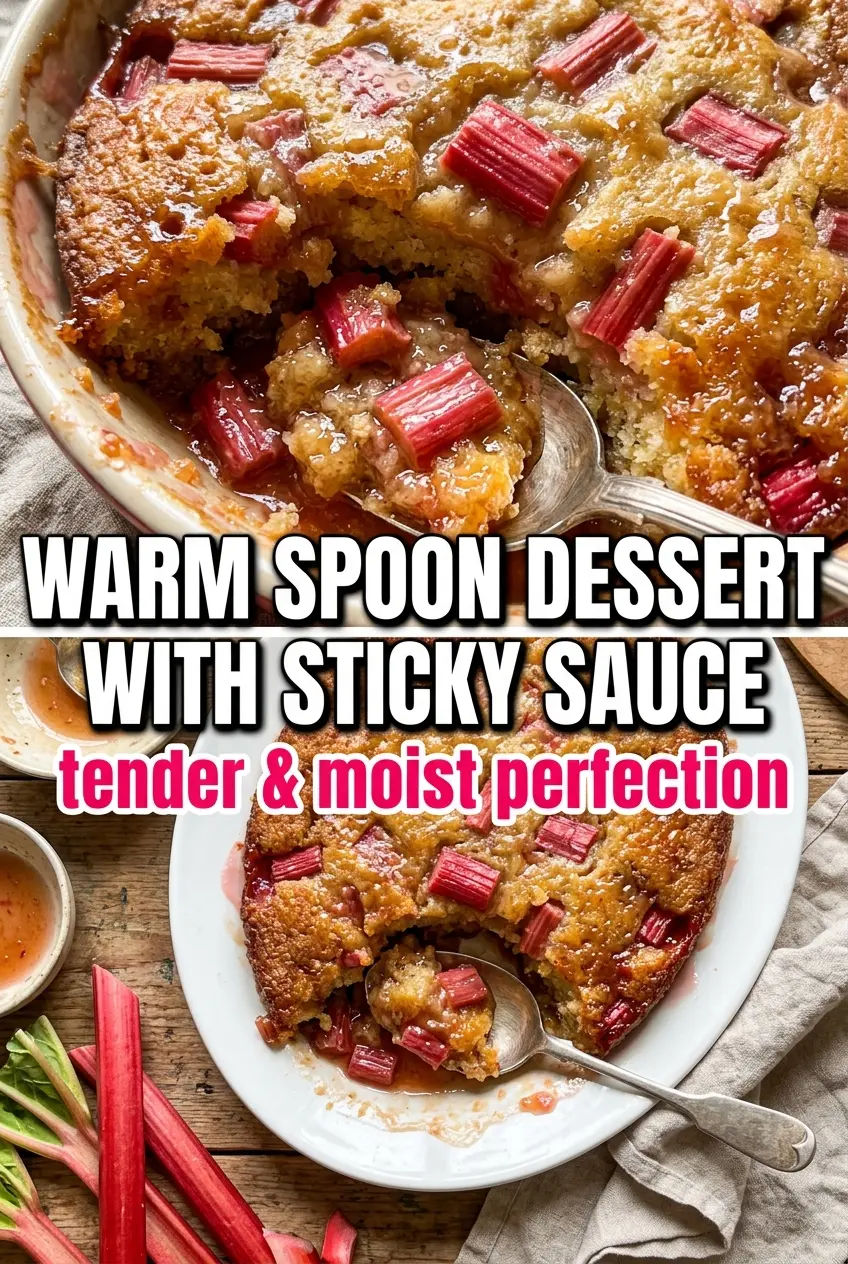
Moist, tender sponge soaked with warm toffee sauce is already a good dessert. Add tart rhubarb tucked through the crumb, and it turns into the kind of pudding that tastes old-fashioned in the best way: comforting, a little sticky at the edges, and sharp enough to keep each bite from feeling heavy. The sauce sinks into the warm cake instead of sitting on top, so every spoonful gets that soft, glossy finish.
This version works because the batter stays simple and the rhubarb goes in at the end, where it softens just enough in the oven without disappearing. Buttermilk gives the crumb a gentle tang and keeps it plush, while brown sugar does double duty in the cake and the sauce for a deeper caramel note. The key is baking the pudding until it’s set but still springy; overbaking dries out the sponge and leaves the sauce with nowhere to go.
Below, you’ll find the timing that keeps the texture right, the one place where the sauce can be adjusted, and a few practical swaps if you need to work with what’s in your kitchen.
The sponge stayed soft all the way through and the rhubarb gave just enough tang to balance the toffee sauce. I poured half over while it was warm like you said and it soaked in beautifully.
Save this Baked Sticky Rhubarb Pudding for the nights when you want tart rhubarb, soft sponge, and plenty of warm toffee sauce in one pan.
The Real Trick Is Pouring the Sauce While the Pudding Is Still Hot
Sticky puddings can go wrong in one very predictable way: the cake cools too much before the sauce goes on, and the topping sits there instead of soaking in. This dessert needs warmth on both sides. The pudding should come out of the oven set around the edges, springy in the center, and still hot enough that a skewer or fork leaves small, steamy crumbs behind.
The other thing that matters is the sauce texture. You want it glossy and pourable, not cooked down to a hard caramel. Five minutes of gentle simmering is enough to dissolve the brown sugar and thicken the cream slightly. If it starts to look oily or split, the heat was too high; take it off the burner and whisk in a spoonful of cream to bring it back.
What the Rhubarb and Buttermilk Are Doing Here
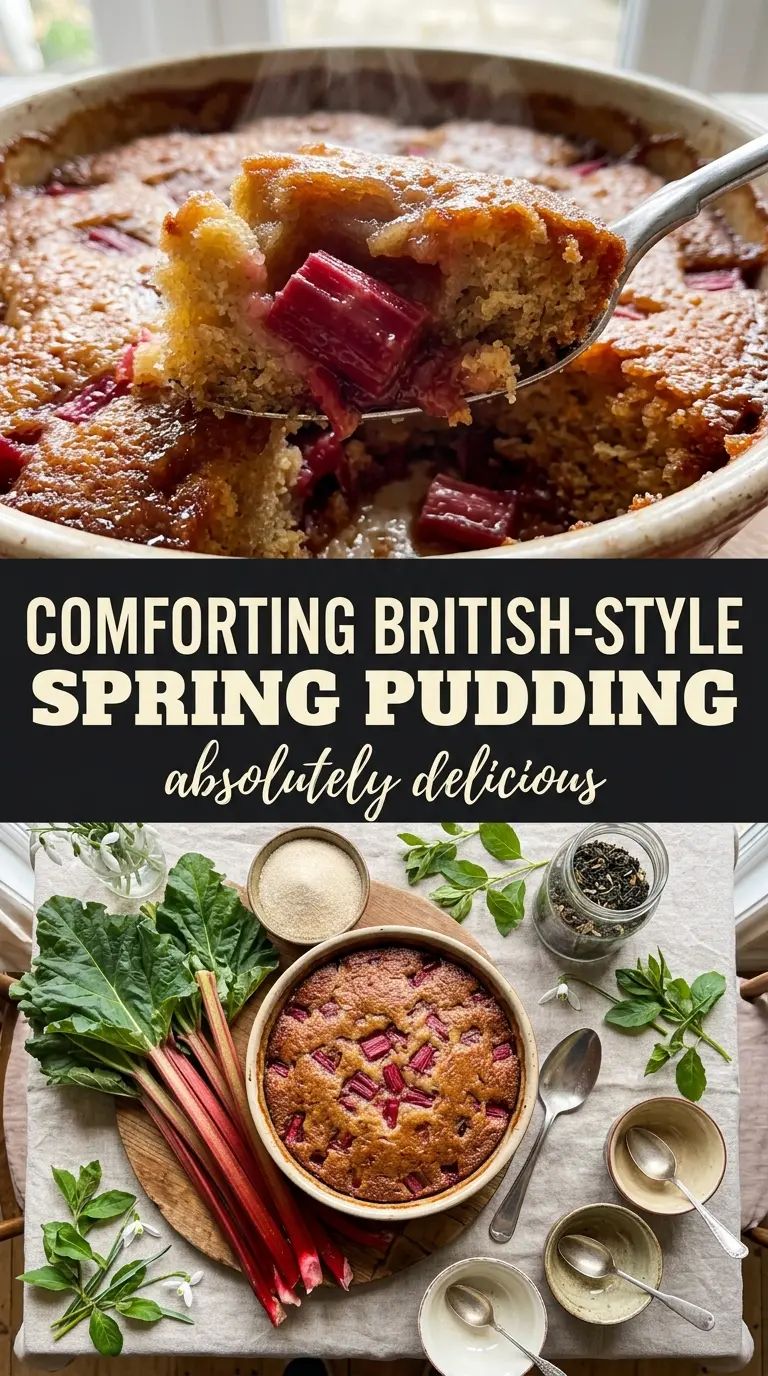
- Rhubarb — Fresh rhubarb gives the pudding its sharp edge and keeps the dessert from tasting one-note sweet. Dice it small so it softens evenly and doesn’t leave wet pockets in the crumb. Frozen rhubarb works if you thaw and drain it first, or the batter gets too loose.
- Buttermilk — This is what keeps the sponge tender and gives it that slight tang that plays well with the brown sugar. Regular milk works in a pinch, but the crumb will be a little less plush. If that’s what you have, add 1 teaspoon of lemon juice to the milk and let it sit for 5 minutes before using.
- Brown sugar — Use light brown sugar for the cake and sauce unless you want a deeper molasses note. Dark brown sugar will make the toffee flavor stronger and the color richer. It’s not a swap that changes the structure, but it does shift the whole dessert toward deeper caramel.
- Butter and cream — The sauce depends on both for its silky finish. This is not the place to cut the fat if you want the sauce to stay smooth and cling to the pudding instead of thinning out into a puddle around it.
Building the Batter, Baking It, and Letting the Sauce Sink In
Mix the Dry Ingredients First
Whisk the flour, baking powder, baking soda, and salt together before anything else. That keeps the leaveners from clumping and helps the cake rise evenly instead of baking up with a dense stripe through the middle. If you skip this, the batter can look fine and still bake unevenly.
Cream the Butter and Sugar Until It Fluffs
Beat the softened butter and brown sugar until the mixture lightens in color and looks a little fluffy around the edges. That step traps air, which gives the pudding lift and keeps it from eating like a brick. Add the eggs one at a time and mix in the vanilla before the batter starts to curdle or look greasy.
Fold in the Rhubarb Without Beating It Down
Add the dry ingredients and buttermilk in alternating turns so the batter stays smooth. Once it comes together, fold in the rhubarb just until it’s distributed. Overmixing here makes the cake tough, and rhubarb can break down into mush if you keep working the batter after it’s already combined.
Bake Until Set, Then Soak Immediately
Pour the batter into a greased 8×8-inch dish and bake until the top is golden and a toothpick comes out clean or with a few moist crumbs. The pudding should still feel soft when you press the center lightly. Poke holes in the hot cake and pour on half the sauce right away so it seeps deep into the crumb instead of sliding off the top.
How to Adapt It Without Losing the Sticky Pudding Texture
Make it dairy-free
Use a plant-based butter and a full-fat coconut cream or oat cream in the sauce. The pudding itself will still bake up soft, but the sauce will taste a little less classic and a little more rounded. Skip low-fat substitutes here; they don’t give the sauce the same body.
Use frozen rhubarb when fresh isn’t available
Thaw the rhubarb completely and drain off any extra liquid before folding it in. Frozen rhubarb carries more water, and if you add it straight from the freezer, the batter can turn wet and bake unevenly. The flavor stays bright, but the texture is best with the excess moisture removed first.
Make it gluten-free
A good 1:1 gluten-free baking blend can work here if it already includes xanthan gum. The crumb will be a little more delicate, so let the pudding cool for the full 10 minutes before serving. That short rest helps it set enough to slice cleanly.
Turn it into individual puddings
Divide the batter among greased ramekins and start checking them a few minutes early. Smaller portions bake faster and give you more sauce-to-cake ratio, which is a very good thing here. The only catch is that they dry out quicker, so don’t leave them in the oven once the centers are set.
Storage and Reheating
- Refrigerator: Store covered for up to 4 days. The sponge will firm up a little as it chills, but the texture comes back once it’s warmed.
- Freezer: Freeze the pudding without the sauce for up to 2 months, tightly wrapped. Thaw in the fridge overnight before reheating; the sauce is better made fresh.
- Reheating: Warm individual slices in the microwave with a spoonful of sauce or heat the whole dish, covered, in a 300°F oven until hot. Don’t blast it on high heat or the cake turns dry before the center is warmed through.
Answers to the Questions Worth Asking
Baked Sticky Rhubarb Pudding
Ingredients
Equipment
Method
- Preheat the oven to 350°F and grease an 8x8-inch baking dish.
- Whisk together the all-purpose flour, baking powder, baking soda, and salt.
- Cream the softened butter and brown sugar until fluffy, then beat in the eggs and vanilla extract.
- Add the dry ingredients alternating with buttermilk, mixing just until combined.
- Fold in the diced fresh rhubarb until evenly distributed.
- Pour the batter into the prepared dish and bake for 35-40 minutes, until a toothpick comes out clean (no wet crumbs).
- Let the pudding cool for 10 minutes so it’s warm but not boiling hot.
- Combine the brown sugar, heavy cream, and butter in a saucepan and simmer for 5 minutes, until it looks glossy and slightly thickened.
- Poke holes in the warm pudding so the sauce can soak in.
- Pour half the toffee sauce over the pudding, letting it sink into the sponge.
- Serve with the remaining toffee sauce and ice cream.