Rhubarb custard kuchen bakes into one of those old-fashioned desserts that disappears faster than you expect: tender yeast dough on the bottom, tart rhubarb in the middle, and a creamy custard that sets into a soft, sliceable top. The edges turn golden and a little crisp, while the center stays rich and silky. It eats like a cross between coffee cake and pie, which is exactly why it earns repeat requests.
The part that makes this version work is the balance between the yeasted base and the custard. The dough needs enough flour to hold its shape in the pan, but not so much that it turns bready. The custard also gets a small amount of flour, which helps it set cleanly instead of sliding apart when you cut into it. Rhubarb brings the sharp, bright contrast that keeps the whole pan from tasting heavy.
Below you’ll find the little details that matter: how to keep the dough from shrinking in the pan, what the custard should look like before it goes into the oven, and how to get neat squares after the kuchen cools.
The custard set up beautifully and the rhubarb stayed bright instead of turning mushy. I let it cool all the way and the slices came out clean with that soft, creamy middle everyone loved.
Rhubarb custard kuchen with its soft yeast crust and silky baked custard is one to keep close for spring baking.
The Dough Needs Enough Structure to Hold the Custard
The mistake most people make with kuchen is treating the dough like a thick batter or pressing it too thin in the pan. This base needs to be soft and supple, but it still has to support a heavy custard layer without disappearing into it. A short rise is enough here; you’re not chasing a lofty bread crumb, just a tender base with enough strength to stay distinct after baking.
If the dough feels sticky, resist the urge to keep adding flour handful by handful. That usually leads to a dry crust once the cake cools. Lightly flour your hands, press the dough evenly into the pan, and let it relax for a few minutes if it keeps springing back. That pause matters more than force.
What Each Part of the Filling Is Actually Doing

- Fresh rhubarb — This is the flavor anchor. It softens in the oven but still keeps a little shape, which gives each bite a bright, tart edge against the rich custard. Cut it into even 1-inch pieces so it bakes at the same rate; tiny bits can turn to mush before the custard is set.
- Heavy cream — Cream gives the custard its lush texture. Milk won’t deliver the same body, and half-and-half can work in a pinch, but the filling will set a little looser. If you want that classic bakery-style custard top, keep the cream.
- Eggs — The eggs are what turn the liquid filling into a sliceable custard. Whisk them until smooth before adding the cream and dry ingredients so you don’t end up with streaks. The custard should look pourable, not foamy.
- Flour in the custard — This small amount is doing important work. It helps the filling set firmly enough to cut cleanly once cooled, especially with all that fruit juice in the pan. Skip it and the center can stay too loose.
- Vanilla — Vanilla rounds out the tartness and keeps the custard from tasting flat. Use pure extract if you have it, since the flavor comes through clearly in a simple dessert like this.
Press, Pour, and Bake Until the Center Barely Moves
Mixing the Yeast Dough
Dissolve the yeast in warm water first and give it the full five minutes. You want it foamy and active before the milk, sugar, butter, egg, and salt go in. If the yeast never bubbles, stop there and start over, because an inactive starter will give you a dense base that never rises properly. Once the flour is added, knead until the dough is smooth and elastic, not stiff.
Shaping the Base in the Pan
Press the risen dough into a greased 9×13-inch pan in an even layer. It doesn’t have to look perfect, but the corners should be filled so the custard doesn’t pool there and overbake the edges. If the dough keeps shrinking back, let it rest for 5 minutes and try again. That brief rest is usually enough to relax the gluten.
Layering the Rhubarb and Custard
Scatter the rhubarb over the dough in an even layer so every slice gets fruit. Then whisk the custard until the sugar is dissolved and pour it slowly over the top. The filling will look loose going in; that’s correct. If you see dry flour pockets after whisking, keep going until the mixture is completely smooth or you’ll get specks in the baked custard.
Knowing When It’s Done
Bake until the custard is set and the top turns golden, with just a slight wobble in the middle when you gently nudge the pan. If the center still sloshes, it needs more time. If the edges are browning too fast before the middle sets, tent the pan loosely with foil for the last stretch of baking. Let it cool completely before slicing, because cutting it warm will give you messy squares and a filling that hasn’t finished setting.
How to Adapt This for a Different Table or a Different Pantry
Gluten-Free Version
Use a 1:1 gluten-free flour blend in both the dough and the custard, but expect a softer, more delicate base. The dough won’t have quite the same stretch, so press it gently into the pan instead of kneading hard. The custard still sets well, but the bottom will be a little less bread-like.
Strawberry-Rhubarb Twist
Replace up to 1 cup of the rhubarb with sliced strawberries for a sweeter, softer filling. Strawberries release more juice, so don’t push the swap any further or the custard can turn runny around the fruit. This version tastes a little brighter and less sharp, which works nicely if your rhubarb is especially tart.
Less Sweet, More Tart
Cut the sugar in the custard by 1/4 cup if you prefer a sharper, more old-fashioned finish. The texture stays the same, but the rhubarb comes forward more strongly. Don’t reduce it any further unless you like a noticeably tart dessert, because the sugar also helps the custard taste rich instead of eggy.
Storage and Reheating
- Refrigerator: Store covered for up to 4 days. The custard firms up in the fridge, and the crust softens a little under the filling.
- Freezer: This one freezes poorly because the custard can turn grainy after thawing. If you must freeze it, wrap individual slices tightly and thaw in the refrigerator, but expect a looser texture.
- Reheating: Serve it cold or let slices come to room temperature. If you warm it, use short bursts in a low oven; the microwave can make the custard weep and the crust rubbery.
Questions I Get Asked About This Recipe
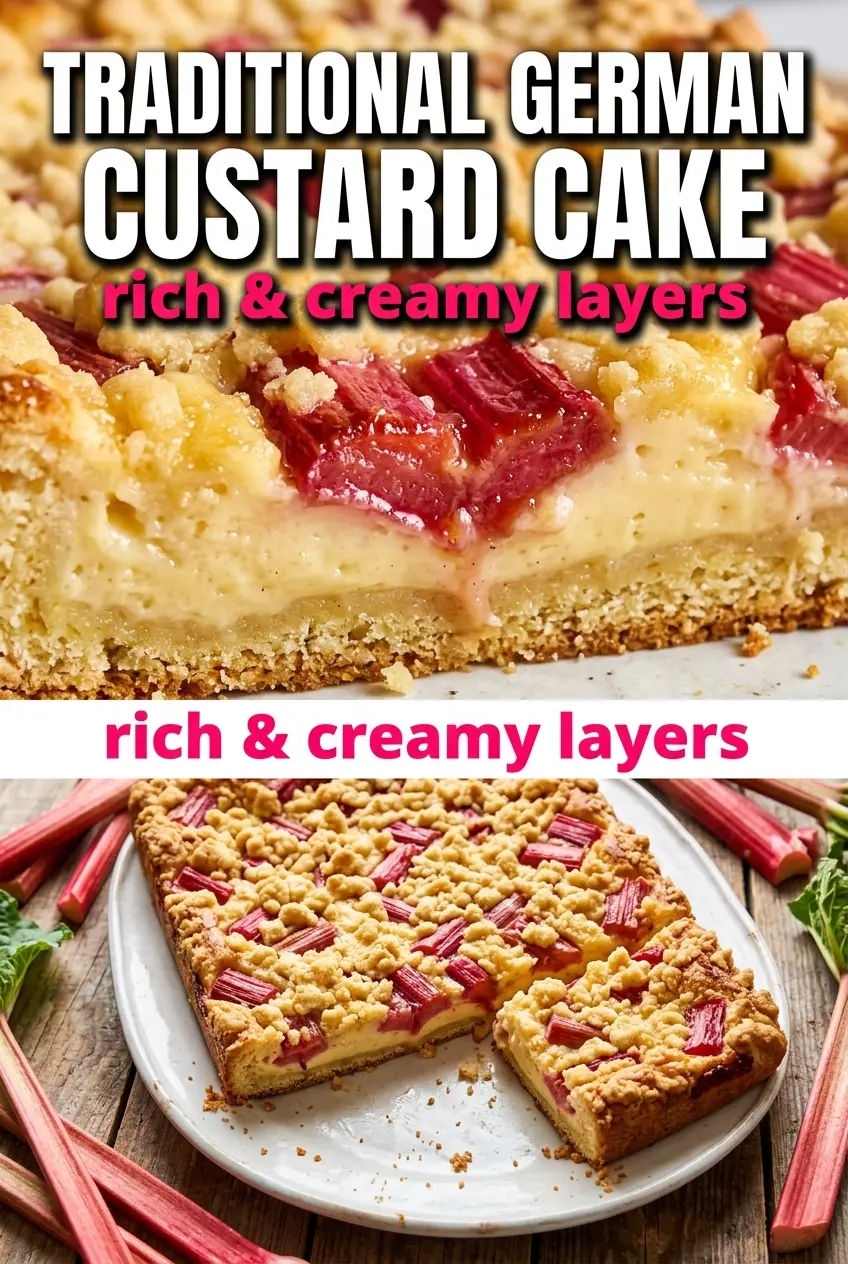
Rhubarb Custard Kuchen
Ingredients
Equipment
Method
- Dissolve active dry yeast in warm water and let sit for 5 minutes until foamy. Visual cue: bubbles form on the surface.
- Mix in warm milk, sugar, butter, melted, egg, and salt until the mixture looks uniform. Visual cue: the liquid turns glossy and evenly colored.
- Gradually add all-purpose flour and knead until smooth. Visual cue: the dough becomes elastic and no longer looks dry.
- Let the dough rise for 30 minutes until puffy and slightly increased in volume. Visual cue: it feels lighter when pressed gently.
- Press the dough into a greased 9x13-inch pan and arrange fresh rhubarb, cut into 1-inch pieces on top. Visual cue: rhubarb pieces are evenly distributed across the dough.
- Whisk together eggs, heavy cream, sugar, all-purpose flour, and vanilla extract until smooth. Visual cue: the custard mixture looks pale and thickened slightly.
- Pour the custard over the rhubarb so it settles into the gaps. Visual cue: rhubarb stays visible but is mostly covered.
- Bake at 350°F for 50-55 minutes until the custard is set and golden. Visual cue: the center springs back and the top has a browned, caramel tone.
- Cool completely before cutting and serving. Visual cue: the custard firms up into clean slices.