Bright citrus, clean ocean flavor, and just enough heat make authentic Mexican ceviche the kind of appetizer people hover over before the bowl even hits the table. The fish turns opaque and tender in the marinade, while the lime and orange juice pull everything into a sharp, fresh balance that tastes light but never bland. When it’s done right, every bite gives you soft fish, crisp onion, cilantro, a little jalapeño kick, and that cool avocado finish.
The trick is using the right fish and the right bowl. A firm white fish like sea bass, snapper, or halibut holds its shape after curing, and a non-reactive bowl keeps the citrus tasting clean. The orange juice doesn’t make this sweet; it rounds out the lime so the ceviche tastes bright instead of harsh. Thirty minutes is enough for small dice, but the fish should still look moist and delicate, not chalky or tough.
Below, I’ve included the details that matter most: how to tell when the fish has cured enough, which ingredient you can swap without losing the character of the dish, and how to keep the final texture fresh right up until serving.
The fish set up beautifully in 30 minutes, and the lime-orange balance kept it from tasting too sharp. I served it in little glasses with tostadas and everyone kept going back for more.
Save this citrus-cured Mexican ceviche for the next time you want a chilled appetizer with clean lime, sweet orange, and tender fish.
The Curing Step That Makes the Fish Taste Fresh, Not Rubbery
Ceviche gets ruined fastest by impatience. If the fish sits too long in citrus, the texture goes from tender to dry and cottony. With small, even dice, 30 minutes is usually enough for the outside to turn opaque while the center stays delicate, which is the texture you want for this dish.
The other common mistake is using a bowl that reacts with acid or chopping the fish in uneven pieces. A reactive bowl can give the marinade a metallic edge, and uneven dice leave you with some pieces overcured while others still look translucent. Keep the fish cold, cut it evenly, and stir once or twice during the cure so every surface gets the same treatment.
What Each Ingredient Is Actually Doing in This Bowl
- Fresh white fish — Sea bass, snapper, and halibut all hold up well because they’re firm enough to cure without falling apart. Pick the freshest fish you can get, since ceviche doesn’t have any long cooking time to mask fishy flavor.
- Lime juice — This is the main curing acid, and there isn’t a substitute that gives the same clean, sharp result. Bottled lime juice tastes flat here, so use fresh-squeezed if you want the ceviche to taste bright instead of dull.
- Orange juice — The orange juice softens the lime’s edge and brings a little roundness to the marinade. If you skip it, the ceviche will taste harsher and more aggressively tart.
- Red onion, jalapeño, cilantro, tomato, and avocado — These are the fresh contrast pieces that make the dish taste complete. Slice the onion thin so it doesn’t overpower, seed the jalapeños if you want less heat, and add the avocado at the end so it stays intact.
Building the Citrus Cure Without Overdoing It
Submerging the Fish Evenly
Put the diced fish in a non-reactive bowl and pour the lime and orange juice over it until every piece is covered. If the fish floats, give it a gentle stir so no surface stays dry. The goal is an even cure, not a heavy marinade, so don’t leave big clumps of fish touching each other.
Watching for the Opaque Turn
Refrigerate the bowl and stir once or twice during the 30-minute rest. The fish is ready when it looks opaque on the outside but still feels tender when you scoop it, not stiff or chalky. If you wait until every bit looks completely white all the way through, you’ve gone too far and the texture will tighten up.
Finishing With the Fresh Add-Ins
Drain off a little of the citrus if the bowl looks flooded, then fold in the onion, jalapeño, cilantro, tomato, and avocado. Season with salt and pepper after the fish has cured so you can taste the balance first. Toss gently because aggressive stirring breaks the fish and bruises the avocado.
How to Adapt This Ceviche for Different Tables
Make it milder for a mixed crowd
Use one jalapeño instead of two and remove the seeds and ribs. You’ll still get the green pepper flavor and freshness, but the heat won’t build with every bite.
Swap in shrimp for a different texture
Use peeled, deveined shrimp and cut them into bite-size pieces if needed. Shrimp cure faster than fish, so check them early; once they turn pink and opaque, move straight to the vegetables or they’ll get tough.
Keep it dairy-free and gluten-free without changing a thing
This recipe already fits both of those needs as written. Serve it with tostadas if you want crunch, or use tortilla chips for a simpler presentation.
Hold the avocado until the last minute
If you need to prep ahead, leave the avocado out until right before serving. It stays greener and cleaner-looking, and the ceviche won’t get soft or muddy as it sits.
Storage and Serving Prep
- Refrigerator: Best eaten the day it’s made. It can hold for up to 1 day, but the fish tightens and the avocado softens as it sits.
- Freezer: Don’t freeze ceviche. The fish and vegetables lose their texture and the citrus cure turns watery when thawed.
- Serving prep: Chill the bowls or glasses ahead of time and add the tostadas or chips at the table. Warm dishes flatten the whole experience, and the ceviche is at its best when it stays cold and crisp.
Answers to the Questions Worth Asking
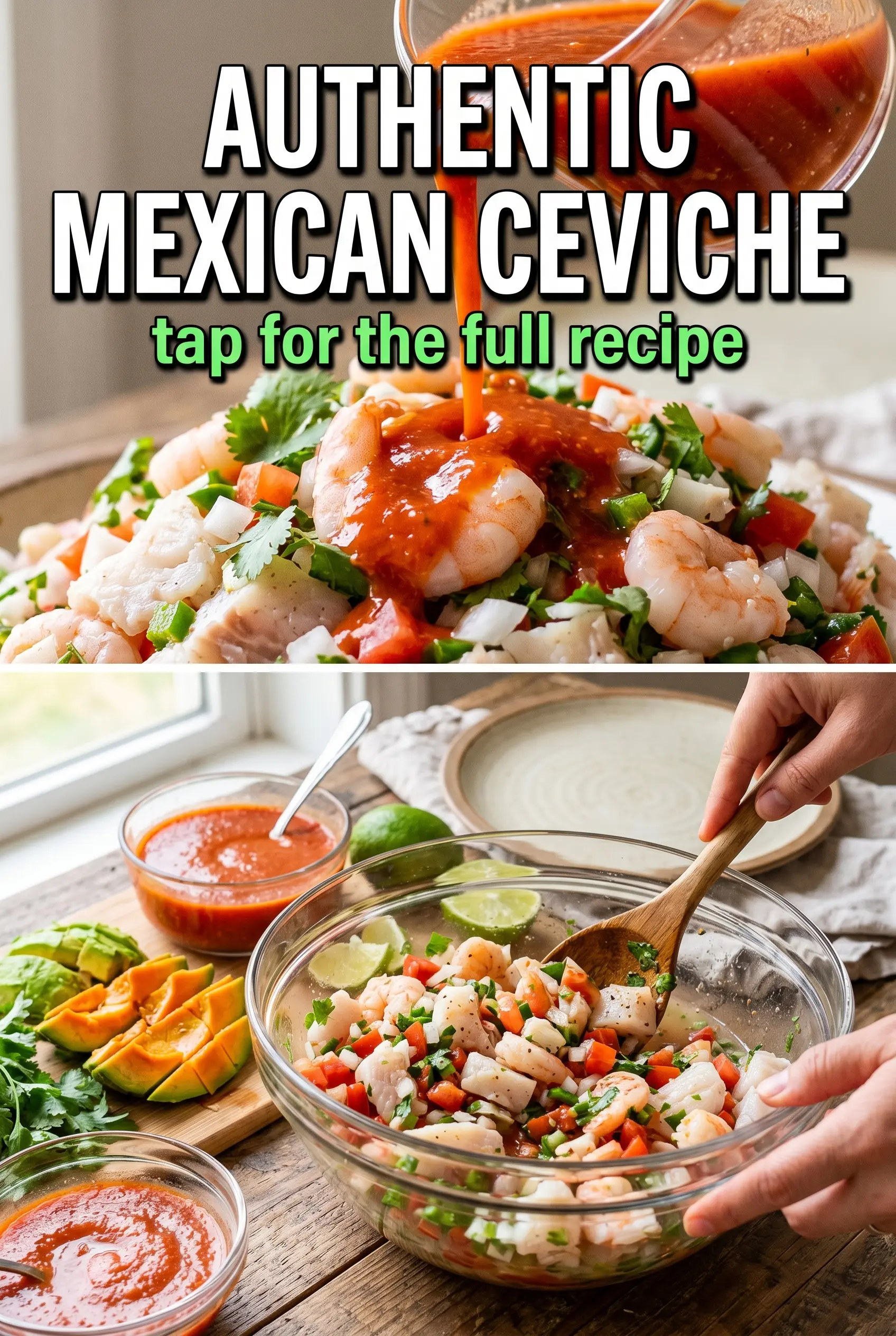
Authentic Mexican Ceviche
Ingredients
Equipment
Method
- Place the diced fresh white fish in a non-reactive bowl. Pour the fresh lime juice and fresh orange juice over the fish until fully submerged.
- Cover the bowl and refrigerate for 30 minutes, stirring occasionally. The fish should turn opaque and look “cooked” from the citric acid.
- Add the thinly sliced red onion, minced jalapeños, chopped fresh cilantro, diced tomato, and diced avocado to the cured fish. Stir gently to combine while keeping the avocado intact.
- Season with salt and black pepper, then gently toss everything together. Taste and adjust lime juice if needed for brightness.
- Serve immediately in chilled bowls or small glasses with tostadas or tortilla chips on the side. Garnish with extra herbs if desired so the red onion and jalapeño stay visible.