Deep red consomé, tender beef, and chiles with just enough smoke to make the whole pot feel special — that’s what this birria delivers. The broth turns rich without getting heavy, and the meat shreds into soft, juicy strands that soak up every bit of the sauce. Whether you pile it into tacos or serve it as a stew, this is the kind of meal people hover over while it’s still steaming.
The key is building flavor in layers instead of trying to force it all at once. Toasting the dried chiles wakes up their oils, and blending them with onion, garlic, vinegar, and spices gives the broth depth before the beef ever goes in. Straining the sauce matters too. It keeps the consomé silky instead of gritty, which is what makes the finished broth taste polished and restaurant-level.
Below, I’m walking through the small details that matter most: how to keep the chile sauce smooth, how to know when the beef is done, and how to turn the same pot into either birria tacos or a satisfying bowl of stew.
The consomé turned out rich and smooth, and the beef was fall-apart tender after just over two hours. I made tacos first and then used the rest for bowls the next day — both were incredible.
Save this birria recipe for tender shredded beef, deep red consomé, and tacos that taste even better dipped in the broth.
The Part Most Birria Gets Wrong: A Thin Broth That Never Deepens
Birria needs time, but it also needs structure. If the broth tastes flat, it’s usually because the chiles were never properly toasted, the sauce wasn’t strained, or the simmer stayed too aggressive and dulled the spices. The goal isn’t just tender beef. It’s a consomé with body, color, and a clean chile taste that clings to the meat and tortillas.
The cinnamon stick and tomato paste matter here because they round out the chile base without making the broth taste like tomato soup or dessert. A short boil after the sauce goes in helps the oil from the chiles bloom in the pot, but the long, low simmer is where the flavor settles and the beef gets tender. If the liquid is bubbling hard the whole time, the meat tightens up before it softens.
- Guajillo chiles — These bring the deep red color and a mild, fruity heat. They’re the backbone of the broth, so use dried ones that still smell vivid and not dusty.
- Ancho chiles — Anchos add sweetness and a dark, raisin-like note that keeps the consomé from tasting sharp. Don’t skip them unless you have to, because guajillos alone can taste one-dimensional.
- Chipotle chiles — These add smoke and a little edge. Two is enough for balance; more than that can take over the pot.
- Apple cider vinegar — This brightens the chile paste and helps the beef taste seasoned from the start. Lime won’t give you the same depth here, so keep the vinegar in the blend.
What Each Ingredient Is Actually Doing in the Pot
Beef chuck roast is the right cut because it has enough fat and connective tissue to turn silky during the simmer. Leaner beef will dry out before the broth develops. Cut it into large chunks so it stays juicy while it cooks, then shred it after it’s tender.
The chile blend does the heavy lifting for both color and flavor. Toasting the chiles for about two minutes is enough to wake them up; if they darken too far, the broth turns bitter. Soaking them in hot water softens them for blending, and straining the sauce afterward removes any skins or seeds that would make the consomé grainy.
Beef broth gives the pot a head start, but the chile sauce is what turns it into birria. If your broth is salty, hold back on added salt until the very end. Tomato paste adds body and a little sweetness, while the cinnamon stick gives warmth without screaming cinnamon. Use a whole stick, not ground cinnamon, or the broth can turn muddy.
How to Build the Consomé So the Beef Stays Tender
Toasting and Soaking the Chiles
Set the dried chiles in a dry skillet over medium heat and move them around until they smell fragrant, about two minutes. They should darken a shade or two, not blacken. Once they’re toasted, cover them with hot water and let them soften for ten minutes so they blend into a smooth paste. If they soak too long, they can lose some flavor, so stick close to the timing.
Blending Until the Sauce Is Smooth
Blend the softened chiles with onion, garlic, cumin, oregano, and vinegar until the mixture looks thick and glossy. It should pour, not sit in stiff chunks. Press the sauce through a fine mesh sieve with a spoon to remove any tough bits. That extra minute pays off later because the broth finishes silky instead of pulpy.
Cooking the Base Before the Beef Goes In
Warm the olive oil in a large pot over medium heat, then add the strained sauce and cook it for about five minutes. You’ll notice the color deepen and the aroma turn rounder and less raw. Add the broth, tomato paste, bay leaves, and cinnamon stick, then bring everything to a boil before adding the beef. If the sauce still tastes harsh at this stage, don’t panic — the long simmer mellows it.
Simmering Until the Meat Falls Apart
Add the beef chunks, bring the pot back to a boil, then lower the heat and leave it uncovered at a gentle simmer. You want occasional lazy bubbles, not a rolling boil. After 90 to 120 minutes, the beef should pull apart with a fork and the broth should taste richer from the meat itself. If the beef is still chewy, it needs more time, not more heat.
Serving It as Tacos or a Bowl
For tacos, shred the beef and dip the tortillas in the consomé before warming them in a skillet. That coating gives the tacos their signature red color and keeps the tortilla from tasting dry. Fill them with meat, top with onion and cilantro, and serve with extra broth for dipping. For stew, ladle the meat and consomé into bowls and finish with lime. The acid wakes up the whole pot.
How to Adapt Birria for a Bigger Pot, Less Heat, or a Different Finish
Make it milder without losing depth
Use only one chipotle chile, or leave it out entirely if you want a softer, sweeter broth. The guajillo and ancho chiles still give you the classic birria color and richness, just with less smoke and heat. Add extra lime at serving time to keep the flavor lively.
Use beef shank or short ribs for a richer stew
Chuck roast is the easiest cut to work with, but beef shank or short ribs bring even more body to the broth because of the marrow and connective tissue. The tradeoff is a slightly richer, heavier consomé and a longer simmer if the pieces are large. If you use a mix of cuts, keep some chuck in the pot for reliable shredding.
Make it dairy-free and naturally gluten-free
This recipe already fits both of those needs as written. Serve it with corn tortillas instead of flour tortillas, and check your broth if you’re using store-bought so it doesn’t contain unexpected additives. The texture and flavor stay the same.
Store the meat in its broth for the best leftovers
Birria reheats best when the shredded beef stays submerged in the consomé, which keeps it from drying out. Refrigerate it for up to 4 days, or freeze portions with plenty of broth for up to 3 months. Reheat gently on the stove over low heat; boiling it hard will tighten the meat and dull the broth.
Answers to the Questions Worth Asking
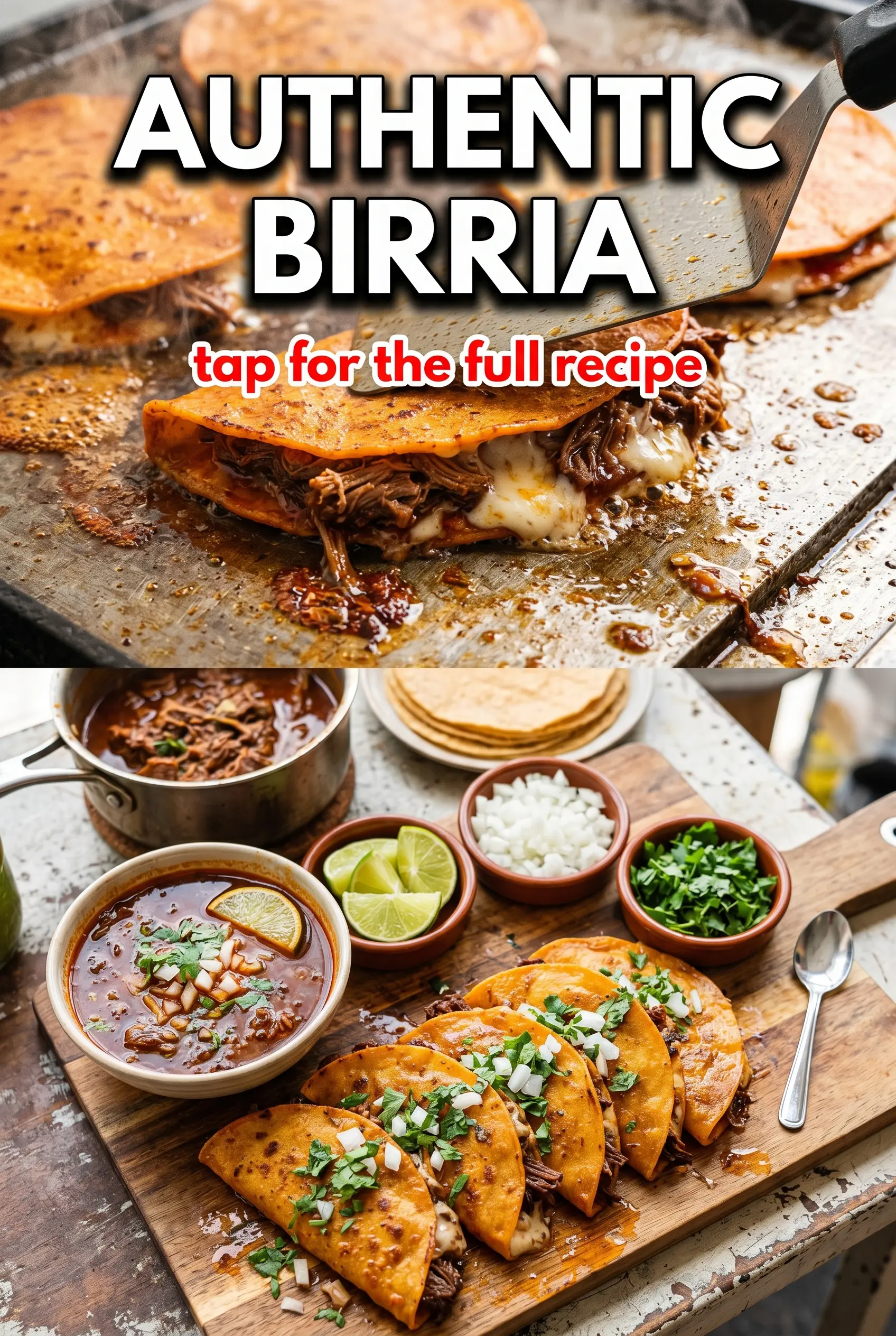
Authentic Birria Recipe for Tacos or Stew
Ingredients
Equipment
Method
- Toast the dried guajillo chiles, dried ancho chiles, and dried chipotle chiles in a dry skillet over medium heat until fragrant, about 2 minutes, watching closely for a toasted red aroma.
- Soak the toasted dried chiles in hot water for 10 minutes, until pliable and darker in color, then drain well.
- Blend the drained chiles with the onion, crushed garlic, cumin, oregano, and apple cider vinegar until completely smooth, stopping to scrape down the blender as needed.
- Strain the chile sauce through a fine mesh sieve, pushing with a spoon so you get a silky, pourable deep-red sauce.
- Heat the olive oil in a large pot (Dutch oven) over medium heat until shimmering, then add the strained chile sauce.
- Cook the chile sauce for 5 minutes, stirring, until slightly thickened and fragrant with a darker brick-red color.
- Add the beef broth, tomato paste, bay leaves, and cinnamon stick, stirring until the tomato paste is incorporated.
- Bring the mixture to a boil over medium-high heat until you see steady bubbling across the surface.
- Add the beef chuck roast chunks, then return to a boil so the liquid bubbles again around the meat.
- Reduce heat to low and simmer uncovered for 90–120 minutes until the beef is fall-apart tender, with the broth taking on a deeper red hue.
- Season the consomé with salt and pepper to taste, then taste again for balance.
- For tacos, shred the tender beef and dip corn tortillas in the hot consomé briefly, then fill with shredded meat.
- Serve the tacos with diced onion and cilantro, keeping the filling and tortillas warm so the consomé flavor clings.
- For stew, ladle the meat and consomé into bowls, then serve with lime wedges for bright acidity.